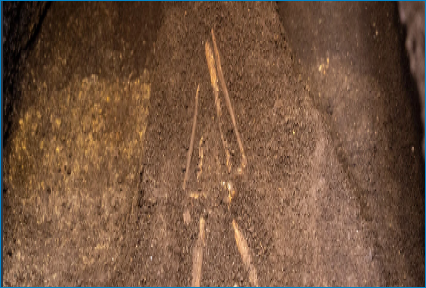
Archaeologists in El Salvador have exhumed human remains believed to be nearly 3,000 years old, a discovery announced by the Ministry of Culture on Tuesday, July 22, 2026, at 9:30 AM EDT. The ancient burial site, located in Antiguo Cuscatlan, a suburb of San Salvador, was first uncovered on July 2.
The remains are estimated to date back to approximately 850 B.C. and were found face down, preserved beneath distinct layers of volcanic ash. The burial pit also yielded a small ceramic vessel, crafted in the Usulutan style and shaped like a sea turtle, alongside remnants of cassava branches.
The Ministry of Culture released images of the site and stated that the find could represent one of the oldest pre-Hispanic burials in Mesoamerica. In a social media post, accompanied by a video of archaeologists at work, the ministry highlighted that this discovery "would provide new information about the populations that inhabited this region more than two thousand years ago."
Further scientific analysis is planned for the remains. Radiocarbon dating will be conducted to precisely determine their age, while DNA analysis will be carried out to ascertain the individual's sex.
According to the ministry, the current site in Antiguo Cuscatlan may contain burials analogous to those previously unearthed at the Chalchuapa archaeological site in western El Salvador. In the 1970s, archaeologists at Chalchuapa discovered the remains of 33 individuals, including 26 complete skeletons, four partial skeletons, and three isolated skulls. Many of these remains were found face down with their hands and feet bound, and some exhibited signs of mutilation or decapitation.
Last year, archaeologists said they discovered an ancient altar in a jungle in Guatemala that was apparently used for human sacrifices, "especially of children."
In 2015, scientists in Brazil announced they discovered evidence of human decapitation that dates back to over 9,000 years, making it the oldest case ever seen in the New World.