The European Environment Agency (EEA) has showcased the winners of its annual "Resilient by Nature" photo contest, bringing international focus to the delicate connection between natural ecosystems and human impact. The announcement coincides with global climate negotiations at the UN COP31 summit and follows the COP17 biodiversity talks, which concluded on October 31 with a new framework despite UN warnings that global progress remains behind 2030 target goals.
Amid rising greenhouse gas emissions pushing global temperatures past the 1.5°C threshold, the competition highlights pressing environmental challenges alongside moments of ecological recovery.
Open to all European citizens and residents of EEA member countries aged 18 and over, the free-to-enter competition attracted nearly 2,800 entries from photographers across 35 countries. An external panel of judges selected category winners alongside a youth award recipient, while a public online vote determined the public choice winner. The contest aims to illuminate Europe’s natural beauty, the ongoing environmental pressures facing local habitats, and viable conservation solutions.
Among the recognized works, award-winning photographer Ali Aslan captured an aerial view of the Dalyan Delta in Türkiye. The ecologically vital wetland was designated a Special Environmental Protection Area in the 1980s, enabling it to withstand decades of commercial resort developments. The delta encompasses rare endemic Turkish sweetgum forests and serves as a habitat for more than 150 bird species.
Nearby, vulnerable loggerhead sea turtles nest along İztuzu Beach, where authorities enforce pet prohibitions and night closures during nesting seasons. The landscape also bears historic human footprints, including ancient Lycian cliff-carved tombs and the ruins of Kaunos, while modern preservation efforts, artisanal fishing, and eco-tourism maintain the area's environment.
Addressing the dark realities of pollution, Spanish photographer Julián Fernandez Quilez positioned a remote-triggered wide-angle camera inside a drainage pipe. His image captures a secretive wetland water rail picking through trash—including a disposable medical face mask, plastic bottle caps, and a crushed drink can—with its long red bill. Through the opening of the drain, a surrounding aquatic habitat remains visible, emphasizing the direct spatial impact of urban waste on wildlife ecosystems.
The competition also underscored the devastating toll of extreme weather. Data from the European Commission revealed that 2026 ranked among the severe fire seasons on record, with prolonged droughts and heatwaves contributing to nearly 700,000 hectares burned by August—almost double the 20-year historical average. These fires destroyed farmlands, degraded soils, emitted massive volumes of greenhouse gases, and generated transboundary air pollution.
Capturing the potential for ecological rebirth, Sofia-based photographer Elitsa Mihaylova captured a solitary green sprout emerging from charred soil, characterized in contest notes as fragile yet resilient.
In the youth category, 18-year-old Swedish photographer Denat Lahi earned the Youth Prize for his study of elusive pine martens in Lund, Sweden. Lahi spent weeks tracking animal paths, studying scat, and consulting local wildlife databases to find locations where mammals manifest expressive behavior.
Utilizing motion sensors and nighttime camera traps, he recorded a pine marten exploring an abandoned barn containing discarded industrial machinery, offering a rare look into how wild species navigate human-altered environments.
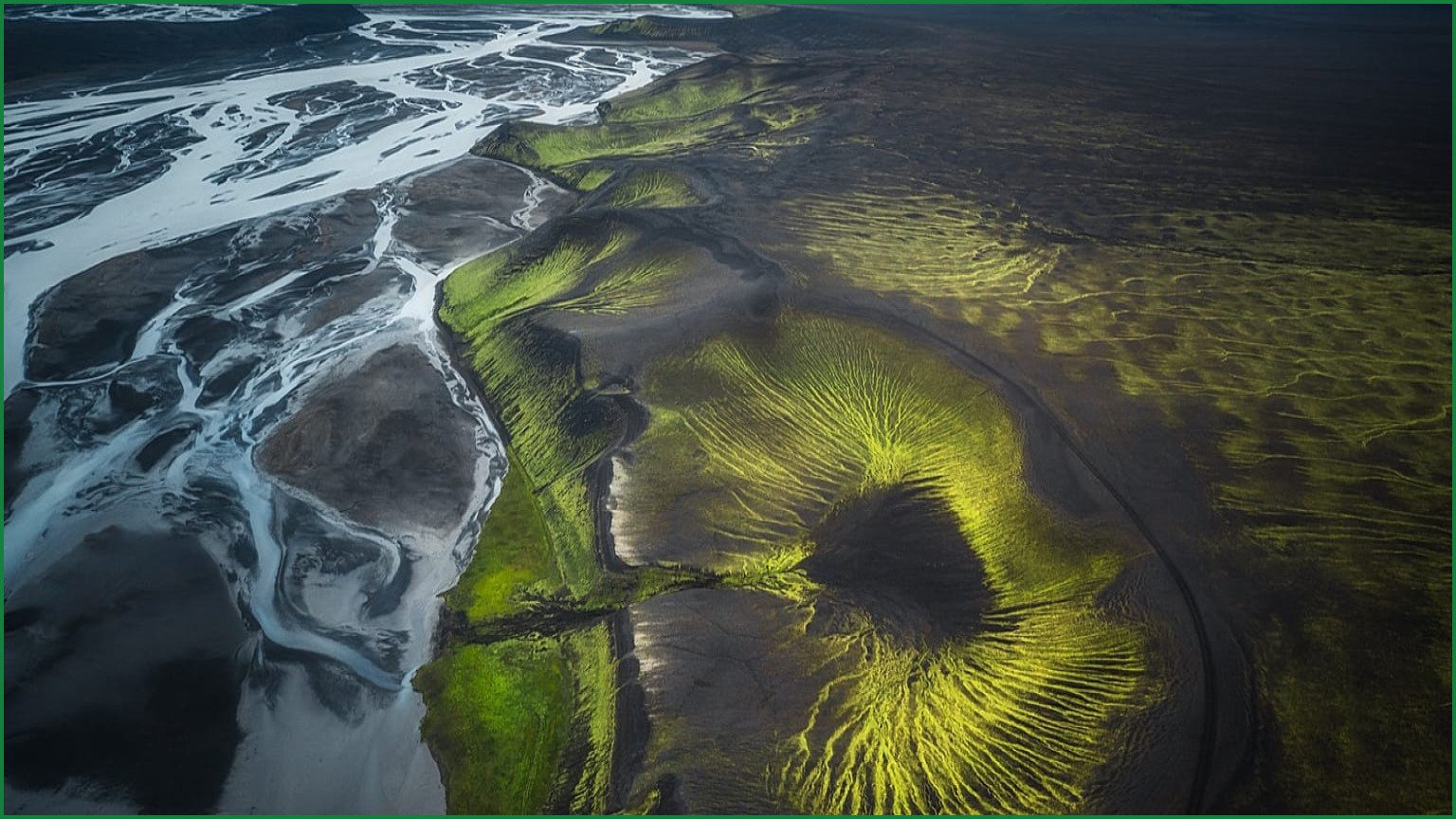
Expanding on atmospheric changes in northern Europe, aerial photographer Radoslav Sviretsov documented the changing terrain of the Icelandic Highlands. His photograph displays intricate patterns formed by melting snow interspersed with vibrant green moss. While seasonal snowmelt typically occurs between May and June, accelerated warming linked to climate change has caused snow cover to disappear earlier in the season, while milder winter conditions hinder snow accumulation and alter local hydrologic cycles.
Carbon emissions from the burning of fossil fuels are pushing global warming towards and beyond the 1.5°C limit, resulting in ever worsening weather extremes.
Lahi uses this intel to identify the best locations for capturing human-like emotion in mammals, he told photography news site PetaPixel.