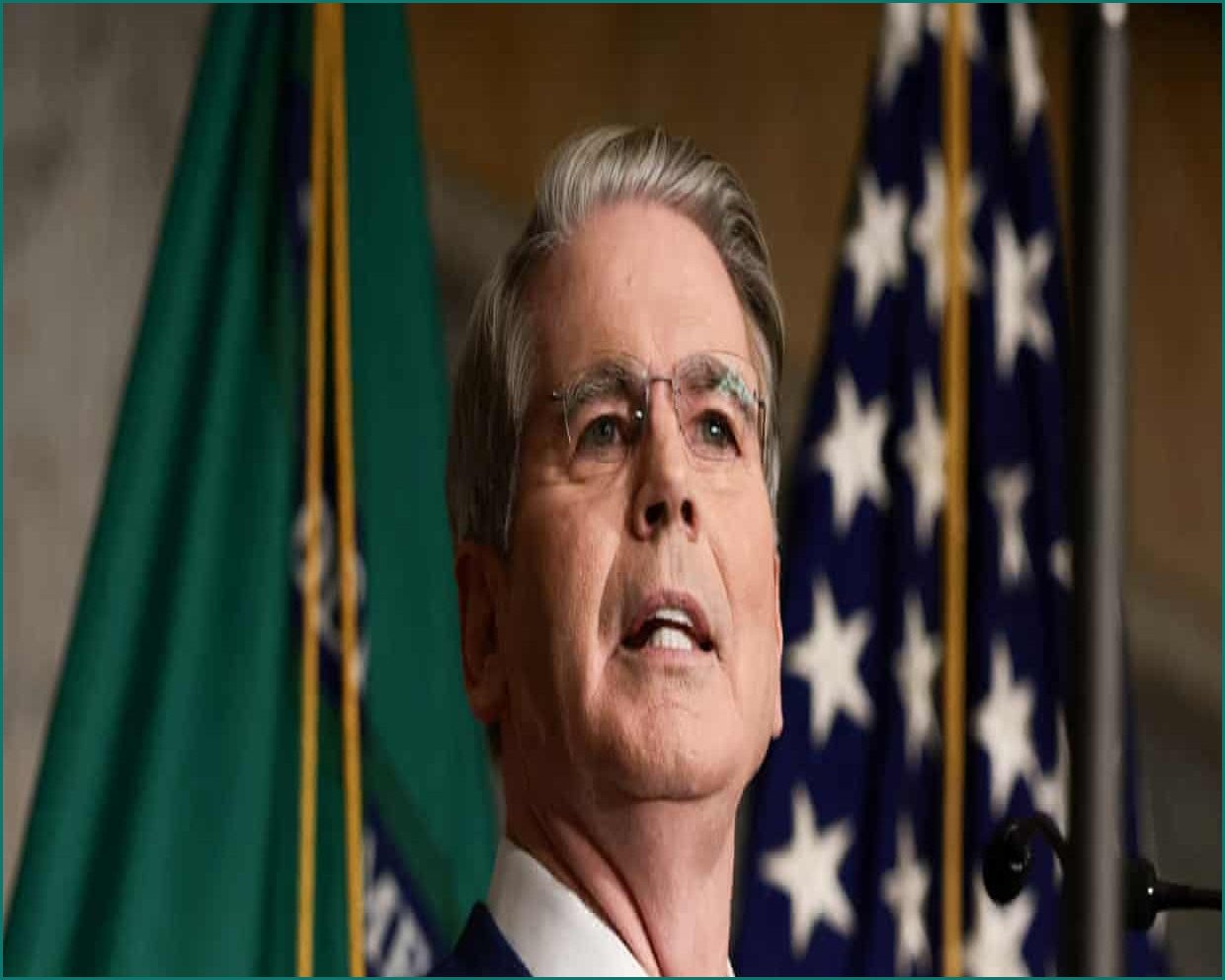
Billionaire investor Stanley Druckenmiller has publicly rebuked his former pupil, US Treasury Secretary Scott Bessent, over recent attempts to calm bond markets and lower borrowing costs. Druckenmiller, who worked alongside Bessent at George Soros’s fund management firm during the 1990s, warned that the Treasury is courting danger by trying to suppress US bond yields.
In an article for the Wall Street Journal, Druckenmiller argued that the government should allow the bond market to speak rather than expanding bond purchases to artificially inflate prices. He stated that governments attempting to defend prices against market fundamentals are destined to lose, with the only variable being the amount of money spent before they eventually concede. The critique follows Bessent’s decision to double the maximum size of the Treasury’s buyback operations from $2bn (£1.5bn) to $4bn. While this move initially caused a brief dip in long-term bond yields, the effect was quickly reversed.
Druckenmiller described the Treasury’s action as a mistake, labeling it as price management rather than liquidity management. He emphasized that the long-term Treasury yield remains the most important price globally and serves as the only remaining fiscal disciplinarian for the United States. He further criticized both political parties for ignoring arithmetic and expanding commitments while failing to address entitlement reform.
Recent reports from CNBC indicate that Bessent may increase his bond-buying firepower by utilizing the Treasury’s near-$1tn General Account, a government fund held at the Federal Reserve. This comes as the US national debt has surpassed $40tn, with the annual deficit projected to reach $2tn this year. According to Druckenmiller, addressing this primary deficit is the only way to durably lower long-term yields. He noted that a credible fiscal package would be significantly more effective than a buyback program 1,000 times the current size.
Axel Rudolph, chief technical analyst at the trading platform IG, observed that Bessent’s intervention signals that Washington is becoming increasingly uncomfortable with soaring long-term borrowing costs.
Last week the US national debt hit $40tn, and rising, and the annual deficit is expected to hit $2tn this year.