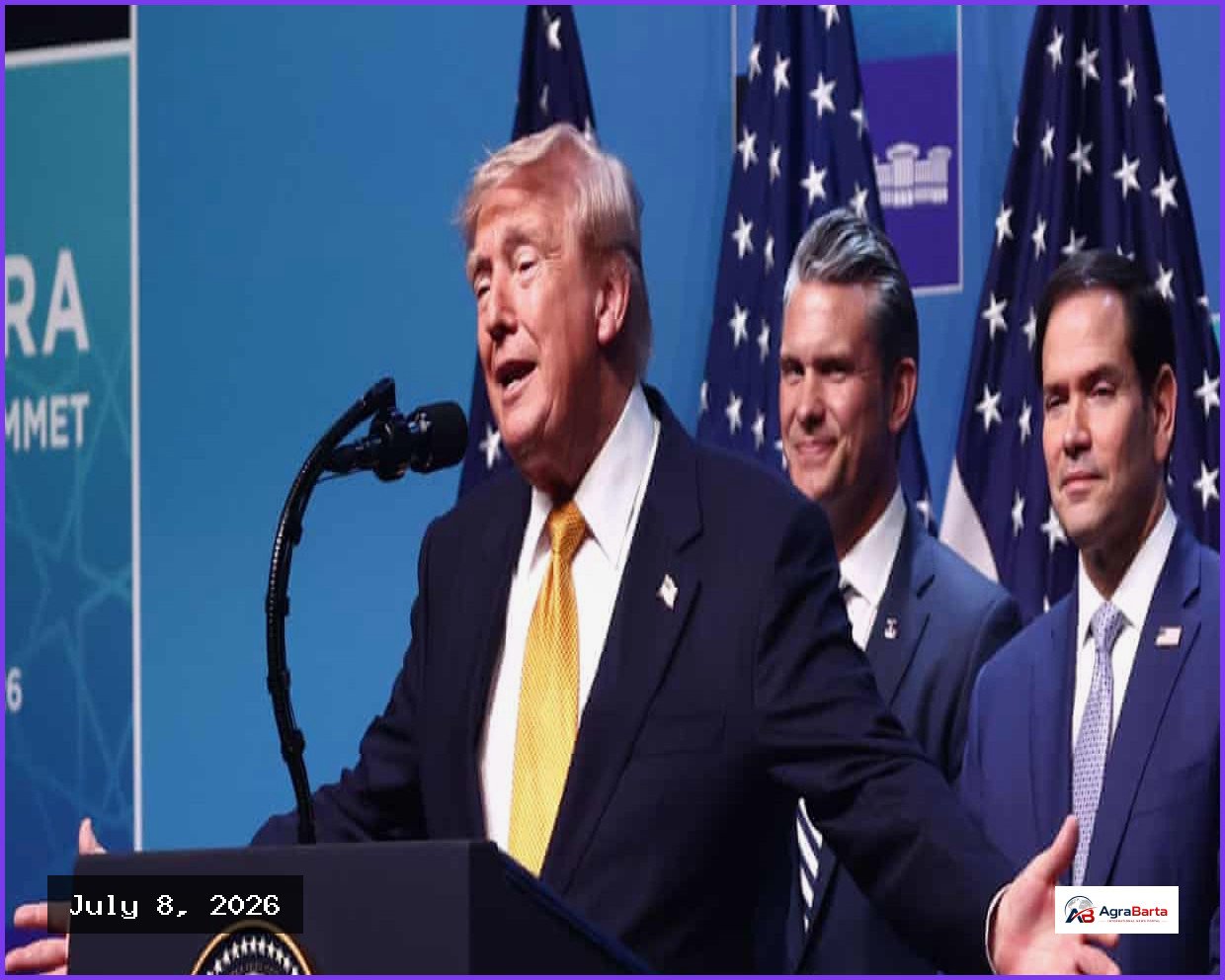
Donald Trump concluded the two-day Nato summit in Ankara with a surprising turn toward reconciliation, declaring a sense of “tremendous love” from Western leaders despite spending much of the gathering lambasting his allies. The U.S. president’s visit was defined by extreme volatility, beginning with harsh public attacks on the Iranian leadership and renewed demands for control of Greenland, before shifting to a more cooperative tone during a private session with 32 Nato leaders.
During a late-morning private meeting, Trump refrained from his earlier criticisms and instead assured his counterparts that the United States intended to remain committed to the alliance. By the end of the summit, he characterized the day as a moment of “unification.” This pivot was welcomed by alliance members who had feared the summit would further destabilize the organization. A final declaration signed by all 32 leaders affirmed an “ironclad commitment” to Article 5, the collective defense clause of the Nato treaty.
The summit was marked by significant tension, particularly after a dinner at the Turkish presidential compound where European leaders reportedly worried about the president’s mood. These concerns appeared justified on Wednesday morning when Trump, alongside Nato Secretary General Mark Rutte, delivered a lengthy monologue airing grievances. He specifically criticized the United Kingdom for initially denying the U.S. use of RAF Fairford for bombing missions against Iranian missile sites, a move that Prime Minister Keir Starmer eventually permitted on a limited basis. Trump also reiterated his frustration with Denmark over the status of Greenland, calling the territory a “big problem” for the U.S.
Defense spending remained a primary point of contention. Trump expressed deep dissatisfaction, stating that the U.S. pays “billions and billions of dollars” too much to protect allies who “are not there for us.” He singled out Spain for its refusal to meet the agreed-upon target of lifting national defense budgets to 3.5% of GDP by 2035, telling Treasury Secretary Scott Bessent that he did not wish to engage in trade with Madrid. Despite these outbursts, more than $50 billion in international arms contracts were announced, including a 12-country agreement to develop deep-strike missiles with ranges between 300km and 2,000km.
The summit concluded with a rambling press conference where Trump praised Turkish President Recep Tayyip Erdoğan and discussed his personal popularity on TikTok, rather than focusing on Nato policy. While the alliance managed to secure a unified declaration, no date was set for the next leaders’ summit in Albania, with officials hinting it may not occur until 2028 amid ongoing anti-government protests in the host country.
Trump concluded by hosting a rambling press conference that barely addressed Nato topics, but where he praised Turkey’s strongman president, Recep Tayyip Erdoğan, talked up the US economy and said he was “No 1 on TikTok”.
The final summit declaration, signed off by Trump and 31 other alliance leaders, affirmed the countries’ “ironclad commitment” to article 5, which says that an attack on one Nato member is an attack on them all.