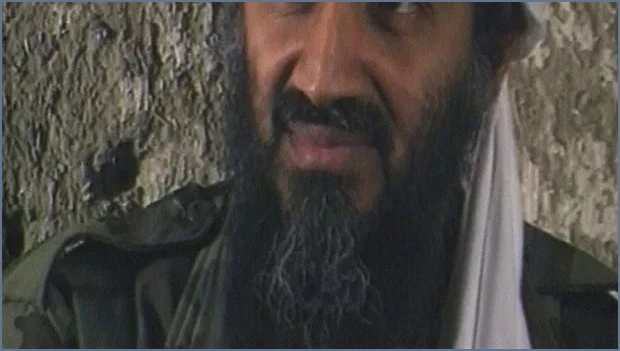
The CIA has declassified 71 intelligence reports compiled in the years and months preceding the September 11, 2001, terrorist attacks, offering a fresh perspective on the information delivered to two U.S. presidents regarding al Qaeda and Osama bin Laden. The release of these documents, which primarily consist of assessments prepared for the President's Daily Brief, coincided with ceremonies commemorating the 25th anniversary of the tragedy.
Among the newly public files are 70 documents written prior to the 2001 attacks, alongside a single report drafted the day after. While the vast majority of these records contain redactions, two of them had previously been disclosed during the investigation conducted by the congressionally mandated 9/11 Commission. The documents illustrate the depth of the CIA's awareness concerning bin Laden and his followers' persistent intent to launch an assault on U.S. soil, with briefings distributed to both President Bill Clinton and President George W. Bush.
"25 years ago, the 9/11 attacks struck a blow to our Nation, but they did not break us. Generations of CIA officers have since dedicated their careers to securing justice for our fallen Americans and ensuring al-Qa'ida would never again harm our country," Ratcliffe said in a statement.
The earliest declassified assessment in the collection is dated February 13, 1998. It revealed that bin Laden and other Islamic extremists had met with individuals, whose identities remain redacted, and agreed to acquire unspecified chemical, biological, and nuclear materials from open markets. Analysts noted at the time that bin Laden possessed legitimate businesses, commercial relationships, and a substantial financial empire that could facilitate his pursuit of such weapons.
During this period, bin Laden and his fighters operated out of Afghanistan under the protection of the Taliban. Several of the declassified files detail the Taliban's motives for sheltering the al Qaeda leader, while also tracking bin Laden's escalating involvement in the regional drug trade. An October 1999 report asserted that bin Laden had made a major investment in 57 narcotics laboratories linked to Taliban leader Mullah Omar, and had recruited specialists "to develop more addictive drugs — possibly ecstasy or methamphetamine." However, the 9/11 Commission later concluded in its final investigation that there was "no reliable evidence that Bin Ladin was involved in or made his money through drug trafficking."
In another report from February 1998, analysts highlighted a fatwa issued by bin Laden and other figures, which called "for all Muslims to attack US interests and civilians worldwide until the US 'retreats' from Saudi Arabia and 'Palestine.'" Later that year, a memo dated September 10, 1998, warned that extremists "may fly an explosive-packed airplane into a US city." The document included a disclaimer stating that available intelligence did "not provide conclusive information on Bin Ladin's intentions for future attacks," but noted that bin Laden had expressed a preference to strike the United States on its own soil in Washington.
The 9/11 Commission's final report later referenced that September 1998 warning, finding that the government's Counterterrorist Center did not subsequently "analyze how an aircraft, hijacked or explosives-laden, might be used as a weapon." The commission concluded that had such an analysis been performed, it "would soon have spotlighted a critical constraint for the terrorists — finding a suicide operative able to fly large jet aircraft."
The newly declassified collection also features the prominent August 2001 memo titled "Bin Ladin Determined To Strike in US," which was initially declassified in 2004 following a request by the 9/11 Commission. This document noted that FBI intelligence pointed to "patterns of suspicious activity in this country consistent with preparations for hijackings or other types of attacks, including recent surveillance of federal buildings in New York."
A former senior intelligence official noted that several other President's Daily Brief entries warning of threats dating as far back as 1996 and earlier were omitted from this release, as were several additional documents from 2001. Even so, the 9/11 Commission's findings emphasized that by the summer of 2001, most of the intelligence community recognized that the volume and severity of threat reports were entirely unprecedented, with many officials desperate to prevent an impending disaster.
One memo included in the release noted that "Mounting evidence indicates Sunni extremists in Afghanistan and the Persian Gulf recently were aware Usama Bin Ladin-directed attacks were imminent." A redacted portion of the document suggested that the existence of a probable operation was widely known among extremists in Afghanistan, leading to speculation that bin Laden had relocated to Kabul to avoid conflict over his activities with the Taliban leadership in Kandahar. The files indicate that bin Laden and the Taliban's Mullah Omar clashed in August 2001 over bin Laden's insistence on launching terrorist attacks, during which "Bin Ladin told Mullah Omar he had operations in progress that would cause great damage to the US."
Furthermore, the reports state that a Kandahar-based Arab remarked on September 10, 2001, that the impending attacks were the culmination of two years of planning and represented "the beginning of the wrath." Redacted intelligence also suggested that the U.S. Capitol and the White House may have been designated as targets. Ultimately, the 9/11 Commission determined that "failures of imagination, policy, capabilities, and management" prevented the government from stopping the disaster, concluding that "the most important failure was one of imagination."