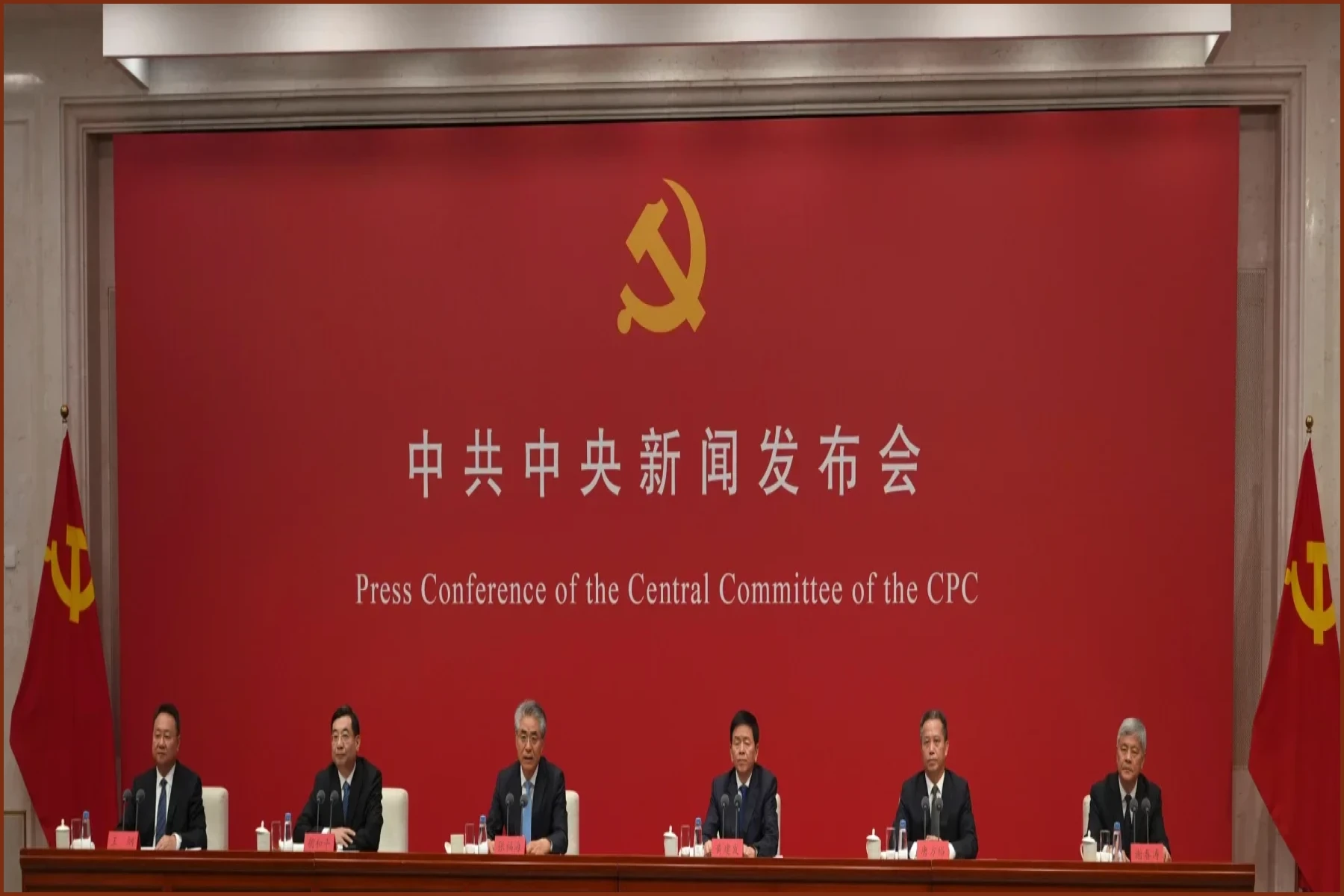
China’s ruling Communist Party has officially concluded its most significant political gathering of the year, the fifth plenum, which wrapped up on Thursday in Beijing. The meeting, which commenced on Monday, resulted in the confirmed expulsion of 33 senior party members as leader Xi Jinping’s expansive anti-corruption campaign continues to intensify across the nation’s governance structures.
Attendance figures from the event underscored the scale of the ongoing internal purge. Out of the 376 full and alternate central committee members originally appointed in 2022, only 279 were present, meaning more than one-quarter of the body was absent. Many of these missing members are believed to be currently under official investigation.
Among those expelled are high-profile figures, including Zhang Youxia, formerly China’s most senior military general, and Liu Jianchao, a prominent diplomat previously considered a top candidate for the role of foreign minister.
Neil Thomas, a senior fellow on Chinese politics at the Asia Society Policy Institute, noted that the ranks of China’s military leadership have been almost completely purged over the past three to four years.
This significant turnover raises questions about how the party will fill these critical positions ahead of the major succession events expected at next year's party congress.
Joseph Torigian, a professor of Chinese studies at American University in Washington D.C., suggested that the meeting serves as a strategic maneuver by Xi to ensure alignment across the party hierarchy. "This is Xi Jinping setting up for the next party congress next year by ensuring that everybody is on the same page as him," Torigian explained.
The plenum’s emphasis on discipline also reflects Xi's concerns regarding the party's longevity and his desire to prevent the kind of degradation and collapse seen in other communist regimes. According to Torigian, Xi is focused on convincing party members to prioritize the institution over their own personal interests.
The broader implications of this internal focus are being watched closely by international observers. Thomas noted that the party’s preoccupation with internal control suggests that Xi is unlikely to take significant risks regarding external flashpoints—such as Taiwan, the South China Sea, or disputes with the U.S.—until he feels more secure in his leadership of the party.
"The focus of this fifth plenum suggests to me that Xi is unlikely to take that risk until he feels more comfortable with the party that he leads," Thomas stated.
During a press conference held on Friday, Zhang Fuhai, Deputy Secretary of the Central Commission for Discipline Inspection, provided an update on the progress of the anti-corruption drive that began in late 2012. He reported that 7.9 million individuals have been punished, a figure that includes more than 960 senior officials.
"The fight against corruption remains serious, complicated, and eradicating the breeding ground for corruption remains a formidable task," Zhang Fuhai told reporters.
The plenum also addressed the issue of bureaucratic inertia. Xi has frequently criticized excessive formalities, which experts interpret as a condemnation of officials who perform performative tasks without achieving substantive results.
While the government plans to implement more rigorous reporting requirements for local officials to ensure discipline, some analysts warn of unintended consequences.
Thomas suggested that the constant threat of the discipline system might cause local officials to become overly cautious, leading to increased inertia and a decrease in necessary policy experimentation.
As the party prepares for its next congress, political observers remain largely in the dark regarding Xi’s long-term succession plans, with full decisions from the plenum expected to be published in the coming days.
Few political watchers believe Xi will pick a successor at the next party congress, and nobody knows exactly what he will do when he is ready to step down, according to Torigian.
Additional research by Jasmine Ling in Beijing.