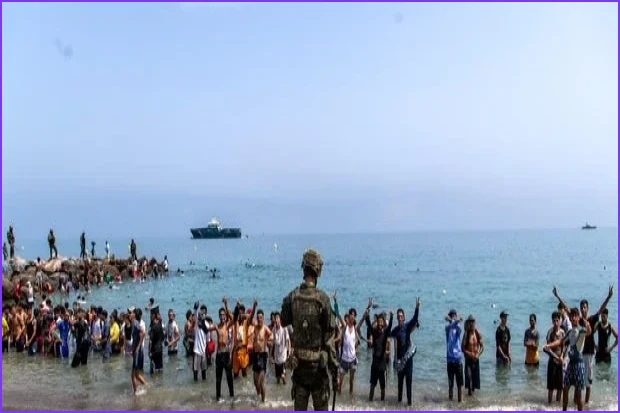
The Spanish enclave of Ceuta is grappling with the aftermath of a massive border surge after up to 60,000 North African migrants crossed into the territory. By Sunday, August 2, 2026, officials confirmed that the majority of those who entered had been returned to Morocco, though deep tensions and unresolved questions remain in the tiny city of 84,000.
As shops in Ceuta reopened and the usual blend of tourists and residents began filling open-air terraces, cafes, and restaurants, Spanish civil guard vessels continued searching nearby waters for bodies. The humanitarian crisis, which has reignited intense debate over immigration across Europe, turned deadly when at least 72 people died. Authorities reported that some victims drowned while others were killed in a stampede as crowds attempted to cross a breakwater barrier.
The unauthorized arrivals, consisting mostly of young men, occurred on Thursday and Friday, temporarily swelling Ceuta's population by more than half. Some of the migrants who were sent back to Morocco reported that the border was effectively left open, claiming that authorities did little to stop thousands of people from crossing. In response to the breach, Spain has announced plans to construct a containment fence.
Local residents remain divided over who is to blame for the crisis. Mohamad Abdelkader Driss, a 44-year-old waiter at a local fried fish restaurant, argued that the migrants themselves should not be held responsible. "It's not the young men's fault," Driss said. "If you open the border, of course everyone comes in, but the young men aren't to blame. The authorities are responsible." He lamented the situation but noted that those who crossed behaved relatively well, adding, "It could have been much worse."
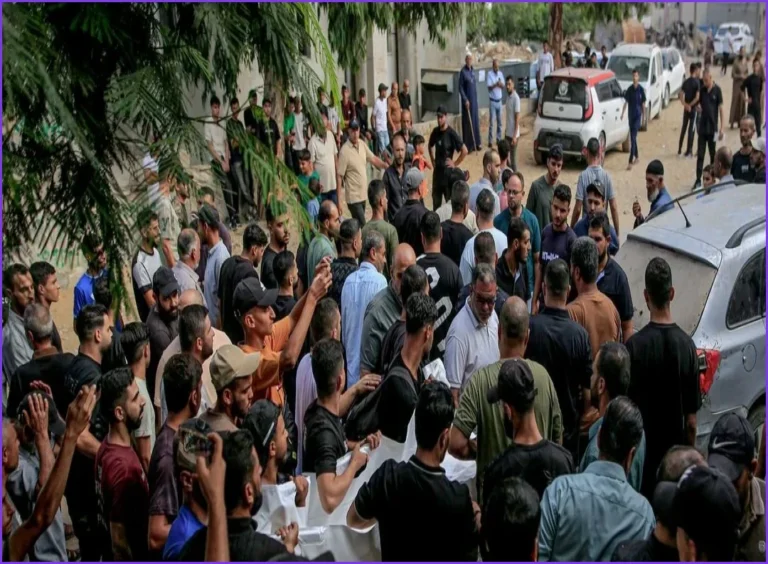
The crisis also drew far-right, anti-immigrant Spanish politicians and right-wing social media influencers to the enclave over the weekend, sparking counterprotests from Ceuta's large Muslim population, many of whom are of Moroccan descent. On Saturday evening, Alvise Pérez, a far-right Spanish politician and member of the European Parliament, called for the immediate expulsion of the migrants. His speech drew an angry crowd of rival protesters, forcing Pérez to take shelter in a local bar as demonstrators banged on the windows before police escorted him away.
Noor Ahmed, a 20-year-old student and resident of Ceuta who joined the counterprotests, condemned the arrival of outside political figures. "They just want to take advantage of the humanitarian crisis Ceuta is currently experiencing," Ahmed said.
On Sunday, Santiago Abascal, the leader of Spain's far-right Vox party, visited Ceuta to criticize the national government, labeling the sudden influx "an invasion." Abascal declared, "The frontiers of Ceuta and Melilla are the walls of our home and homeland, and they are not being protected by a corrupt and traitorous government."
While Ceuta is historically home to Christians, Muslims, Jews, and Hindus living in relative harmony, some residents expressed growing anxiety over the town's internal divisions. Eva Barrientos, a logistics company employee who attended the Saturday evening protest to observe the speakers, questioned the loyalty of some foreign-born residents to Spain. "In Ceuta, we have always lived together. We have four cultures living very well, without any problems," she said. "But the only thing we are realizing now is that there is an enemy within." Barrientos accused some residents of Moroccan descent of holding more loyalty to Morocco than to the country where they live.
From the Vatican, Pope Leo XIV expressed his concern regarding the situation on Sunday, stating he was "following with concern the alarming situation in Ceuta, asking God … that solutions of peace, stability and justice may be found." Migration remains a central focus for the Pope, who recently highlighted the issue during a visit to Spain's Canary Islands, another primary entry point for migrants entering Europe.