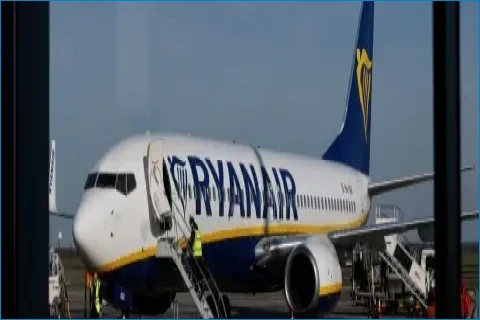
A British woman traveling to Italy to celebrate her husband's 60th birthday was forcibly escorted onto a return flight to the United Kingdom after Europe's automated Entry/Exit System (EES) incorrectly flagged her for exceeding her permitted stay. Paula Pugh, from Norfolk, had landed at Reggio Calabria Airport on a Ryanair flight from London Stansted when Italian border authorities stopped her and alleged she had overstayed her 90-day Schengen allowance.
Details of the incident were disclosed by travel journalist Simon Calder during a podcast. Pugh immediately contested the system's finding upon landing, asserting that she had just arrived from Stansted and had not overstayed her allowance. However, border officials refused to accept her explanations or evaluate evidence showing she was outside the European Union during the period indicated by the system, with Calder clarifying that the computer system had simply made an error.
Following the automated flag, Italian police drove Pugh to the nearest airport with available outgoing flights and walked her onto the aircraft in front of other passengers. Officers handed her passport directly to the flight captain before she was flown back to the UK. Upon her return, Ryanair charged her for the cost of the flight, in accordance with airline terms that require passengers who are denied entry at their destination to cover the expenses of return travel.
According to Calder, the error occurred because Pugh's exit from the EU at the end of a previous trip was never registered in the system. While multiple travelers have reported exit-logging glitches since the introduction of EES, Calder noted that Pugh's case is the only known instance where border officials flatly refused to consider proof that the traveler had left the EU. Inquiries sent to several Italian authorities regarding the incident went unanswered.
Operational issues with the EES have primarily resulted in long airport queues, but several British travelers have experienced miscalculations regarding their 90-day allowance in the Schengen area. Author Jojo Moyes separately told consumer organization Which? that border officers in Marseille accused her of overstaying as she departed her second home in France, because an earlier departure following a trip to Portugal had not been logged.
Under current regulations, citizens of non-EU nations—including the UK, the United States, Canada, and Australia—are permitted to stay in the Schengen zone for up to 90 days within any 180-day window without a visa. Visitors who overstay face potential fines, entry bans, or deportation. EES has at times been suspended when it caused long delays, meaning some entries and exits were never logged. Anyone recorded as entering but not leaving is assumed to have stayed the whole time.
Non-EU citizens residing in Italy are technically exempt from EES checks and are required to show their passport and residence permit (permesso di soggiorno) at staffed border control points instead. However, travelers report that airport personnel are not always aware of these procedures, and experiences have varied widely, as Italy left the implementation of the system up to each individual airport. The European Union has since introduced an online calculator to help travelers verify their remaining days and contest incorrect automated records.