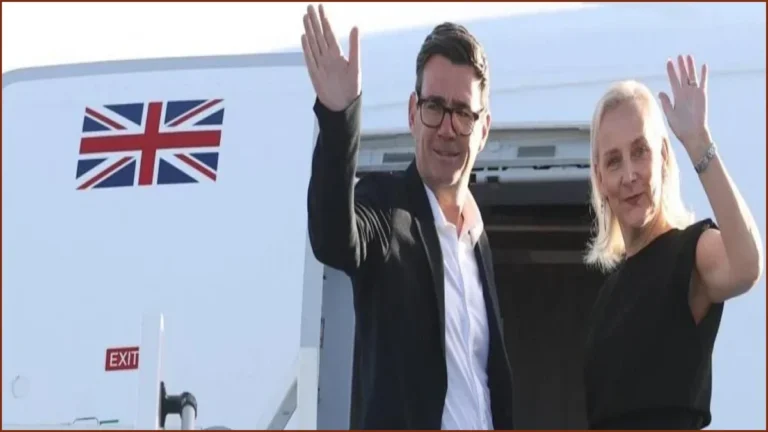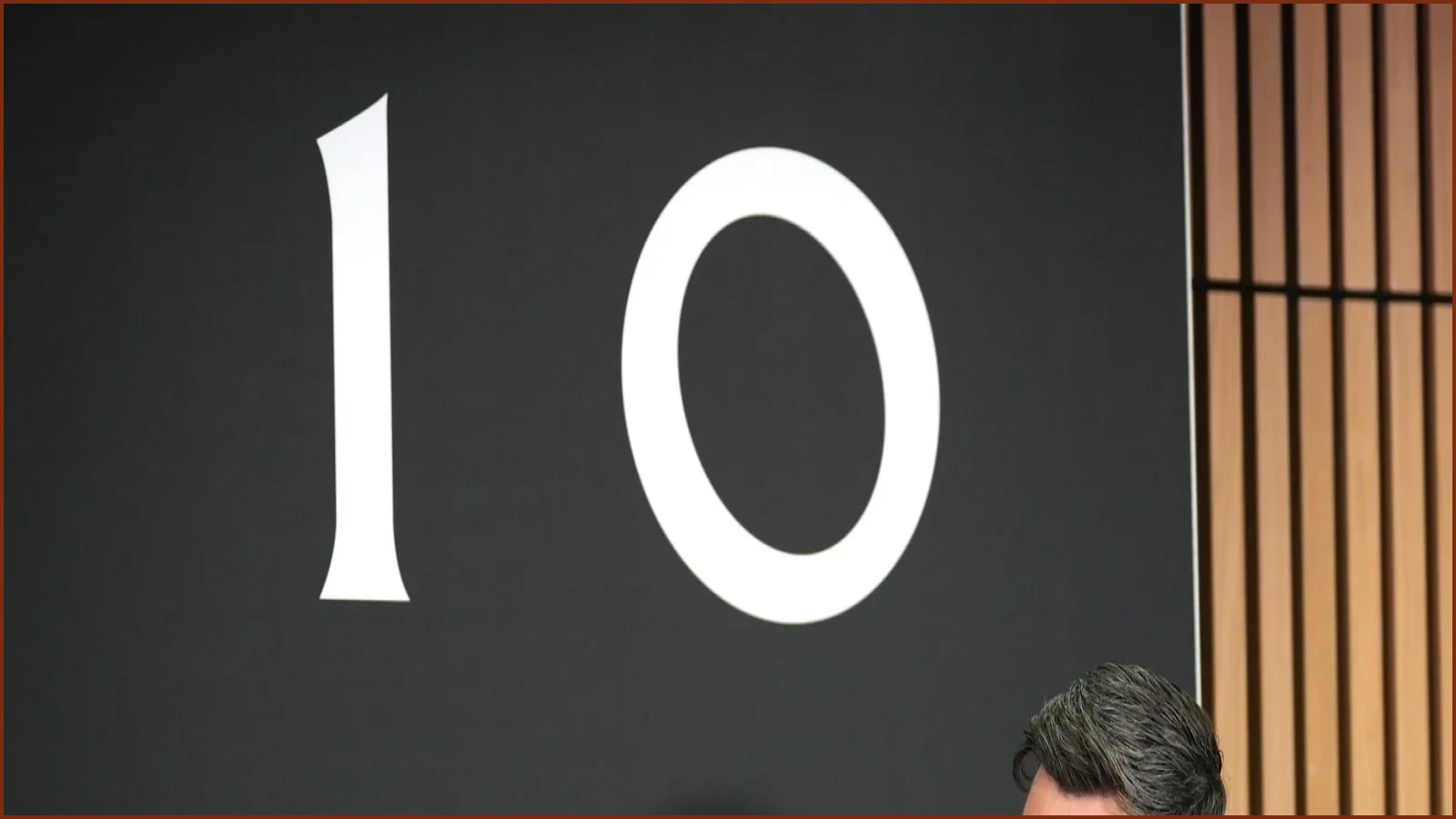
In an effort to decentralize British political power, the country's new Prime Minister, Andy Burnham, has established a secondary governmental headquarters known as "No. 10 North" in Manchester. Located approximately 165 miles (260 kilometers) away from the traditional, centuries-old prime ministerial residence at 10 Downing Street in London, this new hub is designed to shift decision-making power and foster economic growth outside of the capital.
The temporary home of No. 10 North is a modest, modern low-rise office block in Manchester. It stands in stark contrast to the cramped and stuffy 350-year-old townhouse in London, which has long struggled to accommodate a modern government. Currently, the Manchester office shares its premises with a local registry office, a chain pub, and a branch of the government's cyberintelligence agency, GCHQ. However, plans are already underway to construct a brand-new, dedicated headquarters for the office as part of a broader inner-city redevelopment project.
Burnham, who served as the mayor of Greater Manchester for nine years before returning to national politics, plans to work from the Manchester office at least one day a week. He will be supported by a full-time staff of civil servants, policy experts, and political aides. Describing the initiative, Burnham said Friday that it is "not another office" but rather "a fundamental change to the way the country thinks about growth and investment." He envisioned the setup as a "North Pole" designed to balance the "South Pole" of Westminster politics.
By establishing this northern outpost, Burnham hopes to avoid the difficulties that faced his predecessor, Keir Starmer. Starmer stepped down as Labour Party leader and prime minister in July after just two years in office, following a series of policy reversals, political missteps, and a failure to revive the United Kingdom's sluggish economy. Burnham, who earned the nickname "King of the North" during his time as mayor for his fierce advocacy for the region, intends to apply his philosophy of "Manchesterism" on a national scale. This approach combines business-friendly socialism with private investment to fund major infrastructure projects, while simultaneously decentralizing authority so local communities can manage their own transport, housing, job training, and public services.
During Burnham's tenure as mayor, Manchester experienced a dramatic economic boom. Skyscrapers rose over previously vacant lots, service industries expanded, a thousand coffee shops opened, and a municipally run transit network of bright yellow buses and trams was launched. Burnham now aims to use No. 10 North to spread this model to other parts of the country that have suffered from industrial decline, job losses, and the departure of young people.
However, the initiative has met with skepticism. Critics have labeled the new office a political gimmick, and many details—including the exact amount of funding that local mayors will receive—remain unannounced. Rob Ford, a professor of political science at the University of Manchester, noted that the United Kingdom is one of the most highly centralized developed democracies in the world, with money and decision-making power traditionally concentrated in London. While Ford acknowledged that Burnham's early actions show he "means business," he warned that reversing this centralization is a massive undertaking. Furthermore, Ford pointed out that Manchester's recent economic boom has not reached all of its outer districts, leaving some voters discontented—a factor that has boosted the anti-immigration party Reform UK. Ford also noted that Burnham will have to convince other northern cities, such as Leeds, Liverpool, and Sheffield, that No. 10 North represents their interests as well, rather than just favoring Manchester.
Despite the criticism, supporters have welcomed the new office. Rose Marley, the chief executive of Cooperatives UK and a former adviser to Burnham, recalled her positive experience attending a meeting at No. 10 North. She noted that not having to travel to London was refreshing and suggested that Westminster politicians might gain a better understanding of northern transport issues, such as high train fares and poor rail service, when they have to travel north themselves. Marley compared the potential impact of the office to the BBC's decision to move some of its production to Salford in Greater Manchester, which she said allowed diverse voices and alternative ways of thinking to be represented nationally.
Local residents have also expressed optimism. "I think it makes sense," said Sam Turner, a nursing lecturer, because the north is very different to the south, with different house values, land values, and salaries. Meanwhile, Lesley Lebbon, a visitor to Manchester from Newmarket in eastern England, called No. 10 North a promising start. While she hoped to see similar regional offices established in other areas—suggesting "an East and a West No. 10"—she welcomed the symbolic and practical progress the new office represents.
Most Mancunians are proud of their city, and many support the idea of it getting more control over its own affairs.
Still, “I like the idea of what No. 10 North represents,” she said. “I think any progress has got to be better than no progress.”