More than 2,600 villages have been flooded in Assam this year, in a climate disaster made worse by uncontrolled deforestation and mining in the region. As of 11 August, 101 people have lost their lives, a figure officials fear will rise. The scale of the crisis has affected more than 1 million people across 25 districts. By comparison, the death toll was 36 in 2025, while in 2024, when all 35 districts were affected, at least 110 people died.
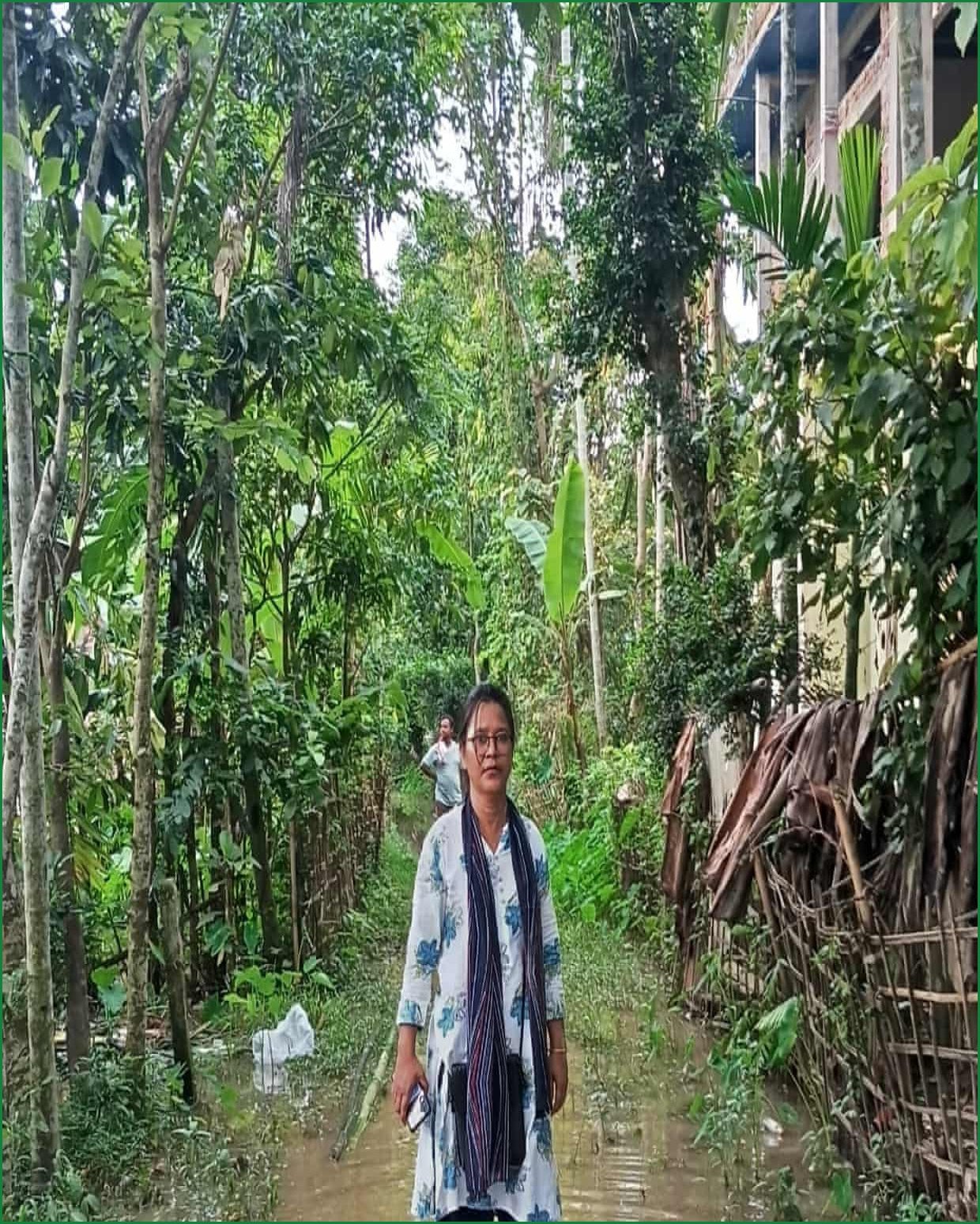
Gitali Phukon, a resident of Gaurisagar, experienced the disaster firsthand. After two days of rain, the Mitong River overflowed, with water gushing into the streets and rising to waist level in less than an hour. As evening approached, flood waters entered most homes in her neighbourhood. The rain resumed, and darkness descended. Standing on her veranda with a candlestick in her hand, Phukon watched as her neighbours moved to their rooftops or the elevated highway to escape the rising water. They waved at each other, signalling they had survived. No one slept that night. “We feared we would all be drowned,” she says. Along with mosquito bites, they had endured a foul smell emanating from the flood waters. The next morning, the situation worsened as groundwater became contaminated, leaving people thirsty and crying for water. Phukon shared her stored water with neighbours, and they survived on biscuits and puffed rice for three days.
The Sivasagar village of Nepalikhuti, located about 60 miles west of Gaurisagar, lies in ruins. The area is covered in thick mud and silt, with drowned cars, dead cows, and broken house walls marking the destruction. At least 10 people from the village of 3,000 have died, and many remain missing. Villagers have reported seeing unidentified dead bodies floating on the Dikhou River. Livestock, the main means of support for residents, has disappeared.
Partha Jyoti Das, a specialist in water and climate hazards with the environmental organisation Aaranyak, states the disaster was inevitable. “It’s a much-abused landscape, turning into a burial ground,” he says. Had it been just flood waters, the damage would have been less, but the rain brought with it debris, mud, silt and soil from the hills of Nagaland. “These areas have seen mining and quarrying, both legal and illegal, for several years. From coal, sand or boulder mining, everything happens in these places. The whole landscape has been changed by large-scale deforestation, encroachment and excavation,” he adds.
Agricultural losses are severe, with 95% of farmland across Sivasagar ruined, according to Himadrijyoti Dutta of the non-profit Krishak Nyas. Mintu Hazarika, a 30-year-old working in Bengaluru, learned that his family’s two-hectare paddy field was destroyed. He now fears for his family’s survival, noting that his brother plans to move to Bengaluru to find work, joining many others from Sivasagar who have already migrated for employment.
While Bitupan Raidongia of the Bharatiya Janata party and district commissioner Mridul Yadav stated that the government is providing food, medicine, and relief camps, the response has faced criticism. Singer Nilotpal Bora went viral for claiming the government response was delayed and that thousands more would have died without the intervention of local charities and individuals. Meanwhile, groups like the One Northeast Motorcycle Club are distributing essentials to those living in tents made of plastic sheets and tarpaulins. Phukon, who was fortunate that the water did not enter her home, has spent the last week providing relief aid to others, noting that everyone she knows has been affected by the floods.