The U.S. Army announced Sunday night its plan to move forward with the detonation of several tons of unstable explosives at a munitions plant in Iowa on Wednesday. The military stated this decision was made "to allow for optimal weather conditions and all mitigation measures to be emplaced."
This planned detonation is set to occur despite an indefinite pause ordered by a federal court. The Army, however, stated in a court filing that it does not need to adhere to the court order, citing public safety risks associated with the possibility of the explosives detonating on their own.
Federal court records filed late Saturday by the Department of the Army indicated plans to utilize an emergency munitions and explosives exclusion to the Environmental Protection Agency's permit. The government argues that a controlled detonation is necessary to protect the public from the more significant threat of an uncontrolled explosion.
The Army's original schedule for two controlled explosions on Friday was first delayed until Monday, then suspended by a federal court on Friday. This suspension followed a lawsuit filed by environmental groups and significant community outcry regarding the potential for toxic lead particles to spread in a dust plume across parts of Iowa and Illinois. The 8th U.S. Circuit Court of Appeals had granted an emergency motion to pause the demolition.
On Friday, the military also stated it was working closely with the Department of Health and Human Services and the EPA to ensure the controlled explosion would be conducted as safely as possible. A statement noted that "Officials have been meticulously planning for this event since March, and all agencies involved are prepared to take the most extreme mitigation measures available to ensure there is no risk to the public and any disruptions are minimized."
In its Saturday filing, the government had warned that the controlled explosion needed to be carried out by Tuesday. This urgency was attributed to an expected drop in temperature below 30 degrees in the coming days, which could cause crystals in the deteriorated lead azide waste to break. The Army did not immediately clarify if changes in the forecast or other factors made the move to Wednesday safer. The court filing emphasized, "A controlled detonation allows the Army to implement measures to minimize the risk to the public, including the risk from the ejection of partial unexploded ordnances that can explode later from the Facility." It added, "The Army intends to act consistent with the terms of the Emergency Permit and its mitigation measures even if not in effect. That includes mitigation measures to minimize the risk of the dispersal of lead dust. In short, a controlled detonation is by far safer than an uncontrolled explosion."
In response to the Army's filing, the Iowa Environmental Council and Sierra Club filed a motion Sunday, seeking to supplement their emergency request to block the planned detonation. Their filing included declarations from three experts and local government officials, which challenge the Army's assessment of the risks associated with delaying the detonation. These declarations also raised concerns about public notice and potential health and environmental impacts.
In a separate statement on Sunday, the Iowa Environmental Council, Sierra Club, and Earthjustice questioned the Army's claims that all alternatives were appropriately considered, asserting that "this emergency is of the Army's own making." Earthjustice Attorney Thien Chau criticized the Army, stating, "The Army seemed more concerned over the weekend with finding a way to sidestep the judicial process than on meeting the public's demands for greater transparency, notice to affected communities, and far stronger protection of people, property, and the environment from serious harm."
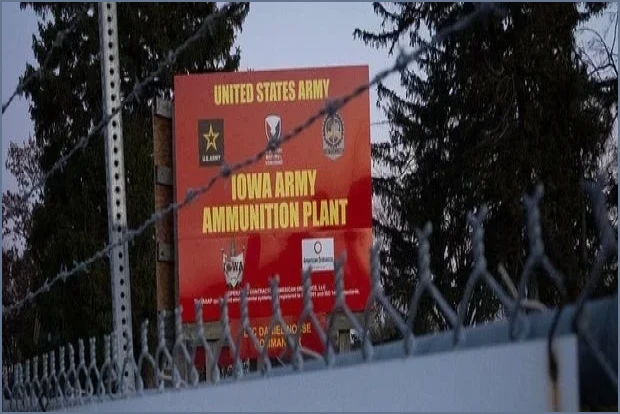
Iowa's new Democratic Senator-elect Josh Turek also issued a statement Sunday, expressing his concern "about the potential health risks resulting from the U.S. Army's planned detonation in Middletown and the lack of clear communication and transparency from the U.S. Army." Turek called for a full investigation into why the stockpile of lead azide, stored at the Iowa Army Ammunition Plant (IAAAP) for decades, was allowed to degrade to a critical state. He also demanded answers on why safer disposal methods were not pursued, the condition of other potentially dangerous materials at IAAAP, and the procedures needed to prevent similar incidents. Furthermore, Turek emphasized that "The public also deserves answers as to why the U.S. Army's communication — both with the public and with Iowa officials — was delayed and inadequate from the beginning."
The Army had initially discovered in March of this year that 68 drums of lead azide at the site had begun "recrystallization." The lead was stored in bunkers at the Iowa Army Ammunition Plant, a facility built in 1941 that produces medium- and large-caliber munitions.