British Prime Minister Keir Starmer announced in June that he was resigning, marking the end of his leadership less than two years after he guided the center-left Labour Party to a commanding victory in the general election. Starmer has committed to an "orderly transition" following a period of several months characterized by rising public frustration regarding the national economy and a perceived lack of effective action in addressing illegal immigration.
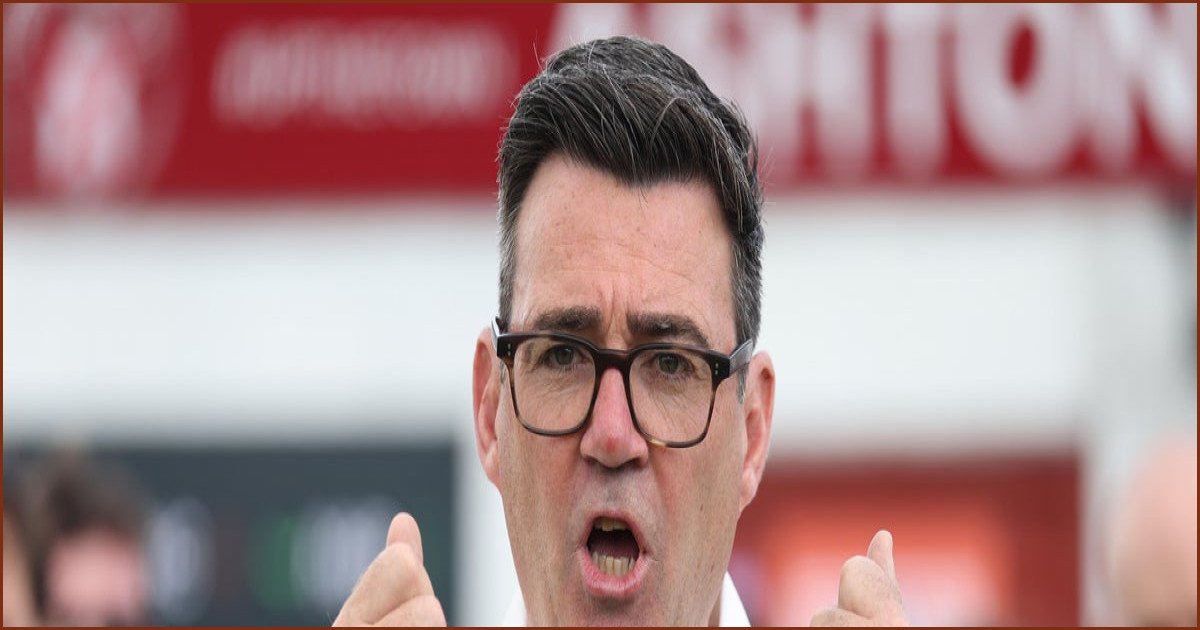
As the political landscape shifts, focus has intensified on the man widely expected to be Starmer's successor: Andy Burnham. Burnham served as the mayor of Manchester, the fifth-largest city in Britain, for approximately a decade. He recently vacated that position to stand in a local by-election in June, where he secured a decisive victory in the Makerfield constituency of Greater Manchester, thereby becoming the local member of Parliament in the House of Commons. While there is no legal requirement for a party leader to be a sitting lawmaker, it has long been the standard practice for British political parties to select their leaders from among elected members of Parliament.
The victory in Makerfield was particularly significant for Labour, as the constituency represents the type of area the party has struggled to maintain in recent years. Makerfield is a predominantly White British, traditionally working-class, post-industrial region that voted heavily in favor of leaving the European Union during the 2016 Brexit referendum. These areas were once considered Labour heartlands, but they have become increasingly contested as voters shift toward right-wing, populist alternatives such as Reform UK.
Led by Nigel Farage, an ally of President Trump, Reform UK has achieved notable gains over the past year, driven by voter anxiety over immigration and a perceived decline in living standards. Burnham’s strong performance in this by-election has provided Labour strategists with hope that the party can successfully reconnect with these voters before the next national elections.
Burnham has spent years cultivating a national profile while positioning himself as a viable alternative to Starmer, often criticizing the Labour leadership during moments of perceived weakness. Despite this, it remains unclear exactly how his leadership would differ from Starmer's on both the national and international stages. A lawmaker from the Conservative Party, Labour's primary rival, recently characterized Burnham as "Keir Starmer with a Northern accent." It is also uncertain whether he would adopt a different strategy in his dealings with President Trump, especially after Starmer found that prioritizing a close relationship with the American leader yielded limited advantages.
Other European leaders have previously found themselves at odds with the White House despite initial ideological alignment.
While Burnham would face immediate pressure to maintain the United Kingdom's most cherished international alliances, he has cautioned against the adoption of American-style politics. During his recent campaign in Makerfield, he warned supporters that politics is becoming increasingly polarized. He stated that the current path, if not carefully managed, leads toward the "poisonous" and polarized political environment seen in the United States, where communities struggle to work together.
Although he often presents himself as an outsider to the London political establishment, Burnham has spent much of his career in the capital, including 16 years as an elected Labour member of Parliament and service as a Cabinet member under former Prime Ministers Tony Blair and Gordon Brown, prior to becoming Manchester's mayor in 2017. He has also made two previous, unsuccessful attempts to secure the leadership of the Labour Party.
As the mayor of Greater Manchester, Burnham built a reputation as a fierce champion of northern England, particularly during the COVID-19 pandemic, when he publicly clashed with the Conservative government of then-Prime Minister Boris Johnson over financial support for his city. This advocacy for regional devolution and civic pride has been dubbed "Manchesterism." Supporters argue that this background makes him a more authentic voice for post-industrial Britain than the technocratic, rigid approach associated with Starmer, a former government lawyer. Conversely, critics argue that Burnham has failed to clearly articulate his stance on several defining issues.
As speculation about his return to London grew, he appeared to shift his positions on immigration and the U.K.'s post-Brexit relationship with Europe. While he previously criticized Starmer's tougher immigration policies, he later suggested he would go further by reducing legal migration and expanding detention capacity. He also previously supported Britain eventually rejoining the European Union, a position from which he has since distanced himself.
The policy direction Burnham might take remains unclear, and he may be hesitant to implement dramatic changes given that he would be taking over without a fresh mandate from a national election. Starmer was the one who led the party to a resounding 2024 victory, and abandoning those policies could leave Burnham vulnerable to accusations of being undemocratic. Nigel Farage was quick to capitalize on this, demanding a new general election within minutes of Starmer's resignation announcement.
Farage argued that it is "ridiculous" to assume Burnham has a meaningful mandate to lead the country based solely on a single by-election. Under the British system, citizens do not directly elect their prime minister; they elect local members of Parliament, and the leader of the party with a majority in the House of Commons typically becomes the prime minister.
A governing party can replace its leader without a general election if a majority of its lawmakers decide the incumbent is an electoral liability. When Burnham enters Number 10 Downing Street, he will be the seventh person to do so in a decade. His supporters believe his strong standing in northern heartlands and his fresh profile could help the party avoid electoral disaster in the next national election, which must be called by 2027.