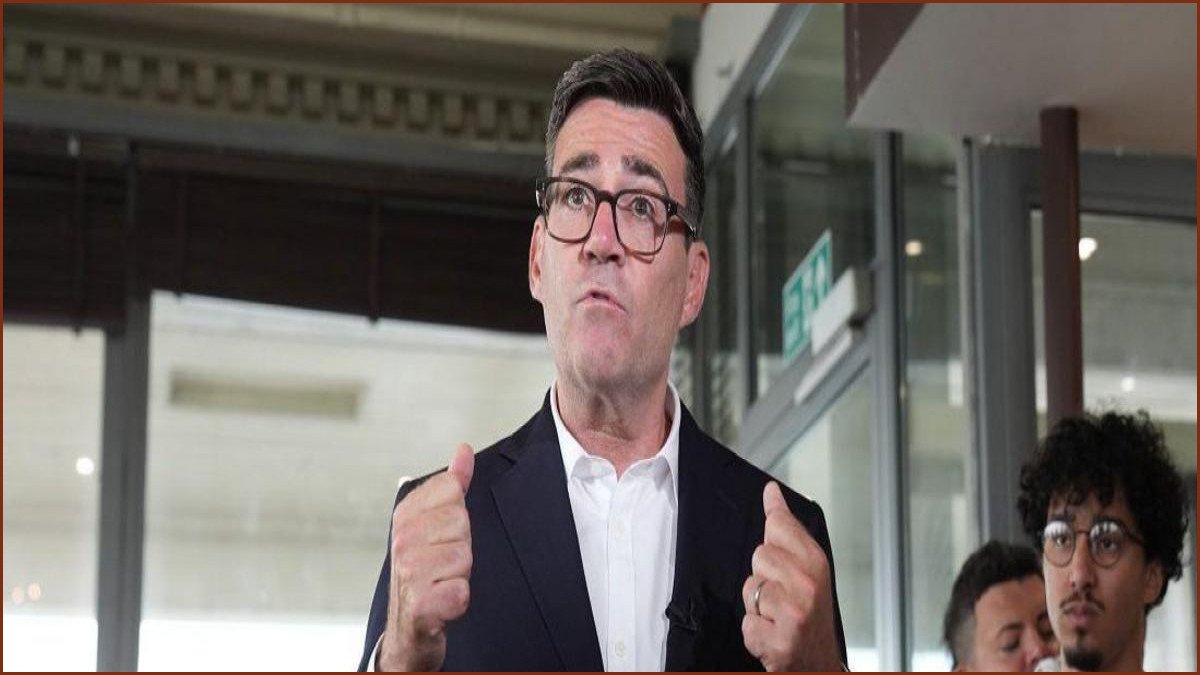
For Andy Burnham, this weekend marks a pivotal moment in a political career that has long been defined by his ambition to lead both his party and the country. Supporters close to the incoming leader have noted that while his path to Downing Street was a slow, sixteen-year journey, the final stages have unfolded with a sudden, intense speed. Burnham first publicly signaled his intent to lead in 2010 following Labour's general election defeat, and he contested the leadership again in 2015. On both occasions, he was unsuccessful, losing to Ed Miliband in 2015 and Jeremy Corbyn in 2017 and 2019. Now, in 2026, he is set to take the helm.
The transition has been remarkably swift. As recently as January, Burnham was barred from standing as a parliamentary candidate by the outgoing Prime Minister, Sir Keir Starmer. However, with Sir Keir now preparing to vacate Downing Street—removal vans have already been spotted, and he is expected to depart with his family on Monday morning—the leadership change has proceeded without a formal contest. Because no one challenged Sir Keir for the leadership and no one stood against Burnham to replace him, the process was completed much faster than some in Team Burnham had anticipated, leading to a sense of being rushed as they finalize their preparations.
In recent days, Burnham and his team have been engaged in access talks with the civil service to coordinate plans for the new government. These discussions include scheduling a series of early events and announcements intended to help the new administration hit the ground running. Burnham has also begun receiving national security briefings as the handover of power accelerates. When asked about the composition of his new cabinet, Burnham stated that he has not yet made final decisions regarding his top team, though he clarified that he is currently in the process of finalizing those appointments over the weekend. This includes the high-profile selection of a new chancellor and the distribution of 149 ministerial posts currently held by 122 people.
The process of forming a government is a complex task of organizational jenga, requiring a prime minister to balance considerations of politics, gender, geography, and experience. While some serving cabinet ministers have been kept in the dark, those hoping to remain in their roles have been privately advocating for stability and continuity. Others have already accepted that their time in government is coming to an end. Despite the uncertainty, there is a palpable shift within the Labour Party, which appears to have regained a sense of optimism. Supporters and MPs alike are hopeful that this leadership reboot will allow the party to become competitive again, with one MP describing the change as a necessary "hydration break" in a nod to the current political climate.
Burnham has set high expectations, claiming he will personify the most significant change in British politics in 40 years. His stated enthusiasm for tackling difficult issues, such as social care in England, appears genuine. However, he will face immediate challenges at home and abroad upon taking office on Monday. Observers are now questioning whether the "Brand Burnham" approach—his trademark blokeish charm—will prove resilient when faced with the harsh realities of governing. As the fifth prime minister in four years, Burnham must also navigate the constraints of the party's two-year-old manifesto while attempting to satisfy an impatient and expectant electorate.
Later, when asked if this really was the case, or whether in some instances he did know but would wait until next week to make announcements, he said he was "finalising those decisions."
This is the weekend for that finalising. Yes, there is the headline-generating question of who will be chancellor but there are plenty more jobs to sort too.