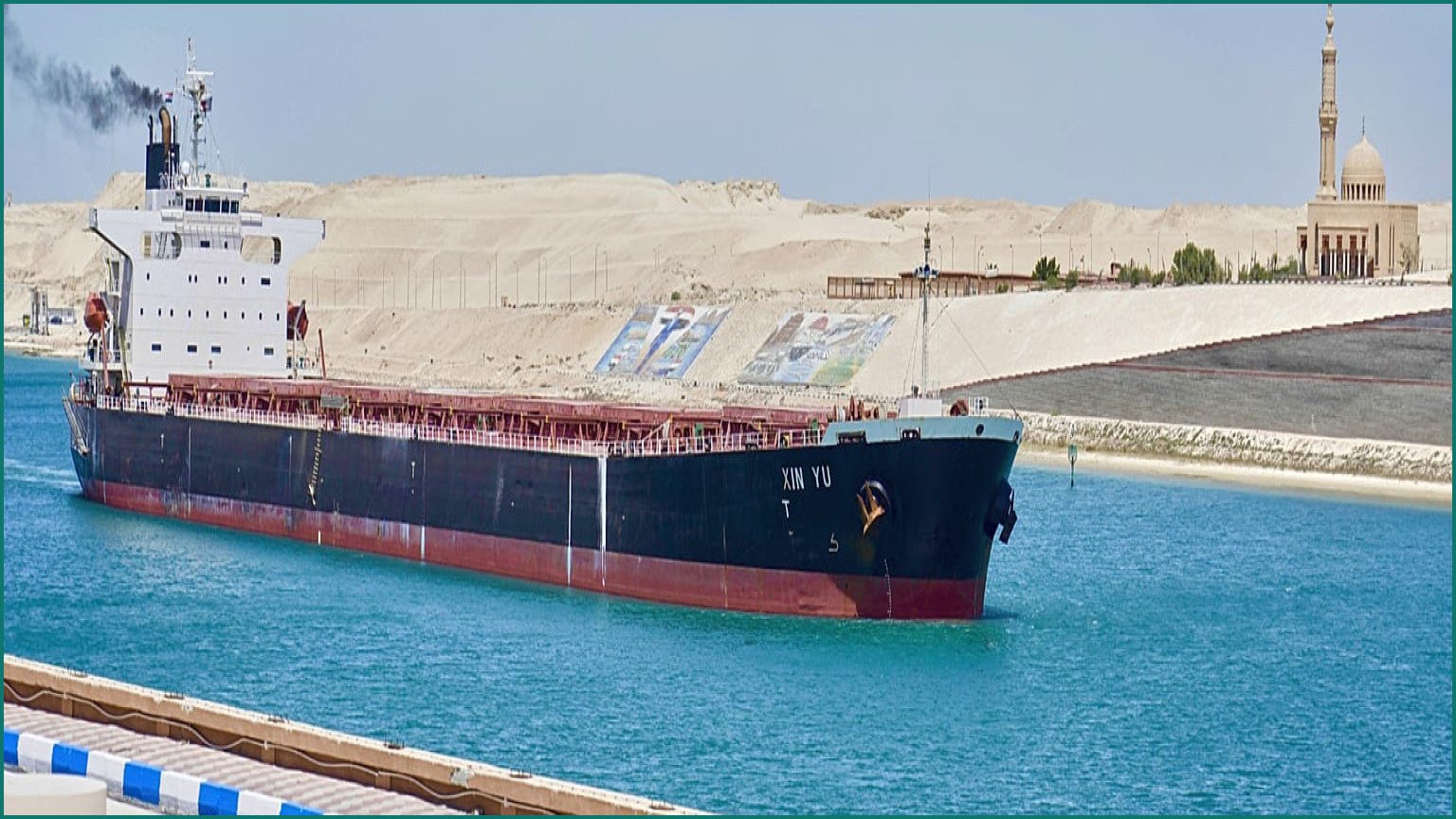
Shipping companies Maersk and Hapag-Lloyd have resumed a major Asia–Europe container service through the Suez Canal, representing a incremental shift in the industry's return to the route. The AE19 service, which is operated jointly under the carriers' Gemini Cooperation, provides connections between Asia, the Mediterranean, Saudi Arabia, and Europe. Previously, the service had been diverted around the Cape of Good Hope.
The companies announced that the change took effect immediately, starting with the westbound voyage of the Berlin Maersk. According to Hapag-Lloyd, this adjustment is expected to reduce transit times by approximately four weeks compared to the longer journey around Africa. Maersk stated that the decision followed a thorough assessment of current security conditions in the Red Sea. Hapag-Lloyd emphasized that this is a targeted adjustment for a single selected service rather than a broader, network-wide return to the canal.
Hapag-Lloyd further noted that future routing decisions will remain dependent on security assessments, operational viability, and the potential impact on customers. Maersk confirmed that the AE19 is one of four services it has transitioned from the Cape of Good Hope to the Suez route since early July, joining the AE15, MECL, and WAF6 services. Despite this, Maersk continues to route nine other eligible services around the Cape of Good Hope and declined to comment on potential future changes.
Industry analysts maintain that this limited return should not be viewed as a general resumption of Suez Canal traffic. Simon Heaney, senior manager for container research at maritime consultancy Drewry, stated that the recovery of Suez traffic is intrinsically linked to the ongoing crisis in the Strait of Hormuz and the broader Middle East conflict. He noted that until these issues are resolved, a significant return of Asia-to-Europe loops via the canal is unlikely.
Heaney suggested that even if security improves, a phased return is more probable, likely beginning with lower-value cargo routes. Carriers require confidence that regional hostilities will not escalate before committing high-value shipments to the area. Furthermore, there are commercial considerations at play. Sailing around Africa requires more vessels due to longer transit times, and a mass return to the Suez could lead to an oversupply of capacity just as carriers are receiving new ship deliveries. Heaney warned that if rotations are shortened en masse, shipping rates could decline dramatically.
The Suez Canal remains the shortest maritime link between Asia and Europe. The ongoing diversions have caused increased fuel costs and longer transit times, while also impacting Egypt's foreign currency revenue. The Suez Canal Authority continues to encourage carriers to return, with Chairman Admiral Osama Rabiee noting in June that operational savings are helping attract major vessels back. During that period, the authority reported that CMA CGM vessels completed 104 journeys through the canal between January and May, totaling 12.5 million tonnes.
He made the comments as the CMA CGM Vendôme, which has capacity for 24,000 twenty-foot containers, passed through Suez on a service between Asia and north-western Europe.
The voyage marked the first southbound Suez transit by the FAL 3 service since January. According to the authority, vessels operated by France’s CMA CGM made 104 journeys through the canal between January and May, with a total tonnage of 12.5 million tonnes.