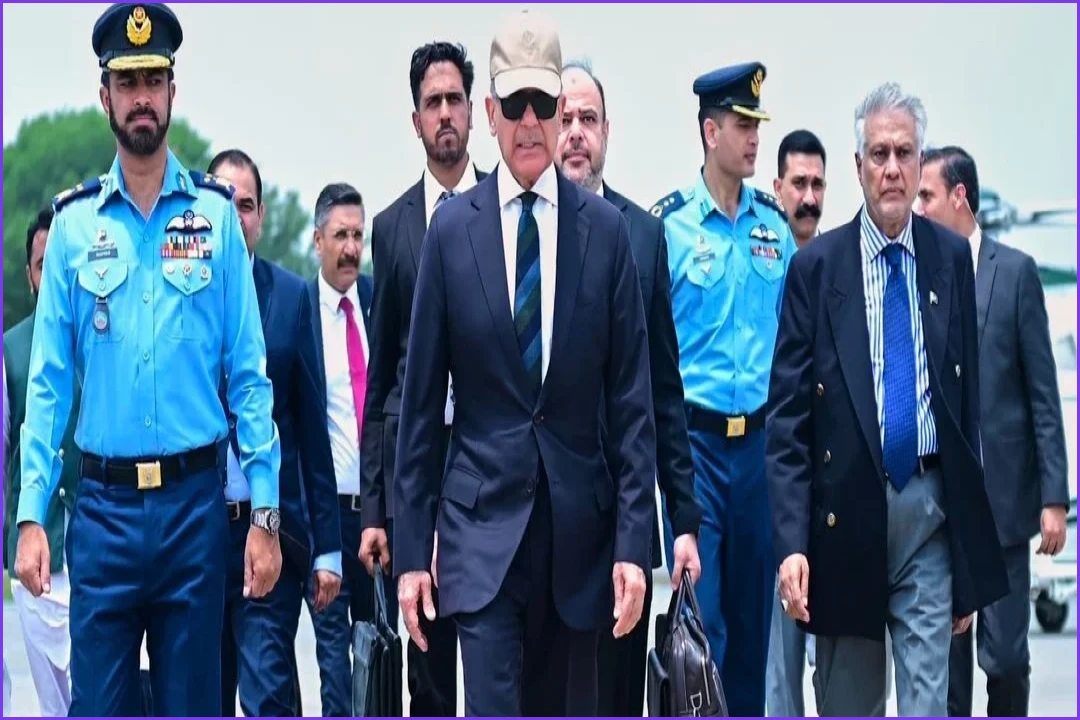
Pakistan Prime Minister Shehbaz Sharif has issued a stern warning to India, declaring that every drop of Indus water is a "red line" for Pakistan. Speaking at a ceremony in Islamabad on Thursday to inaugurate the Yadgar-i-Fatah monument on the eve of the country's 80th Independence Day, Sharif emphasized that while Islamabad remains committed to peace, it will respond with force to any threat against its sovereignty or defense. He stated that Pakistan's desire for peace should not be misinterpreted as a sign of weakness, asserting that the nation remains resolute with dignity and determination.
Sharif warned that any challenge to Pakistan's security would trigger a response even stronger than the military confrontation that occurred in May 2025. He specifically criticized India for the unilateral suspension of the Indus Waters Treaty (IWT), claiming New Delhi took this action following its "defeat" in the May 2025 conflict. He warned that if India does not stay on the right track, Pakistan will provide a direct response. The Permanent Court of Arbitration in The Hague noted in June 2025 that the long-standing water-sharing pact lacks any provision for unilateral suspension and confirmed its jurisdiction over such disputes.
The Indus Waters Treaty divides the six rivers of the Indus Basin between the two nations. India was assigned the three eastern rivers—the Sutlej, Beas, and Ravi—while Pakistan was granted control over the three western rivers: the Indus, Jhelum, and Chenab. Pakistan has expressed significant concern that India's planned hydropower dams will reduce water flows, potentially impacting 80 percent of its irrigated agriculture. The treaty has been under immense strain since India suspended its participation following the killing of 26 tourists, mostly Hindu, in India-administered Kashmir in April 2025. New Delhi blamed Pakistan for the attack without providing evidence, a charge Islamabad denied while calling for an independent investigation.
The incident led to a sharp deterioration in relations, with both countries downgrading diplomatic and trade ties, closing their main land border, and revoking visas. Following Indian attacks, Pakistan retaliated by targeting military bases and downing several aircraft in May 2025 before a ceasefire was brokered by US President Donald Trump. Although India initially denied any aircraft or personnel losses, it later admitted to the death of at least six soldiers. Estimates regarding the air conflict vary; the US, which mediated the truce, believes approximately 11 aircraft were shot down, while Pakistan claims it downed seven or eight Indian aircraft, including Rafale fighter jets. While India has stated the US played no role in the truce, Pakistan has credited President Trump’s efforts and nominated him for the Nobel Peace Prize.
During his address, Prime Minister Sharif also celebrated Pakistan's independence and emphasized the importance of unity and development across all provinces, including Gilgit-Baltistan and Azad Jammu and Kashmir. Furthermore, he reaffirmed that Pakistan will continue to advocate for the Palestinian people, supporting their right to self-determination in the face of ongoing oppression.