In an unusually sharp rebuke from the administration of U.S. President Donald Trump, U.S. Ambassador Mike Huckabee has referred to Israeli settlers as "terrorists" following a five-night siege of Palestinian homes in the occupied West Bank. The strongly worded condemnation targets a group American officials typically reserve the term for—Palestinian militants—and highlights growing international friction over settler violence.
The diplomatic outcry was triggered by events in the village of Qusra, located south of Nablus. For five consecutive nights, Israeli settlers surrounded three Palestinian homes on the outskirts of the town, trapping families inside as their essential supplies dwindled. Qusai Abu Rida was blockaded inside one of the homes with his teenage son. During the standoff, settlers cut off the water and electricity, forcing the occupants to drink well water while dozens of settlers set up tents directly outside.
The home is owned by Abu Rida's brother, Loui Ridi, a Palestinian American living in Ohio. Ridi, who spells his last name differently, watched the entire siege unfold in real-time through security cameras and maintained phone contact with his family for updates. Despite multiple interventions by Israeli troops, Ridi noted that the settlers repeatedly returned. "It’s a cycle," Ridi said. "They need to be prevented from the entire area, not just removed and moved 100 feet away so when the (Israeli military) leaves, they come back." On Thursday, Ridi reported that although water and power lines had been briefly reconnected, settlers cut them once again.
Ambassador Huckabee, historically a staunch supporter of Israeli settlements, spoke out forcefully against the siege. "Actions by those who carried out this horrific act of terror meant to intimidate and harass this family are disgusting," Huckabee stated, adding that the U.S. Embassy has been coordinating directly with the Israeli military and police to address the situation.
The escalation comes at a sensitive time for Israeli Prime Minister Benjamin Netanyahu, who faces a challenging reelection campaign in October. Netanyahu is working to mobilize ultranationalist voters while simultaneously trying to protect Israel's relationship with the United States, its most critical ally. While President Trump signaled broad acceptance of settlements during his first term and lifted Biden-administration sanctions on violent settlers at the start of his second term, this latest incident has drawn a direct line of criticism from Washington.
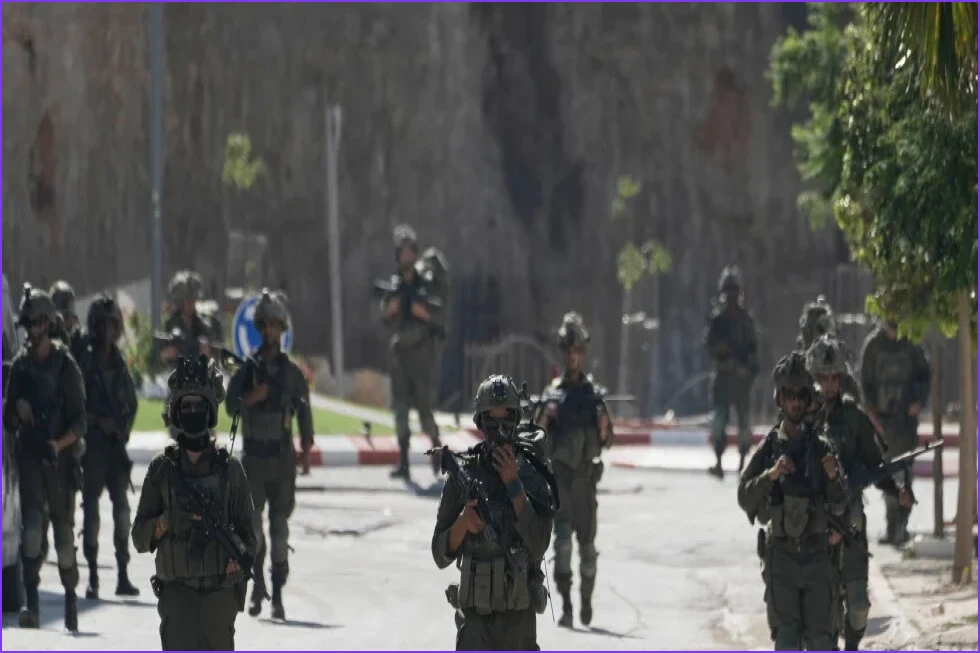
The confrontation began on Sunday when dozens of settlers blocked doors and prevented residents from leaving their homes. By Tuesday, the Israeli military condemned the blockade as "illegal, reprehensible, and unacceptable," declaring Qusra a closed military zone. However, the declaration did not stop the unrest. On Wednesday, video footage captured by local residents showed dozens of settlers returning to the area, attempting to block roads with rocks, and clashing with Israeli soldiers. The military stated that on Wednesday its forces checked on the families and verified they had basic supplies like food and water.
By Thursday, the military announced that troops had dismantled "two illegal outposts" in Qusra and a neighboring village, detaining one Israeli citizen. Additional soldiers were deployed to conduct patrols and defensive missions. Qusra Mayor Abdel Azim Wadi reported that Israeli forces evacuated more than 12 homes in the village to establish military positions, though he noted that settlers remained in other parts of the community. According to Abu Rida, soldiers gave residents of the blockaded homes just 30 minutes to evacuate and gather in a single house. While the military asserted that soldiers were instructed to let families stay in their homes and avoid operating inside them, Abu Rida stated that the displaced families had not yet returned, and it remains unclear when they will be able to safely access basic supplies or return to their properties.
The confrontation in Qusra is part of a broader, intensifying wave of settlement activity under Netanyahu’s government, which is the most ultranationalist and religious in Israel’s history. The governing coalition opposes the creation of a Palestinian state and views the West Bank as the biblical and historical homeland of the Jewish people. On Thursday, members of Netanyahu’s Cabinet joined in celebrating the rebuilding of a settlement elsewhere in the West Bank that had been dismantled in 2005. At the ceremony, Defense Minister Israel Katz declared, "The era of withdrawals and expulsions has ended. The era of construction and Zionism begins."
According to the United Nations humanitarian office, Qusra has experienced more settler attacks in 2026 than any other community in the West Bank. In March, an off-duty Israeli reservist shot and killed a 25-year-old resident, and eight other villagers have been wounded in various attacks this year. Tensions escalated further last month following violence in a nearby northern West Bank village that left two Israelis and four Palestinians dead. In the aftermath of that clash, a mosque in Qusra was set on fire, and the Hebrew word for "revenge" was spray-painted on its wall.
Data from the Palestinian Authority’s Health Ministry indicates that 87 Palestinians have been killed by Israeli settlers and soldiers this year. While Israeli authorities claim some of those killed were involved in terrorism—a term Israel defines broadly to include militant attacks and rock-throwing—Palestinian officials do not distinguish between civilians and militants in their casualty counts. Palestinian officials have documented 1,476 settler attacks in 2026, which include multiple instances of settlers seizing Palestinian homes and land.
While the Israeli military maintains that it works to enforce law and order across the territory, and some Cabinet ministers have blamed the violence on a small faction of young extremists, local leaders warn of a breaking point. Around 2.8 million Palestinians live under Israeli military rule in the West Bank, where the Palestinian Authority holds limited autonomy in major population centers, while more than 560,000 Israeli settlers live as citizens. With no peace negotiations having occurred in over a decade, Mayor Wadi warned, "This is not a life that can continue this way. Too much pressure eventually causes an explosion."