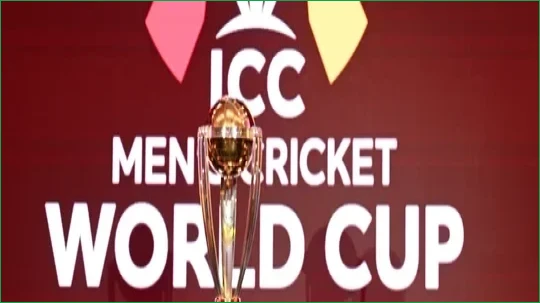
The 2027 Cricket World Cup, set to be co-hosted by South Africa, Zimbabwe, and Namibia in October and November next year, will serve as a significant barometer for the impact of the T20 revolution on cricket in Africa. This marks the second time the tournament will be held on the continent since the 2003 edition.
The first officially recognized T20 matches were played nearly three months after Australia defeated India in the 2003 men's World Cup final at the Wanderers. At that time, ten county teams, including those from the Oval, Worcester, Taunton, Southampton, and Chester-le-Street, began competing in a tournament then known as the Twenty20 Cup, a name that now sounds dated.
Ricky Ponting's unbeaten 140 guided Australia to a 125-run victory in the 2003 final. Cricket was still about 14 months away from its first T20 International (T20I), a women's match between England and New Zealand in August 2004. Men's T20Is followed in February 2005 when New Zealand played Australia. The first Indian Premier League (IPL) match, featuring Praveen Kumar for the Bangalore Royal Challengers against Sourav Ganguly's Kolkata Knight Riders, took place at the Chinnaswamy stadium on April 18, 2008, almost five years after the initial county T20s.
South African fast bowler Kagiso Rabada, who was eight years old during the 2003 World Cup, has grown into a prominent player amidst cricket's biggest boom. Reflecting on the changes, Rabada stated, “There’s a wider audience; that’s the most obvious factor. And a bigger variety of players. People of different ethnicities are playing and supporting the game. There’s more money in the game and more teams.”
Hashim Amla, 11 years older than Rabada, had played numerous first-class and List A games but no T20s when the 2003 World Cup concluded. He observed, “The game has evolved so much. It’s been speeded up.” While 33 centuries have been scored in 68 men's ODIs played this year before August 13, only 10 of those matches saw strike rates higher than Ponting's 115.70 in 2003. In contrast, the entire 2003 calendar year saw 58 centuries from 147 ODIs.
Amla, who remains the fastest batter to reach 3,000, 4,000, 6,000, and 7,000 ODI runs, expressed optimism for South Africa's chances in the 2027 tournament, especially with it being held on home soil. South Africa has not won any of the World Cups Amla played in, nor any of their 10 T20 World Cups. "The Test team are the champions, they’ve got close to winning the T20 World Cup and they’re almost there in the ODI World Cup," Amla said. "Hopefully having the World Cup at home is their moment. It could be our prime time to win it. Imagine, after all the disappointments of previous World Cups, winning it at home. That would be a massive boost for cricket and for the country in general."
Rabada also expressed a desire for fans to enjoy the experience and explore beyond Cape Town. The 2027 event evokes memories of historical moments in African cricket, such as Namibia's inaugural World Cup match against Zimbabwe in Harare on February 10, 2003, and the protest by Andy Flower and Henry Olonga wearing black armbands to "mourn the death of democracy in our beloved" country on the same day.
The 2027 tournament will ultimately gauge how far T20, alongside newer formats like T10 and The Hundred, has pushed cricket's boundaries in Africa since the continent last hosted the men's World Cup in 2003.