The People’s Liberation Army (PLA) is currently undergoing a significant reconstruction of its high command, a process marked by leadership disruption and ongoing anti-corruption purges. Recent observations indicate that officers from the PLA Air Force (PLAAF) are increasingly securing senior roles, sparking discussions about the changing power dynamics within the military hierarchy.
Currently, the PLAAF is the second-best-represented service within the Central Military Commission (CMC), with its officers overseeing five of the commission's departments. In comparison, the Army leads seven departments. Furthermore, PLAAF officers command two of the five theater commands: the Eastern and Central Theater Commands. The leadership landscape remains more complex in other areas; while an Army lieutenant general leads the Northern Theater Command and a Navy vice admiral heads the Southern Theater Command, the Western Theater Command is currently in a state of uncertainty. Its commander, an Army general, has been absent for several months, with his PLAAF deputy reportedly assuming some of his duties.
This upward trend for the PLAAF suggests that the service is likely to maintain a stronger-than-usual presence on the next CMC, which is slated to be confirmed at the 21st Party Congress in 2027. Historically, PLAAF representation on the CMC was quite limited. During the Xi Jinping era, only two PLAAF officers served as CMC members—Commander Ma Xiaotian (2012–2017) and Vice Chairman Xu Qiliang (2012–2022)—with only one, Air Force General Xu Xueqiang, serving as a department director from 2022 to 2026.
Interestingly, this historical lack of representation may have shielded the PLAAF from the worst of the recent military purges. Between 2013 and 2026, only ten documented cases of senior PLAAF officers were caught in the purges, including the recent departures of Xu Xueqiang and the 14th Political Commissar, Guo Puxiao. This relative stability has provided President Xi Jinping with a reliable pool of candidates to revitalize the PLA’s leadership during a period of global tension, as these officers have demonstrated an ability to withstand intense scrutiny from the Discipline Inspection Commission.
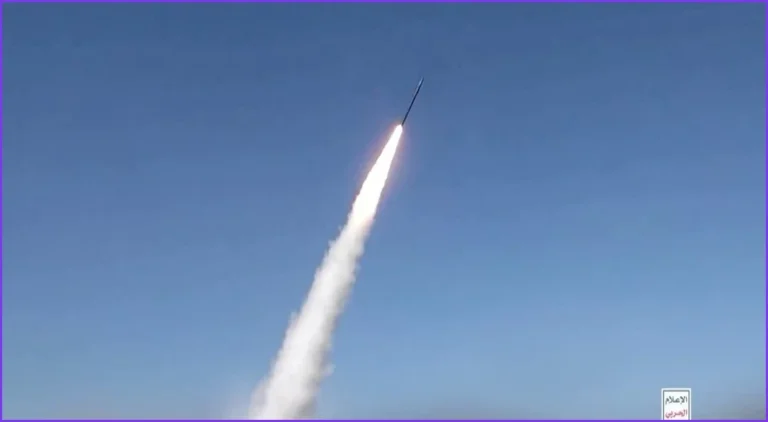
The ascent of PLAAF leadership could significantly influence future military development. These officers are expected to advocate for air power, potentially prioritizing investments in air defense systems, unmanned aerial vehicles, counter-drone technologies, munitions production, and air base security. Such a shift in focus is underscored by the recent revelation of the air-launched, nuclear-capable JL-1 missile on the H-6N bomber. However, this shift may create friction with the traditionally dominant Army, which makes up nearly half of the PLA’s personnel. Xi Jinping will likely need to exercise his personal authority to manage these tensions and foster greater jointness between the services.
Despite their current rise, the future of these PLAAF officers remains uncertain. The history of the Xi era suggests that as officers climb higher in the chain of command, they face increased scrutiny and potential instability. There is no guarantee that the PLAAF will remain immune to future purges, and even if a period of unity follows the 21st Party Congress, systemic mistrust could once again disrupt the military's operational capabilities.
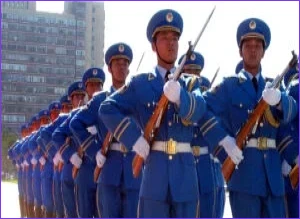
Chinese airmen parade during a full honors arrival ceremony at the Ministry of National Defense headquarters in Beijing, China, July 12, 2000.
You have reached the limit of 2 free articles this month.