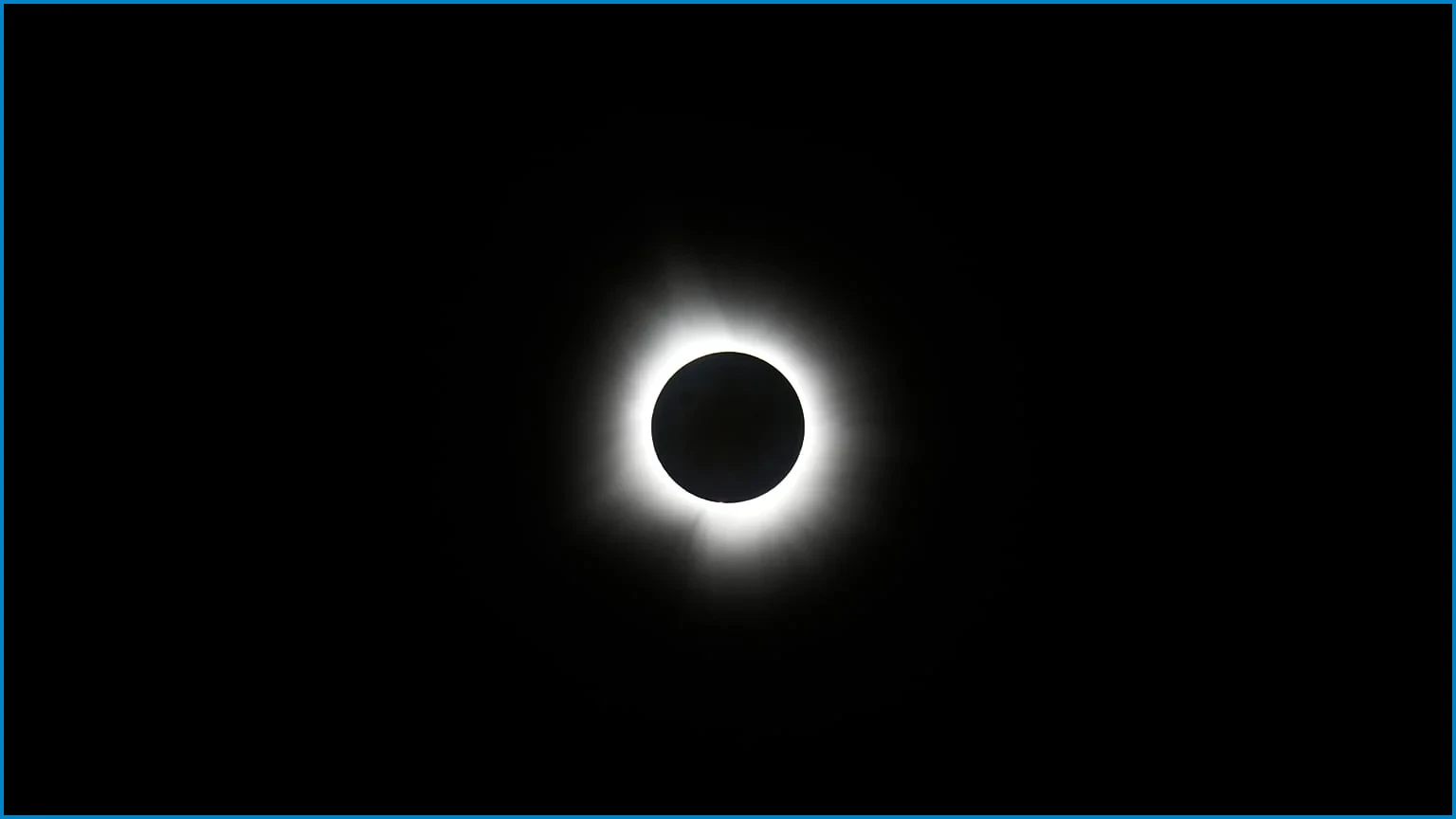
Spain is preparing for a unique astronomical phenomenon as it anticipates a trio of solar eclipses between 2026 and 2028, a sequence unparalleled in 21st-century Europe. The country will host total solar eclipses on 12 August 2026 and 2 August 2027, followed by an annular solar eclipse on 26 January 2028.
This upcoming event marks the first total solar eclipse visible from Spain since 15 April 1912. That fleeting phenomenon, lasting only a few seconds and classified as hybrid due to its narrow path of totality, was recorded in Issue 33 of the Spanish Astronomical Society (SAE) magazine. Tomás Martínez, a teacher from O Barco de Valdeorras, recounted his experience from Ourense at 11:49, describing how "The landscape looked sad and wan, and the cold was quite intense. The hens were looking for their roost and one that I saw, which had her chicks, sheltered them beneath her wings."
The next total solar eclipse on 12 August 2026 will first be seen in totality from northern Siberia, the east coast of Greenland, and western Iceland before traversing Spain. Its path across Spain will span a 293-kilometre-wide band, affecting up to 12 autonomous communities. While observers in Canada, the north-east coast of the United States, and north-west Africa will experience a partial eclipse, Spain will be a prime location for totality.
An eclipse, derived from the Greek 'ekleipsis' meaning disappearance, occurs at new moon when the Moon's disc completely covers the Sun, creating a sudden period of darkness. César González, an astronomy populariser at the Madrid Planetarium, explains the sensory experience: "As soon as the Moon completely covers the Sun, the brightness decreases. We can start to pick out the brightest stars and planets in the sky. If we are in the countryside, we will hear the birds singing. And just as totality begins, the birds stop singing because they think night is falling." He adds that the temperature can drop by as much as five degrees, often accompanied by a slight breeze.
During the partial phases of a solar eclipse, special, fully approved glasses (certified with ISO 12312-2:2015) are crucial for eye protection. These can be safely removed only during the brief period of totality. Without proper protection, ultraviolet radiation can damage the eye's photoreceptors, while infrared energy can cause a direct thermal effect on the retina, leading to solar retinopathy. Symptoms, which may appear over time, include blurred vision, spots or scotomas, distorted perception of shapes (metamorphopsia), reduced light tolerance (photophobia), and headaches.
The total phase of the 2026 eclipse will not exceed 1 minute and 48 seconds anywhere along its path over Spain, with duration depending on proximity to the line of totality. The eclipse is expected to enter Spain through north-west Galicia around 19:27 and conclude in the Balearic Islands around 20:35. Cities like Madrid and Salamanca, while outside the band of totality, will still witness a deep partial eclipse, with at least 92% dimming across the Peninsula.
The path of totality for the 2026 event will directly cross provinces such as Soria, Guadalajara, and Teruel (an area sometimes referred to as Spain's Siberia due to its low population density), as well as all four Galician provinces, most of Castile and León (excluding Salamanca), the Principality of Asturias, Cantabria, the Basque Country, Navarre, Aragon, parts of Castile-La Mancha (Guadalajara and Cuenca), the south-west of Catalonia, the Valencia region (Castellón and Valencia), and all of the Balearic Islands.
Scientists can precisely calculate these celestial events using the known laws governing planetary and satellite movements. César González notes that ancient civilizations, such as the Sumerians around 5,000 years ago, may have already identified eclipse patterns. The Saros cycle, lasting approximately 18 years, 11 days, and 8 hours, describes when the geometry between the Sun, Earth, and Moon becomes similar again, while the exeligmos, equivalent to three Saros cycles, allows for more precise calculations based on observation location.
Beyond its scientific significance, the trio of eclipses is projected to have a substantial economic impact. The Spanish Rural Development Network estimates a boost of nearly 1.4 billion euros, primarily benefiting rural areas often overlooked by international tourists. For the first eclipse, the Presidency Councillor of Castile and León anticipates two million visitors to the region, while the Generalitat Valenciana tourism portal forecasts an 80% surge in bookings in inland Castellón.
The second total solar eclipse in 2027 will last longer, up to five minutes, but will cover a smaller geographical area within Spain, specifically Cádiz, Málaga, Granada, Almería, Ceuta, and Melilla, also competing with observation opportunities in other Maghreb countries.
For those unable to travel, the European Space Agency (ESA) plans to broadcast the 2026 phenomenon live from the Javalambre Astrophysical Observatory in Teruel. Additionally, ESA is organizing a free public observation program in León, in collaboration with the local university and city council.