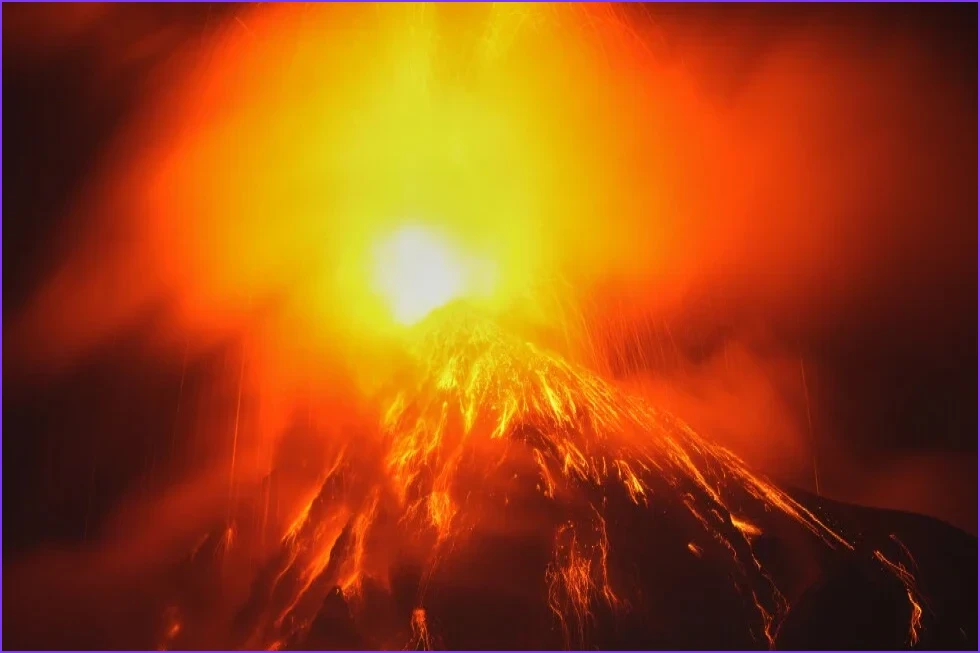
Guatemala remains under a state of high alert as emergency crews manage the aftermath of a significant eruption at the Fuego volcano, one of the most active volcanic sites in Central America. According to the national disaster agency CONRED, approximately 1,700 individuals have been displaced and are currently housed in temporary shelters. Officials have stated that these evacuations will remain in effect until geological conditions stabilize.
The eruption, which began on Monday morning, sent plumes of gas and ash into the atmosphere, followed by lava and pyroclastic flows cascading down the mountainside. By Tuesday, the volcano continued to emit additional ash and mud. Authorities have established a red alert across the municipalities of Sacatepéquez, Escuintla, and Chimaltenango. In these regions, approximately 29,000 residents are currently impacted by heavy ashfall, and the Ministry of Education has ordered the suspension of classes.
Claudinne Ogaldes, the executive secretary of CONRED, has advised residents in the affected areas to protect their water supplies by covering deposits and to wear face masks as a safeguard against airborne ash. While mudflows reaching lengths of up to 7 kilometers (4.3 miles) have been observed descending the slopes, officials reported that no villages have been reached by the flows and no infrastructure damage has been confirmed thus far. However, authorities warned that the coming 72 hours are critical, particularly as incoming rainfall is expected to heighten the risk of further volcanic mudflows.
Among the groups evacuated are roughly 250 residents from the hamlet of Las Lajitas and the community of El Porvenir. Furthermore, officials have closed National Route 14, a major thoroughfare that passes in close proximity to the volcano. The Fuego volcano has a history of violent activity, most notably in June 2018, when an eruption resulted in hundreds of deaths and the destruction of an entire village. Another eruption occurred last year, which also necessitated preventive evacuations for nearby communities.