An ambitious plan by the European Union to deliver a decisive blow to Russia's energy revenues through a comprehensive maritime services ban has stalled indefinitely, leaving Brussels in a difficult diplomatic limbo. The measure, which was once intended to be the centerpiece of the bloc's economic pressure campaign against Moscow, has been quietly sidelined amid shifting international politics and intense lobbying from internal maritime interests.
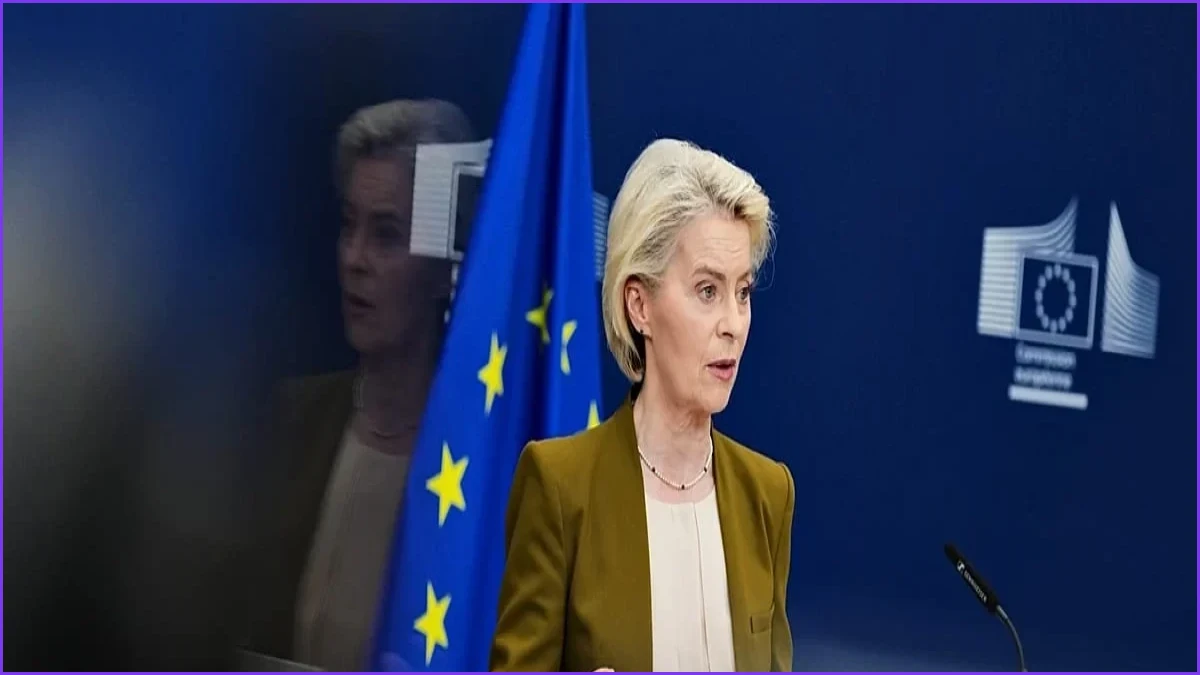
European Commission President Ursula von der Leyen originally introduced the proposal in early February as the crown jewel of the EU's 20th economic sanctions package against Russia. "On energy, we introduce a full maritime services ban for Russian crude oil. It will slash further Russia's energy revenues and make it more difficult to find buyers for its oil," von der Leyen announced at the time. For Brussels, the proposal represented an opportunity to complete unfinished business from the early days of the conflict.
The EU had first attempted to ban maritime services for vessels carrying Russian crude and refined products in 2022 alongside its import ban. The logic was straightforward: if European nations stopped buying Russian oil, they should also stop helping Russia ship it elsewhere. However, amid soaring global inflation and energy price volatility, the administration of former US President Joe Biden feared severe market shocks. The US persuaded its European allies to establish a price cap instead of an outright ban, allowing maritime services to continue under specific conditions. This compromise led G7 allies to set a price cap on Russian oil in December 2022 at $60 (about €52) per barrel.
In the years since, the price cap mechanism has proven incredibly difficult to enforce. Moscow successfully bypassed Western surveillance by deploying a decrepit "shadow fleet" of tankers to sell its crude at higher prices. The system was further weakened by a fragile attestation process, constant fluctuations in global oil prices, and a total lack of participation from major buyers like China and India. Recognizing these structural failures, Brussels decided to pivot back to its original 2022 vision, seeking to replace the flawed price cap with an all-encompassing ban on services ranging from banking and insurance to shipping and flagging.
However, the initiative quickly ran into obstacles, some of which were set by Brussels itself. When announcing the proposal, von der Leyen linked its execution to international consensus: "As shipping is a global business, we propose to enact this full ban in coordination with like-minded partners after a decision of the G7." By tying the ban to G7 approval, Brussels surrendered control over its timeline. The political landscape shifted dramatically when Donald Trump succeeded Biden as US President. The Trump administration showed no interest in maintaining the Biden-era price cap, let alone pursuing a coordinated G7 maritime ban. Consequently, securing G7 consensus became highly improbable.
While a majority of EU member states viewed G7 coordination as a preference rather than a mandatory requirement, securing buy-in from the United Kingdom remained critical. The UK holds a dominant global position in the Protection and Indemnity (P&I) maritime insurance market, which oil tankers rely on for liability coverage at sea. Without London's cooperation, any European ban would be severely undermined.
This geopolitical friction empowered skeptical EU member states with powerful domestic shipping industries, most notably Greece and Malta. Cyprus shared their concerns but maintained a neutral stance due to holding the rotating presidency of the Council of the EU at the time. The Mediterranean nations argued that a unilateral ban would inflict severe economic damage on European businesses while allowing foreign competitors in China and India to seize the shipping market. They asserted that Russia would simply bypass European services entirely.
Fearing these economic consequences, member states compromised when the sanctions package was approved in April. The maritime services ban was adopted only in principle, with its actual activation put on indefinite hold pending further "coordination and consideration" within the G7. Although Commission officials insisted that the legal text remained flexible enough to be revived, the combination of opposition from Greece and Malta, disinterest from Washington, and silence from London, Tokyo, and Ottawa left Brussels isolated. When von der Leyen presented the 21st sanctions package in June, the maritime ban was completely omitted, and the focus shifted back to the very price cap she had previously sought to replace. The subject was entirely ignored at the G7 summit in Évian, France.
Today, the EU remains deeply divided over how to proceed. A coalition of hawkish member states, led by Sweden and Finland alongside the Baltic nations, Poland, Denmark, the Netherlands, and Ukraine, continues to push for the ban's activation. They view energy revenues as the primary driver of Russia's military operations. Swedish Foreign Minister Maria Malmer Stenergard defended the proposal, stating, "Working towards a full maritime services ban is a crucial part of this effort, since it would substantially increase transportation costs and ensure that no EU entity is involved in supporting trade with Russian oil, coal or gas." She added that "a full ban would also be easier to enforce than the current oil price cap."
In contrast, Greece, Malta, and Cyprus remain unyielding in their demand for G7 consensus before any ban is implemented—a condition that some diplomats view as a strategic maneuver to ensure the ban is never activated. Athens has demonstrated its willingness to use significant political leverage to protect its maritime sector. During negotiations for the 21st sanctions package, Greece threatened to veto the entire agreement until it secured an exemption allowing its vessels to continue shipping Russian liquefied natural gas (LNG) to non-EU clients beyond the original January 1, 2027 cut-off date.
This political battle has drawn scrutiny to major Greek shipping firms, such as Dynagas, an LNG carrier provider founded by billionaire George Prokopiou. Prokopiou also controls Dynacom, a firm heavily involved in transporting Russian oil globally. Industry estimates from the Financial Times suggest that Greek shipping companies like Dynacom have earned at least $3.8 billion (around €3.35 billion) from transporting Russian oil over the past three years, a lucrative revenue stream that will continue as long as the maritime ban remains blocked.
The European Commission now finds itself caught in a difficult position. While the EU executive still officially supports the ban it proposed, officials recognize that the political momentum has dissolved. Ongoing instability in the Middle East has further complicated energy policy, making any measure that could disrupt global oil supplies highly sensitive. Isaac Levi, a senior analyst at the Centre for Research on Energy and Clean Air, noted that while a well-enforced ban would squeeze Russian tanker capacity and raise transport costs, "an abrupt ban could push up global oil prices, partly offsetting the hit to Russian revenues." Levi suggested that the EU should instead focus its energy on strictly enforcing the existing price cap, warning that "without serious enforcement, the price cap is a paper tiger — like setting a speed limit with no cameras, police or fines."