Governments across Central and Eastern Europe are implementing urgent measures to conserve electricity and avert a potential energy crisis as record-low water levels on the Danube River have pushed critical power plants to the brink of shutting down. Persistent drought conditions and successive extreme heat waves have severely depleted one of Europe's largest rivers. In Budapest, Hungary, water levels dropped to approximately 10 centimeters (4 inches) on Monday, falling well below the previous all-time low of 33 centimeters (13 inches) recorded in 2018. With no significant rainfall forecast for the coming days or weeks and a new heat wave bringing daytime highs of 38 Celsius (100 Fahrenheit), the region is seeing a sharp rise in both electricity and water demand.
Hungary’s Paks nuclear power plant, which relies on the Danube for reactor cooling, is facing the possibility of a total shutdown for the first time in its 44-year history. The facility, located about 90 kilometers (55 miles) south of Budapest, accounts for nearly half of Hungary’s electricity production and roughly a third of its total consumption. By Monday, the four-reactor plant was producing only 240 megawatts of power, a significant drop from its usual 2,000 megawatts, due to the successive power-downs of its reactors. Hungarian Prime Minister Péter Magyar stated in a video posted to Facebook on Monday that engineers had managed to keep the final operating turbine running, which averted an expected shutdown over the weekend. While a full power-down could still occur on Tuesday or Wednesday, Magyar noted that the complete shutdown of the plant had been avoided for the time being.
To address the deficit, Hungary has turned to regional electricity imports and renewable energy sources. The government recently requested that major industrial users curb their electricity consumption and sought voluntary savings from households, specifically during peak demand hours between 5 p.m. and 10 p.m. Furthermore, the government announced that electric-powered freight trains would be prohibited from running during peak hours starting Monday, a move expected to save between 70 and 90 megawatt-hours of electricity daily. Although these measures were initially voluntary, the government issued a decree on Saturday allowing them to become mandatory for large industrial or commercial consumers. Prime Minister Magyar reported on Monday that these conservation efforts resulted in a reduction of 700 megawatts of electricity usage the previous day.
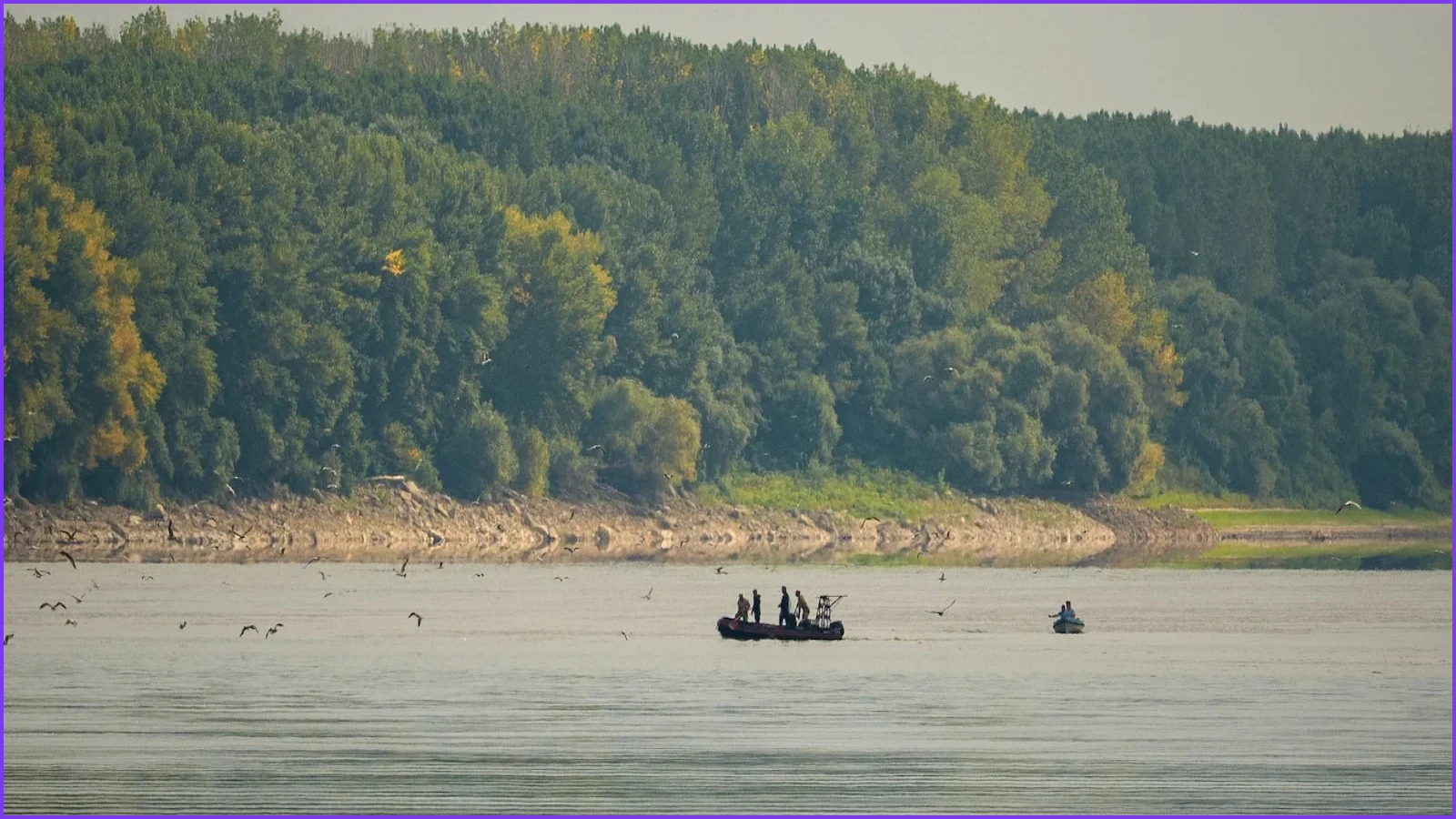
Neighboring countries are also struggling with the impact of low water levels on power generation, shipping, and agriculture. In Romania, the military used 180 kilograms (397 pounds) of explosives on Monday to blast rock near the lower Danube’s Bala Canal. The goal of this operation is to redirect water into the river’s main channel toward the state-owned Cernavoda nuclear power plant. The Danube's water flow in Romania has dropped to 1,500 cubic meters per second, which is less than a third of the typical July average. Authorities have already shut down one reactor at the Cernavoda plant, which is currently operating at about half its normal capacity. Acting Prime Minister Ilie Bolojan announced a nationwide state of alert in the energy sector on Friday, warning that the low water levels threaten the operation of the plant's second reactor, and he has appealed to citizens to voluntarily limit electricity use during peak evening hours.
Meanwhile, in Serbia, record-low levels on the Danube have forced the country’s key hydroelectric plant to operate at only 20% of its capacity. Prime Minister Djuro Macut presided over an emergency meeting on Monday to address these energy challenges. In a statement released late Sunday, Macut described the situation as serious and demanding, and he appealed to residents to minimize the use of major electricity consumers in their homes, such as air conditioners.