Britain faces a potential crisis in food supply as farmers warn that a persistent, punishing drought is severely damaging crops across the country. Tom Bradshaw, president of the National Farmers’ Union (NFU), has called on the prime minister to take urgent action, suggesting that tax breaks for on-farm water storage systems are necessary to help the industry adapt to what farming groups describe as the “new normal” for British agriculture.
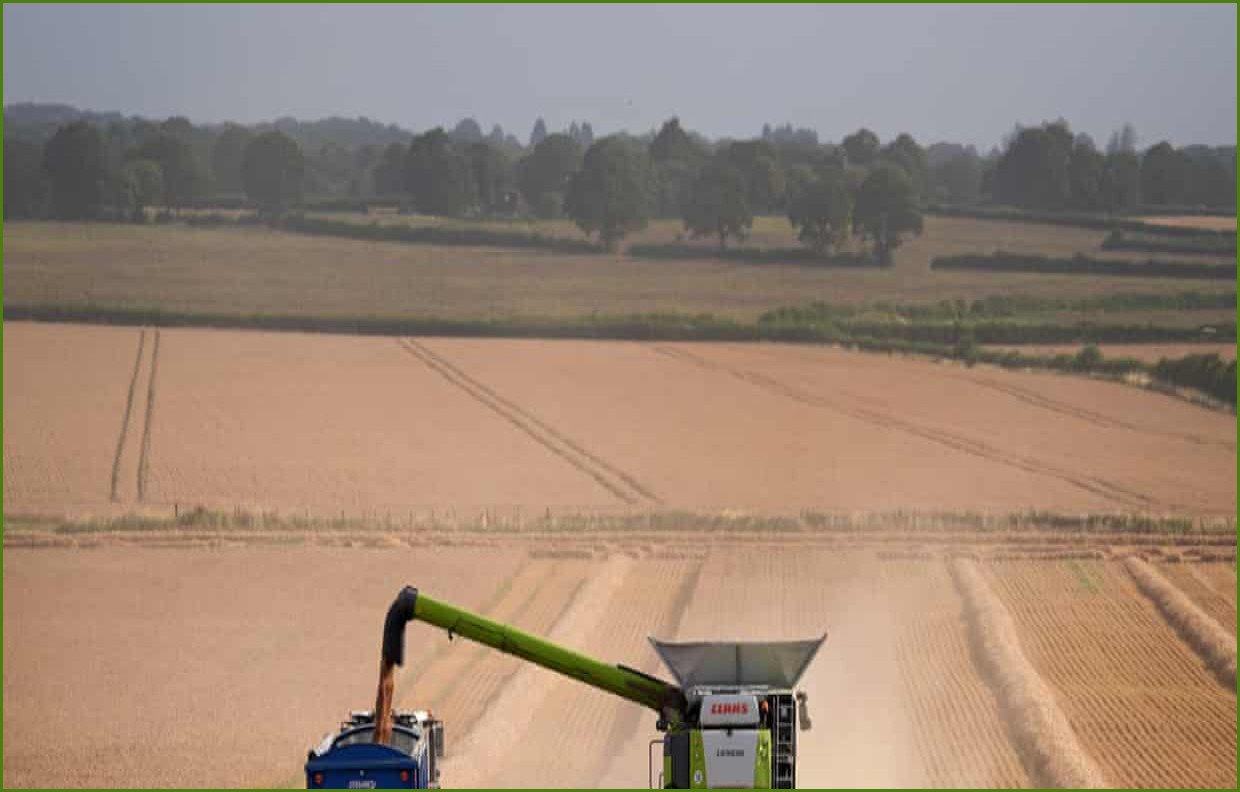
The current drought is the third in just five years, exacerbated by climate change and a lack of rainfall that has left some areas dry for over a month. According to the Met Office, England recorded only 8% of its meteorological average rainfall for July, making it likely the driest July on record. This environmental strain has resulted in wheat crops growing to only half their normal height, while the Agriculture and Horticulture Development Board (AHDB) reports that the hot weather has triggered the earliest harvest since records began in 2006. Many farmers in the south and east of England have completed their harvest two to three weeks ahead of the long-term average.
The impact extends beyond dry fields, with approximately 23 million people across England and Wales currently under a hosepipe ban. Furthermore, the UK Health Security Agency has issued amber heat-health alerts for the East Midlands, the east of England, the south-east, and London from 9am on Monday 3 August to 9am on Wednesday 5 August, with yellow alerts in place for the north-west, Yorkshire and The Humber, West Midlands, and the south-west. The dry conditions have also contributed to widespread wildfires, including recent incidents in Suffolk.
Industry experts emphasize that the situation is becoming unsustainable. “Those other countries around the world that we currently rely on to produce our food and vegetables, their climates are changing as well,” Bradshaw said. “It does feel like there is going be some shortages of [food] products.”
Anthony Hopkins, director of cereals and oilseeds at the AHDB, noted that cereal yields are generally below the 10-year average, with many farmers working through the night to avoid extreme daytime temperatures. Anthony Speight, senior analyst, cereals and oilseeds, added: “At this stage, the emerging picture points to disappointing cereal yields in many areas, but we’ll gain a clearer understanding as harvest continues.” With the removal of EU-derived subsidies and the rising costs of production, many businesses are facing acute financial pressure. A recent report indicated that a third of British farmers are currently breaking even or operating at a loss.
Gavin Lane, president of the Country, Land and Business Association, warned that for many, this may be their final harvest. He stressed that while “farmers have shown again and again that they can adapt and deliver solutions, but resilience has limits. If we want them to keep feeding the country, they need proper support. Otherwise, this harvest could be their last.” Bradshaw echoed these sentiments in his call to leadership, urging the government to prioritize domestic food production to ensure long-term stability and growth.
Farms across the country faced floods over the winter, making planting extremely difficult, and now they do not have access to water in many parts of England as irrigation is being restricted due to drought.
He told BBC Radio 4 that farmers should be given tax breaks to build water storage systems on their land to prepare for the years ahead.