Iran's leadership is projecting a united front in its ongoing military confrontation with the United States and its allies, but behind the scenes, a fierce internal power struggle is raging over the conflict's ultimate endgame and the country's postwar future. Following a week of escalating attacks against U.S. bases and regional allies, Tehran's ruling elite appears determined to prove that Iran can outlast the pressure exerted by Washington and its coalition. However, this outward display of resilience masks deep, systemic divisions within the theocracy regarding what a final resolution should look like.
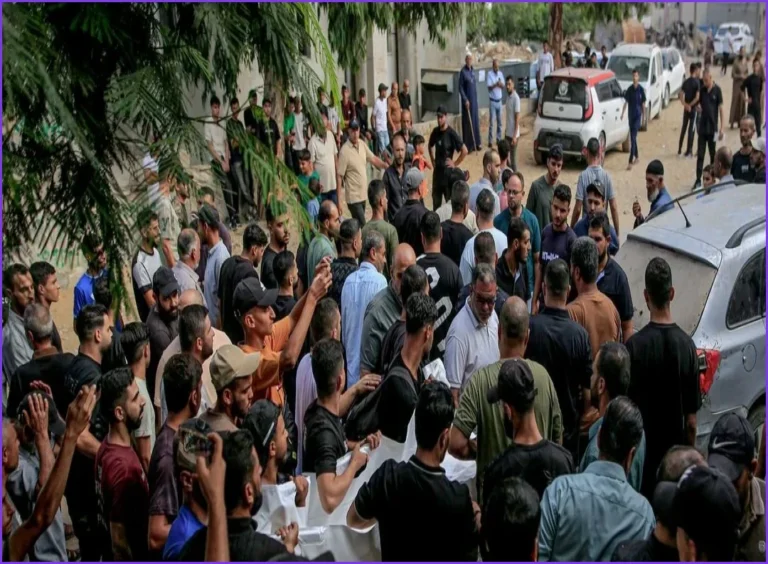
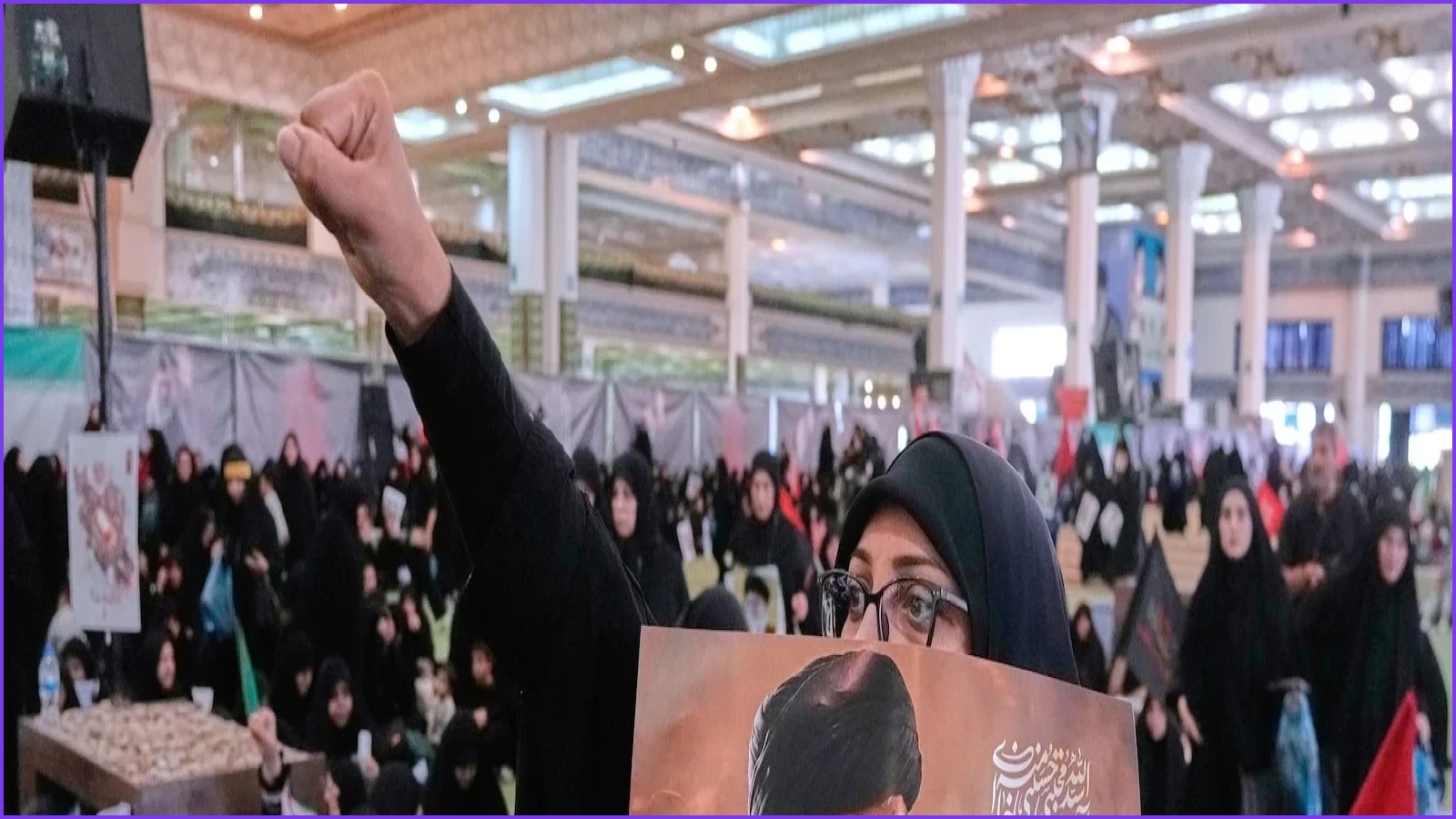
On one side of the ideological divide stands the ultra-hardline "Paydari" (stability) movement. These hard-core ideologues firmly oppose any diplomatic engagement with the United States, demanding instead a total military victory and stricter domestic control over Iranian society. According to political analyst Ali Vaez, members of this faction believe that U.S. President Donald Trump "only understands the language of force, and therefore, they would have to gain the upper hand in order to compel him to deliver." The immense influence of the Paydari movement was on full display earlier this month during the funeral of Iran's slain supreme leader, Ali Khamenei, who was killed in the opening minutes of the war on February 28. Mourning crowds in Tehran clamored for revenge against the U.S. and Israel, warmly welcoming hardliner Saeed Jalili while shouting insults and chanting "Death to the compromiser!" at Iran's pragmatic President, Masoud Pezeshkian.
This rivalry has increasingly played out across state media. The ultra-hardliners have leveraged their control over the state television network, IRIB, to rally public opposition to diplomacy, framing the war as a path to total victory while vilifying those open to compromise. This ideological grip has led to blatant acts of censorship. On June 30, state television abruptly cut off a live broadcast featuring parliament speaker Mohammad Bagher Qalibaf as he began discussing negotiations with Washington. More recently, IRIB cut off a live broadcast of a speech by President Pezeshkian to business leaders just seconds after he revealed that the late Ali Khamenei had actually granted permission for renewed talks with the U.S. before his death.
President Pezeshkian and his supporters have fiercely pushed back against this treatment, accusing the state broadcaster of fracturing the nation during a time of war. Pezeshkian publicly criticized IRIB, stating that the network's actions make it appear as though "the military are on one side, and the government is on another side." Last month, the president’s media office issued a formal condemnation of state television for "censoring" the head of government and other top officials, bringing the internal rift into the open. Mohamad Ali Abtahi, a reformist cleric and former aide to reformist leader Mohammad Khatami, remarked that these brief broadcast shutdowns signaled that "religious extremist parties" are actively asserting their power. Although Jalili's ultra-hardline supporters are a minority, Vali Nasr, a professor of International Affairs and Middle East Studies at Johns Hopkins University, warned of their deep-seated influence. Nasr noted that they possess significant financial resources and power, having placed numerous allies throughout the state bureaucracy and forged strong ties within the Revolutionary Guard.
Even within the conservative establishment, views on diplomacy are nuanced. Mahdi Mohammadi, an adviser to Qalibaf, wrote on his Telegram channel that "negotiation is a political tool and a complement to military action to force the enemy to a point of compulsion and extract real concessions." Meanwhile, the pragmatic camp led by Pezeshkian argues that sustaining national unity during a prolonged conflict is impossible without addressing the public's deep dissatisfaction with political repression and a failing economy. Iran is currently grappling with a rapidly depreciating currency, spiraling inflation, and rising unemployment. Pragmatists point out that a negotiated settlement with the U.S. could secure a massive financial windfall by lifting international sanctions and releasing billions of dollars in frozen assets.
Domestic discontent with the war has begun to surface publicly. In July, a petition signed by more than 250 former lawmakers, clerics, academics, and public figures warned of the devastating toll of the conflict, stating, "We believe that the overwhelming majority of the Iranian people want peace and the right to a decent life." Others have spoken out against a recent surge in state executions targeting protesters following widespread anti-government demonstrations in January. Additionally, a prominent reformist political party that backed Pezeshkian’s campaign warned that the war's domestic burden was "undermining internal social cohesion." This warning drew a sharp rebuke from Tasnim, a news agency closely aligned with the Revolutionary Guard, which accused the reformists of effectively blaming Iran for a war initiated by the United States. In mid-July, the president's son and influential adviser, Youssef Pezeshkian, posted messages emphasizing the need to balance military objectives against economic realities, writing that decades of sanctions and Western confrontation have left Iran "prevented from growing" and "sick."
Ultimately, both factions are positioning themselves for a postwar transition of power, made highly volatile by unprecedented uncertainty surrounding the supreme leadership. Ayatollah Mojtaba Khamenei, the newly appointed supreme leader, has been in hiding since reportedly being wounded in the February 28 strike that killed his father. Both the hardline and pragmatic camps have claimed to have his backing, but his actual stance remains unknown. Abtahi pointed out that Mojtaba Khamenei's true views are still a mystery; while some fear he may be even more radical than his father, others hold out hope that he could introduce moderate reforms. Abtahi warned that while the supreme leader has the authority to act as a "brake" to hold back extremist factions, the internal political struggle could become exceedingly dangerous over time if that authority is left unused.