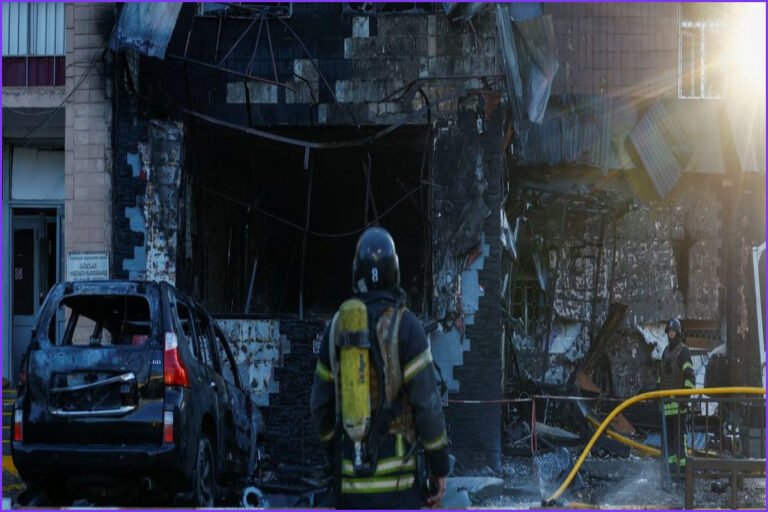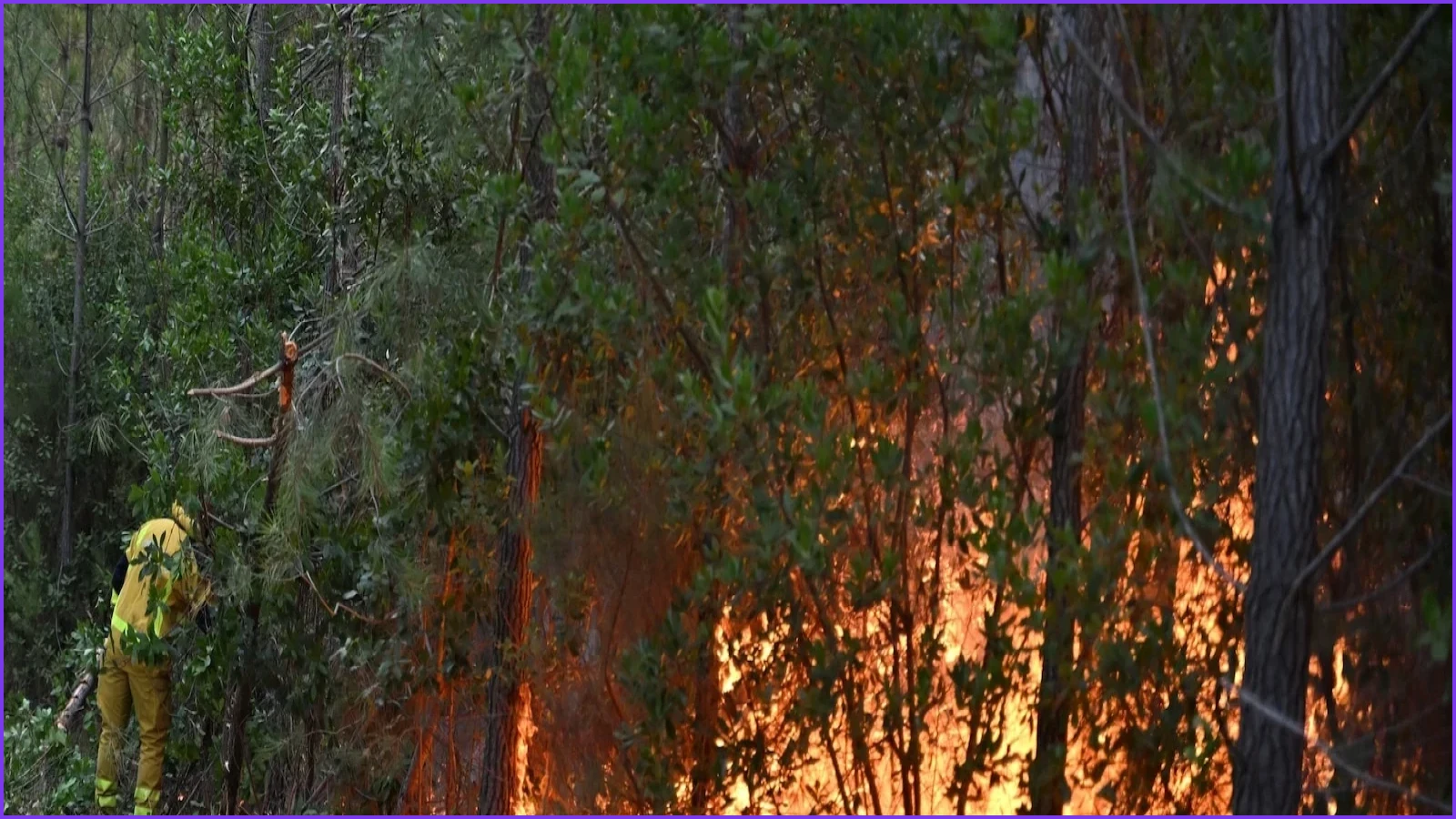
Southwestern France's Les Landes forest, the largest human-made woodland in Western Europe, is once again grappling with devastating wildfires. The recent blaze has charred an area four times the size of Paris, echoing similar destructive fires in 2022 and a fatal one in 1949 that claimed 82 lives.
The forests, covering 10,000 square kilometers (3,860 square miles) and established in the 19th century primarily for timber and resin production, consist of dense, uniform rows of maritime pines. This monoculture structure, experts argue, facilitates the rapid spread of flames from tree to tree.
Climate change is identified as a significant factor exacerbating the wildfire danger, with Europe experiencing the continent's fastest warming rate. However, experts also point to the inherent vulnerability of the industrial plantation model, which dates back to the Second French Empire.
President Emmanuel Macron has stated that the structural conditions created by climate change, along with increased pressure from housing and tourism, necessitate a shift in forest composition. "The structural conditions created by climate change, under which we will have to live, have changed," he said. "So has the pressure from housing and tourism."
While maritime pine is considered relatively fire-resistant due to its thick bark and natural regeneration capabilities, its monoculture planting increases risk. Single-species conifer forests are drier than mixed forests of broadleaf and conifer trees, creating conditions more favorable for fire spread.
Nathalie Naulet, an expert in forestry and agriculture, explained the difference: "In a healthy, diverse forest there are multiple tree species, different age classes and several layers of vegetation, from ground plants and shrubs to mature trees such as oaks and beeches." She added, "In these ecosystems, less than 3% of the sun’s radiation reaches the forest floor."
In contrast, the Les Landes forest lacks this layered structure. "Without a protective canopy, the soil heats up and dries out," Naulet stated. "The top few centimeters of soil, which should normally consist of water-rich humus, become dry and impoverished. In many places, humus has virtually disappeared." Broadleaf trees retain more moisture and are more fire-resistant, while pine needles and flammable dead leaves on the forest floor can smolder for extended periods.
Firefighters and residents are currently working to extinguish remaining embers, a process that could take weeks. "No matter how much we try to extinguish it, re-extinguish it, re-extinguish it, it keeps restarting all the time," said resident Jean-Francois Pauner, 64, who is assisting in the efforts. Resinous pine cones can also ignite and be propelled by wind, further spreading the fire.
The current forest structure originated from an 1857 law that led to the drainage and planting of maritime pines across the region, transforming marshland into productive timberland. This historical development displaced peasants who found work in the timber and resin industries.
Currently, over 90% of the Les Landes forest is privately owned, with a significant portion held by a small percentage of landowners. The forest sector is a major economic contributor, supporting an estimated 60,000 jobs and generating over 10 billion euros ($11.5 billion) in annual revenue, according to the Southwest Foresters’ Association.
Implementing changes to forest management will require collaboration between the timber industry, landowners, and public authorities. Abandoning monoculture in certain areas may necessitate financial compensation for landowners. Nicolas Lafon, president of the association, stressed the need for "financial resources commensurate with the scale of the challenge" and stated, "Forest owners reject any attempt to portray them as being responsible for a disaster of which they are the primary victims." He called for an "ambitious, coherent, and long-term national forest policy."
The national discussion also extends to wildlife conservation, with an online petition for a hunting moratorium in burned areas gaining over 300,000 signatures.
Geographer Arthur Guérin-Turcq highlighted the risk of fires spreading unchecked until they reach villages, emphasizing the need for buffer zones around settlements. Other proposed solutions include introducing wetlands, more farmland, or less fire-prone businesses. Guérin-Turcq, who authored a report on the 2022 wildfires that impacted 37,000 people and destroyed 320 square kilometers (124 square miles) of forest, noted that transforming the entire forested area with more broadleaf trees is a significant challenge on poor soils.
Bruno Lafon, regional president of the Forest Fire Defense Association, advocated for enhanced wildfire prevention measures, including larger, well-maintained firebreaks. "We need larger, well-maintained firebreaks, even if that means sacrificing 1,000 or 2,000 hectares," he said. "Otherwise, we risk losing the Landes forest."
More than 90% of the forest area in Les Landes is privately owned, with 75% held by just 20% of landowners. The National Forest Office and local municipalities manage the remainder.
Mark Carlson in Lanton, France, contributed.