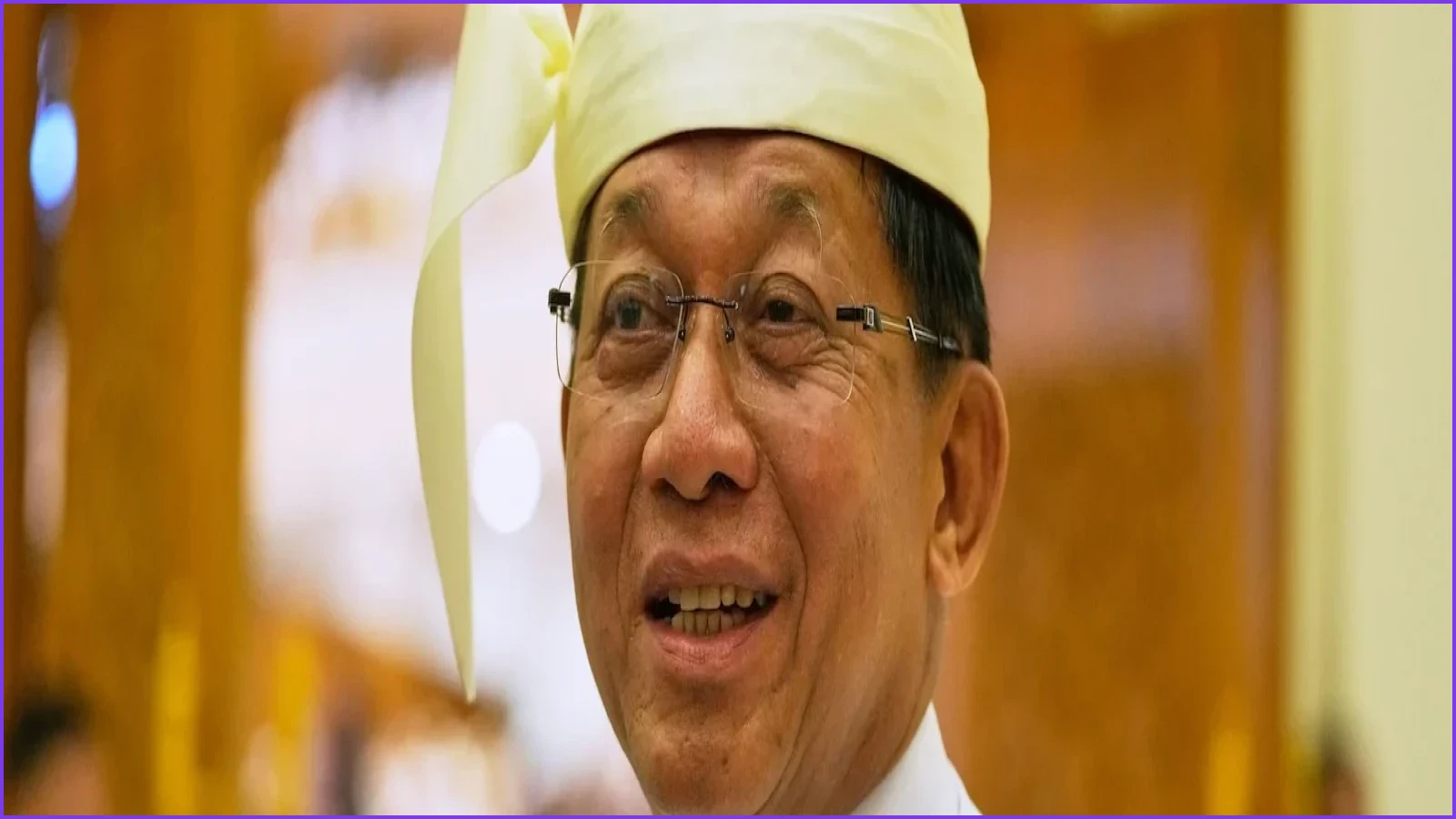
Myanmar’s military-backed leader, Min Aung Hlaing, marked his administration’s first 100 days in office on Friday with a major policy address delivered to an audience of over 900 lawmakers, military officials, and government representatives in the capital, Naypyitaw. The president, who originally seized power from a civilian government in 2021, used the occasion to defend his record and set out a comprehensive five-year road map for the nation.
Min Aung Hlaing outlined a two-phase strategy for the country, stating he would dedicate the first two years to accelerating national development through a foundation of democracy and a federal system, followed by a three-year period of full-speed national build-up. As part of his administration’s political agenda, he announced that special elections are scheduled for 2027 in 102 townships that were excluded from last year's three-phase election due to ongoing armed conflict.
Addressing the security situation, the president confirmed that the government would continue to enforce the military’s conscription law while strengthening police and armed forces to combat ethnic minority rebels and pro-democracy activists. He noted that the administration has extended invitations to various armed groups to lay down their weapons, claiming to have already conducted talks with 13 ethnic groups.
The speech also contained sharp criticism of the five-point consensus established by ASEAN leaders in 2021. Min Aung Hlaing argued that the regional bloc’s peace plan was adopted without the agreement of all member states and accused the organization of discriminating against Myanmar. He rejected the bloc's calls for an immediate end to violence and the appointment of an ASEAN special envoy to mediate dialogue.
On the economic and infrastructure front, the administration plans to move forward with 10 power generation projects, including the controversial Myitsone hydropower dam, which had been suspended for over a decade due to environmental concerns. Plans for a nuclear power plant also remain in development. Furthermore, the president stated that authorities are actively fighting online scam centers, money laundering, and drug trafficking, reporting the successful repatriation of over 72,000 foreigners to 58 different countries.
While acknowledging that a significant outflow of young citizens is hindering economic progress, Min Aung Hlaing did not address the impact of the military’s conscription law on this migration. Critics, including Nan Lin, a spokesperson for the General Strike Coordination Body, dismissed the address as a sign of the junta’s refusal to relinquish power. Lin warned that the country faces worsening hardship and accused the government of using the conscription law to instill fear and sacrifice the youth to maintain control, concluding that no meaningful change can be expected under current policies.