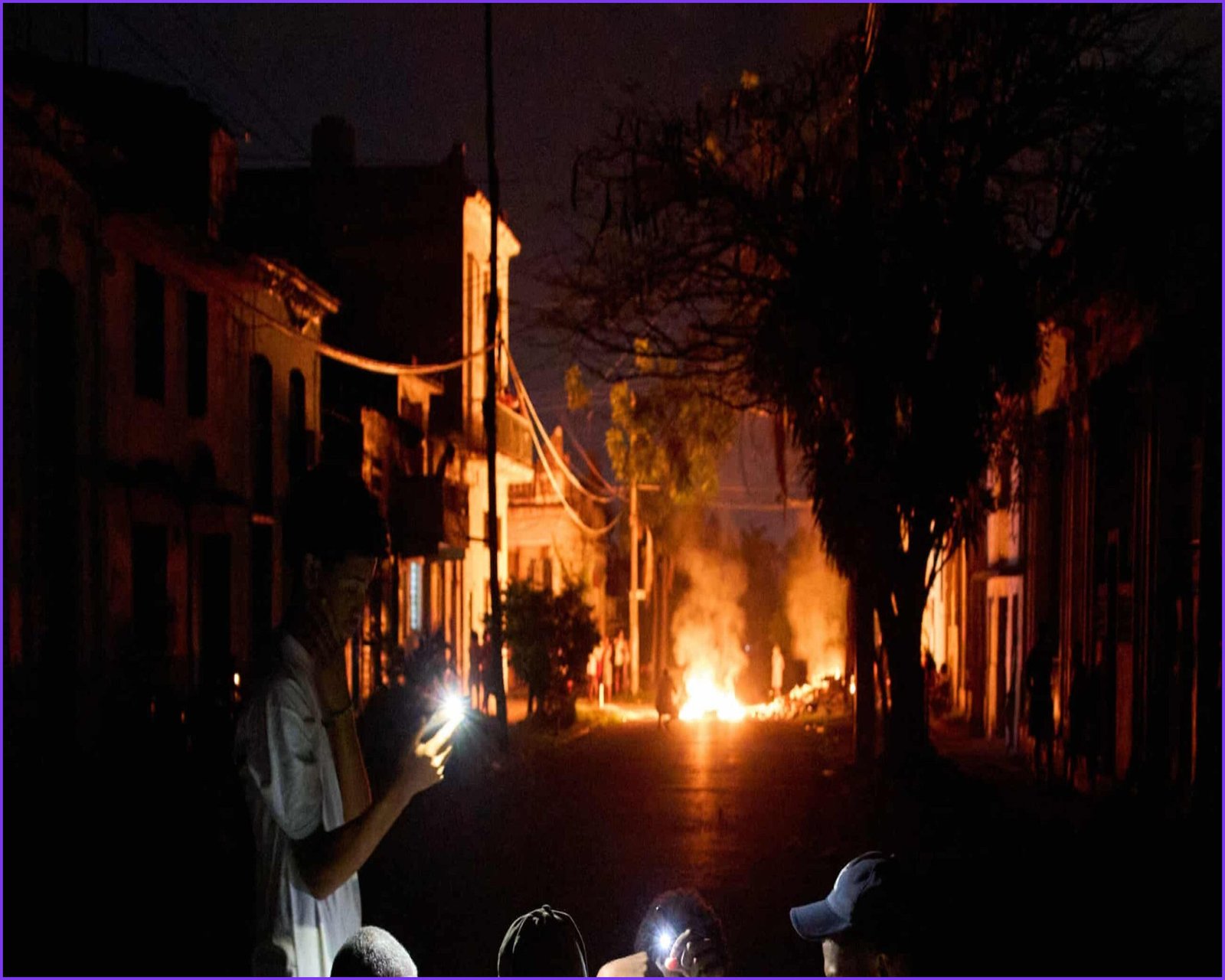
The national power grid in Cuba suffered its third collapse in just 10 days this past Tuesday, leaving the 9.5 million residents of the 777-mile island to wonder if their aging electrical system is beyond repair. This crisis occurs as the nation endures a six-month-long oil blockade enforced by the United States, which is part of a broader pressure campaign aimed at destabilizing the communist government. Jorge Piñon, a senior energy researcher at the University of Texas, noted that the system relies on major power plants that are fundamentally old, broken, and exhausted.
Summer conditions have exacerbated the situation, with temperatures reaching the mid-30s and humidity levels at 80%. These harsh conditions have led to growing public frustration, manifested in nightly cacerolazos—the drumming of pots and pans—which has replaced the traditional sounds of music in Havana. Residents report that sporadic electricity is insufficient for basic needs like pumping water or charging mobile devices. Vicente de la O Levy, the minister of energy, attributed the outages to a total absence of fuel and a lack of access to necessary spare parts for thermoelectric units.
Tensions between Washington and Havana have intensified significantly since January 3, when the US military abducted Venezuelan President Nicolás Maduro. Donald Trump has publicly suggested he has the authority to take control of Cuba. The US has utilized sanctions to drive foreign companies out of the island, impacting sectors from mining to aviation. An electric car importer noted that they currently have dozens of containers stuck abroad with no clear arrival timeline. Additionally, in May, a Florida court charged 95-year-old Raúl Castro with murder in connection to the 30-year-old incident involving the shooting down of small planes from Miami.
Beyond the energy sector, the state is grappling with hyperinflation that began during the pandemic. Crime rates have risen, with reports of street fights, burglaries, and violent muggings, while police presence has become increasingly scarce. According to the Madrid-based group Prisoners Defenders, the number of political prisoners has reached 1,306, including individuals like Héctor Ochoa Vergara, who was detained after protesting blackouts in Ciego de Ávila.
Public discourse has also been stirred by 42-year-old Rodríguez Castro, who recently appeared in a USA Today interview displaying luxury items like a Rolex and Hermes sneakers. His claim that he would step up if the revolution needed him was met with widespread backlash from academics and government supporters. Most telling though, was the anger of younger Cubans associated with the government. “To usurp the functions of government, to assume a public role for which no one elected you, to proclaim yourself spokesperson for measures or new directions for the country … would anyone else be allowed to do that?” wrote Michel Torres Corona, whose Con Filo programme on Cuban television was recently considered the epitome of state propaganda. Michael Bustamante of the University of Miami suggested this interview might signal a breakdown in potential negotiations between Washington and Havana, describing it as a desperate cry for relevance.
Meanwhile, geopolitical tensions are rising again. Certainly, having gone into a lull during the World Cup, war drums are once again banging in the US, 90 miles to the north. Former Florida governor Jeb Bush recently linked Cuba to Iran, alleging the purchase of 300 attack drones, a claim President Trump vowed to address. The Cuban government’s attempts to reform the economy through 176 new measures have been dismissed by the US State Department as superficial. Laura Garcia, an illustrator and single mother from Havana’s 10 de Octubre neighbourhood, said her neighbours now lived only in the present. “What I hear is a level of desperation that doesn’t allow the distance to discuss the future,” she said. She had just gone 72 hours without power, and when pushed for further comment, only muttered: “What has to fall doesn’t fall.” As the grid was briefly reconnected on Wednesday, residents remained skeptical of long-term stability, with many expressing a deep sense of desperation as they navigate a future that feels increasingly uncertain.
“We have seven containers in Kingston and another 40 in China, but we have no idea when, or if, they will arrive,” said an electric car importer.
The resulting uproar took in musicians, academics, former diplomats, and just people on the street outraged by such a display from someone who is, in the words of respected academic Julio César Guanche, “without recognised institutional public functions”.