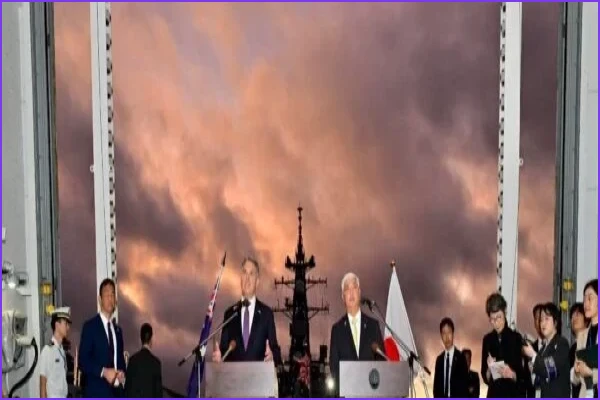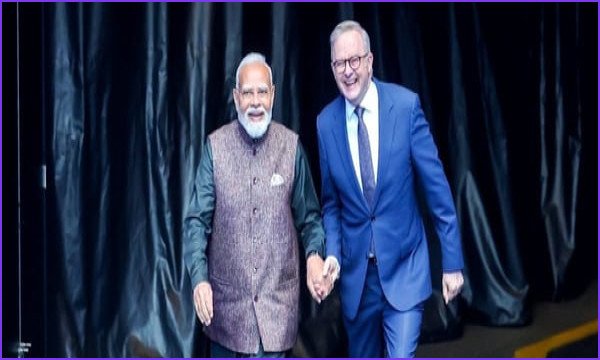
Indian Prime Minister Narendra Modi’s three-day visit to Australia last week resulted in significant developments, particularly within the realms of defense and security. As both nations navigate growing concerns regarding over-reliance on the United States to counter regional challenges from China, Australia and India are increasingly looking to one another to build strength, mirroring the collaborative approach seen between Australia and Japan.
This strategic push is manifesting in the creation of new minilateral coalitions aimed at maximizing options for both countries. While the exact trajectory of these partnerships remains subject to the limitations of their respective material power, officials believe these efforts are more effective when coordinated with other regional partners, such as Indonesia and New Zealand—both of which were also stops on Prime Minister Modi’s recent trip. The Australia-India bilateral relationship serves as a primary pillar for these broader efforts.
A notable outcome of the visit was the signing of a Joint Declaration on Defense. This agreement aims to foster greater interoperability and information sharing between the two nations' defense forces, while also increasing the complexity of their joint military exercises. Beyond immediate defense maneuvers, the declaration emphasizes regional security by calling for the peaceful resolution of disputes without the threat of force, in accordance with international law. This focus is particularly relevant given the 10th anniversary of the U.N. Tribunal award that favored the Philippines, though India missed an opportunity to formally join partners in acknowledging that milestone. Despite the potential for aggressive powers like China to disregard such norms, the declaration and its adherence to the United Nations Convention on the Law of the Sea are viewed as having significant normative value.
However, analysts note that substantial work remains. There is currently a lack of sufficient joint action regarding China’s use of economic coercion. Moving forward, proponents argue that Indo-Pacific partners must develop a unified, multilateral format to respond to Beijing’s aggressive tactics. Historically, commerce has served as a tool in great power politics, and China is currently leveraging its asymmetric trade advantages to pressure neighbors. To effectively deter such behavior, mutual consultation must evolve into a more nimble, multilateral framework. While Prime Minister Modi and Prime Minister Anthony Albanese have successfully facilitated closer cooperation, the challenge remains for all affected parties to act in unison to counter regional instability.
You have reached the limit of 2 free articles this month.
This article was originally published in ASPI’s The Strategist .