European Union militaries remain significantly dependent on United States weaponry, a situation underscored at the recent NATO summit in Ankara, Turkey. The event also featured a Defense Industry Forum where US companies secured substantial contracts. A key decision made was for European governments to increase their involvement in the production and maintenance of critical missiles, with Lockheed Martin and Rheinmetall agreeing to jointly produce ATACMS missiles in Germany. This move aims to bolster stockpiles without alienating the US, though the long-term objective for Europe is greater strategic independence.
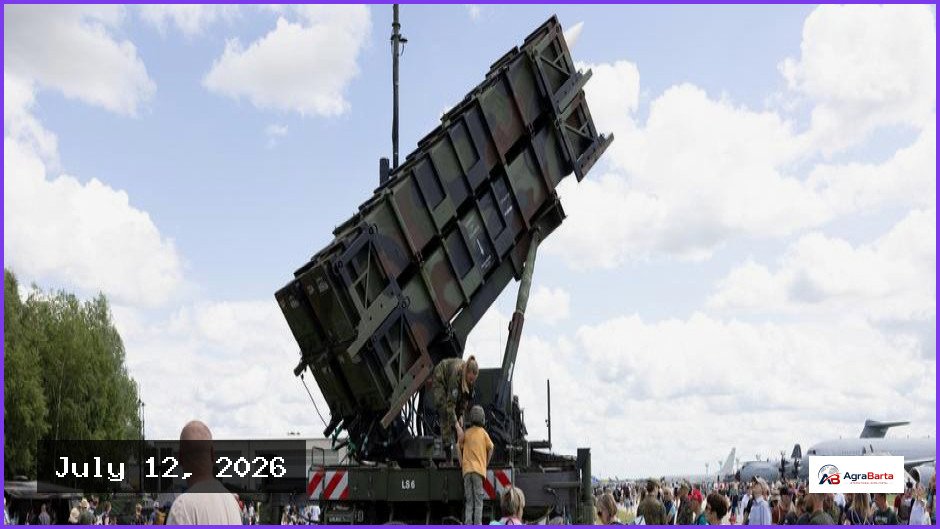
The Patriot air and missile defense system exemplifies this reliance. For decades, these systems have been integral to NATO countries and are currently deployed to protect vital targets in Ukraine. In response, European governments are developing alternative systems to reduce dependence on Patriots. France and Italy have created the SAMP/T NG system, designed for high-altitude threat interception, including ballistic missiles, with initial units slated for delivery in 2027. Germany’s Diehl has developed the IRIS-T for medium-range defense, already operational in Ukraine with a range of 40 kilometers and altitude of 20 kilometers. An upgraded version, IRIS-T SLX, expected by 2029, will extend its range to 80 kilometers at an altitude of 30 kilometers. While these systems cannot yet fully replace US Patriots, they represent a step towards enabling the EU to protect its airspace, potentially against threats from Russia.
Beyond missile defense, European forces currently rely on US systems like Tomahawk cruise missiles for deep precision strikes behind enemy lines. Germany, for instance, has brokered a memorandum of understanding with Washington to purchase Tomahawk missiles and ground-based Typhoon launch systems, a move Chancellor Friedrich Merz stated would “close an important strategic gap in our defenses.” This interim solution, however, further highlights Europe’s continued dependence on the US while its own systems are still under development.
Efforts to develop indigenous long-range strike capabilities are underway through projects like the European Long-Range Strike Approach (ELSA). This international initiative involves six governments, including France, Germany, and Britain, and aims to develop a conventional ground-launched missile system. The project includes the Euro Multi Missile Launcher, complex cruise missiles, and long-range drones with ranges between 500 and 2,000 kilometers. True battlefield independence is not anticipated until the 2030s.
The EU’s dependence extends to the entire “kill chain” – the process of identifying, dispatching, attacking, and destroying targets. Without a self-sufficient network of sensors, satellite reconnaissance, and command structures, European missiles will struggle to independently identify targets. The Russia-Ukraine war has demonstrated the unprecedented scale of drone warfare, influencing front lines and deep behind enemy lines. To address this, the Drone and Counter Drone European Resolve (DECODER) initiative aims to equip EU militaries with drones and counterdrone systems, reducing reliance on the US.
Currently, drone development is largely national. German defense companies and startups have seen growth due to the Ukraine war and new contracts with the Bundeswehr. DECODER seeks to harmonize these national efforts on a European scale, with all 26 EU member states participating, alongside Norway and Ukraine, whose combat experience is deemed crucial. The European Commission estimates DECODER, currently a framework rather than a fully developed program, will require an investment of €3.5 billion to €5 billion ($4-5.7 billion) by 2033.
In terms of satellite communication, Starlink, a US subsidiary, has been essential in Ukraine. The EU is developing its own multi-orbit satellite service, IRIS², comprising 290 satellites for defense and secure government communication. This project, costing over €10 billion, is scheduled to be operational by 2030.
NATO’s fleet of Airborne Warning and Control System (AWACS) aircraft, derived from the US Boeing 707 and operated from a base in Geilenkirchen, Germany, is also a point of reliance. NATO has entered formal negotiations with Sweden’s Saab for GlobalEye early-warning aircraft to replace these systems, with a potential readiness by 2030.
The widespread adoption of fifth-generation F-35 fighter jets by many European countries, while representing advanced Western technology, further signifies dependence on the US. The Future Combat Air System (FCAS), intended as Europe’s response with sixth-generation fighter jets, swarming drones, and a “combat cloud,” has stalled due to disputes over management, labor division, technology, and national interests, particularly between France and Germany. This setback significantly impacts the EU’s pursuit of autonomy at a time when reducing reliance on the US is a key objective.
To view this video please enable JavaScript, and consider upgrading to a web browser that supports HTML5 video