Spain maintains a significant global standing in cultural preservation, currently ranking fourth in the world for the number of sites inscribed on UNESCO's World Heritage list, following only Italy, China, and Germany. With 50 sites distributed across the country—stretching from the northern shores of Galicia to the mountains of Andalusia and reaching the smallest of the Canary Islands—many travelers are familiar with iconic locations such as the works of Antoni Gaudí in Barcelona, the Moorish marvels of the Alhambra in Granada, or the Real Alcázar of Seville. However, Spain also hosts a wide range of spectacular sites that remain relatively unknown, offering visitors the opportunity to explore ancient and natural wonders without the need for advance bookings or navigating large crowds.
In central Andalusia, situated just outside the historic city of Antequera, lie the Dolmens. These three megalithic monuments are believed to be ancient tombs constructed from colossal stone blocks during the Neolithic and Bronze Age. They are inscribed on the list alongside the face-like mountain of nearby La Peña and El Torcal, a natural karst landscape filled with otherworldly rock formations and ancient fossils. Also in the province of Jaén, not far from the city of Jaén itself, are the twin towns of Úbeda and Baeza. These locations are noted for their spectacular Renaissance architecture. Both towns underwent significant renovations during the 16th century, resulting in streets filled with grand palaces, churches, universities, and noble homes. According to UNESCO, these ensembles represent some of the greatest Renaissance architecture in Spain and are among the most important in Europe.
Near the town of Ponferrada in Castilla y León, visitors can find a unique, scarred landscape where paprika-colored rugged rocks rise between an otherwise bottle-green scene. These formations are the remnants of an ancient Roman gold mine. During the 1st century AD, the Romans exploited gold deposits in north-west Spain by using a technique based on hydraulic power to crumble the mountains from within to gain better access to the gold. In Catalonia, close to the city of Tarragona, the Poblet Monastery stands as one of the largest and most impressive Cistercian abbeys in Spain. It features a 12th-century church, a fortified royal residence, and the tombs of several of Aragón's most important kings and queens.
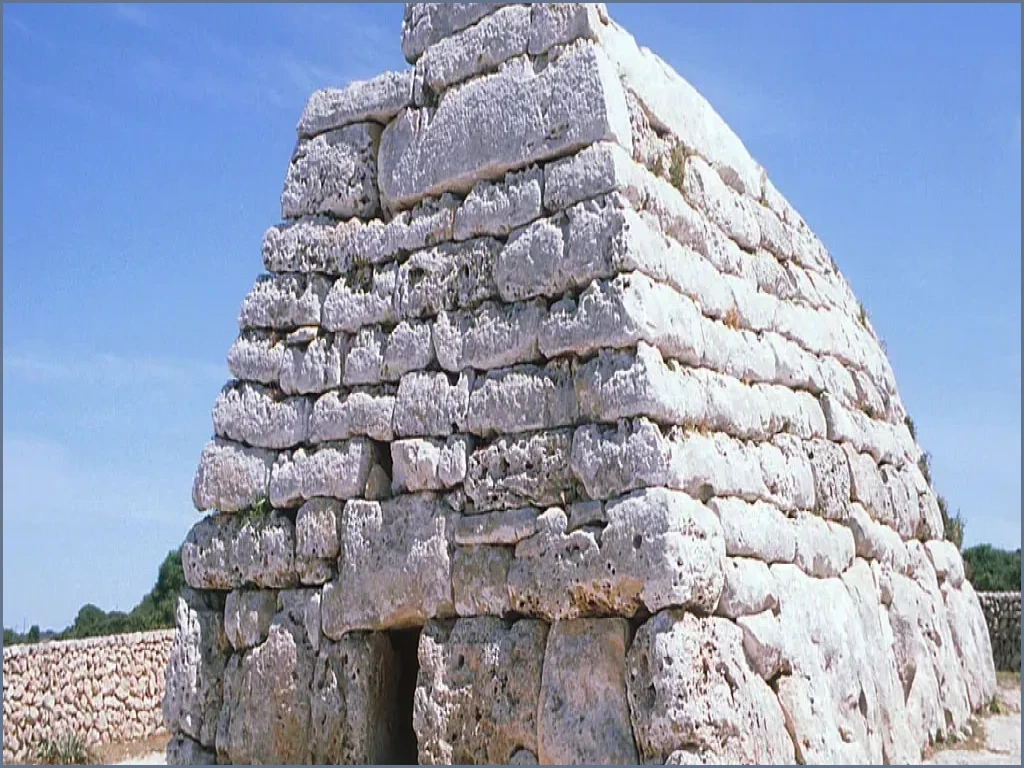
The Prehistoric Sites of Talayotic Menorca in the Balearic Islands represent Spain's newest UNESCO site, having been inscribed in 2023. They reveal evidence of prehistoric communities living on the island, comprising several settlements and burial places dating from the Bronze Age (1600 BCE) to the Late Iron Age (123 BCE). Finally, the Vall de Boí in the high Pyrenees of Catalonia comprises several small villages surrounded by mountain peaks. Each village features a unique Romanesque church built between the 11th and 12th centuries. They are inscribed on the list because they constitute the largest concentration of Romanesque art in Europe.