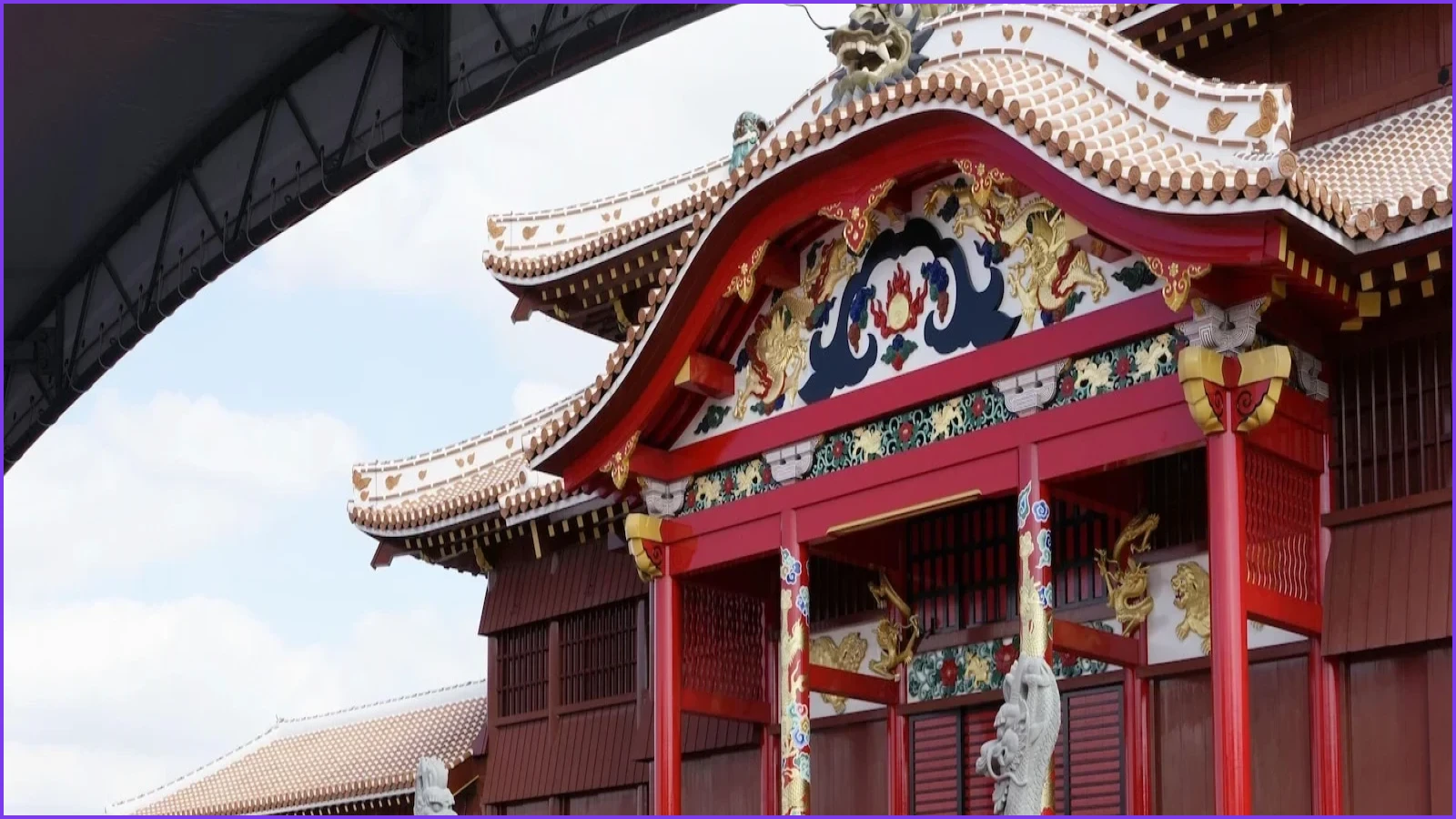
Officials and local residents gathered in Okinawa on Sunday to celebrate the restoration of the Shuri Castle main hall. The event marked the return of a vital symbol of the island's heritage, featuring the structure's iconic deep red exterior and dragon ornaments, seven years after a catastrophic fire razed the building.
The blaze, which occurred on October 31, 2019, destroyed the main hall, known as Seiden, along with two adjacent halls and four other nearby structures, while two additional buildings suffered heavy damage. Firefighters battled the flames for nearly 12 hours as strong winds caused the fire to spread rapidly throughout the complex in Naha, the prefectural capital. While investigators were unable to confirm a definitive cause, they identified an electrical fault as the most probable explanation.
During Sunday’s ceremony held in the courtyard, Okinawa Governor Genta Koja expressed his relief and joy regarding the milestone. He noted that the 2019 fire was a tremendous shock to the Okinawan people, but emphasized that the restoration of the main hall represents a significant recovery. Koja extended his gratitude to the artisans, historians, and experts from across Japan who contributed to the project, as well as to donors from both domestic and international locations. He also stressed that the completion of the Seiden is not the final step, calling for the continued rebuilding of the remainder of the castle complex.
Shuri Castle holds deep historical significance, dating back to the Ryukyu Kingdom, which spanned approximately 450 years from 1429 until its annexation by Japan in 1879. The site also serves as a poignant symbol of Okinawa’s recovery following World War II; the castle was previously destroyed in 1945 during the Battle of Okinawa, a conflict that claimed the lives of roughly 200,000 people, many of whom were civilians. Following that earlier loss, the castle was largely restored in 1992 to commemorate the 20th anniversary of Okinawa’s reversion to Japan, which marked the end of a 27-year U.S. occupation. The island still hosts a large U.S. military presence.
Historian Kurayoshi Takara, who assisted in the previous restoration, noted that this latest reproduction was designed to mirror the original building more accurately. New historical findings, specifically regarding the ingredients of the red pigment, guided the process. Experts identified that the pigment was derived from iron bacteria found in northern Okinawa. Artisans spent time conducting experiments to recreate the authentic deep red hue by blending this bacteria-derived pigment with a commercial product, Takara explained in an interview with Japan’s NHK public television.
The main hall is scheduled to open to the public on Monday. Restoring the remaining portions of the castle will occur in stages, a process that experts estimate could span more than a decade. As a major tourist attraction, the reconstruction of Shuri Castle is expected to boost visitors to the island, supporting Governor Koja’s goal to improve the local economy and increase per capita income and tourism revenue over the next ten years.