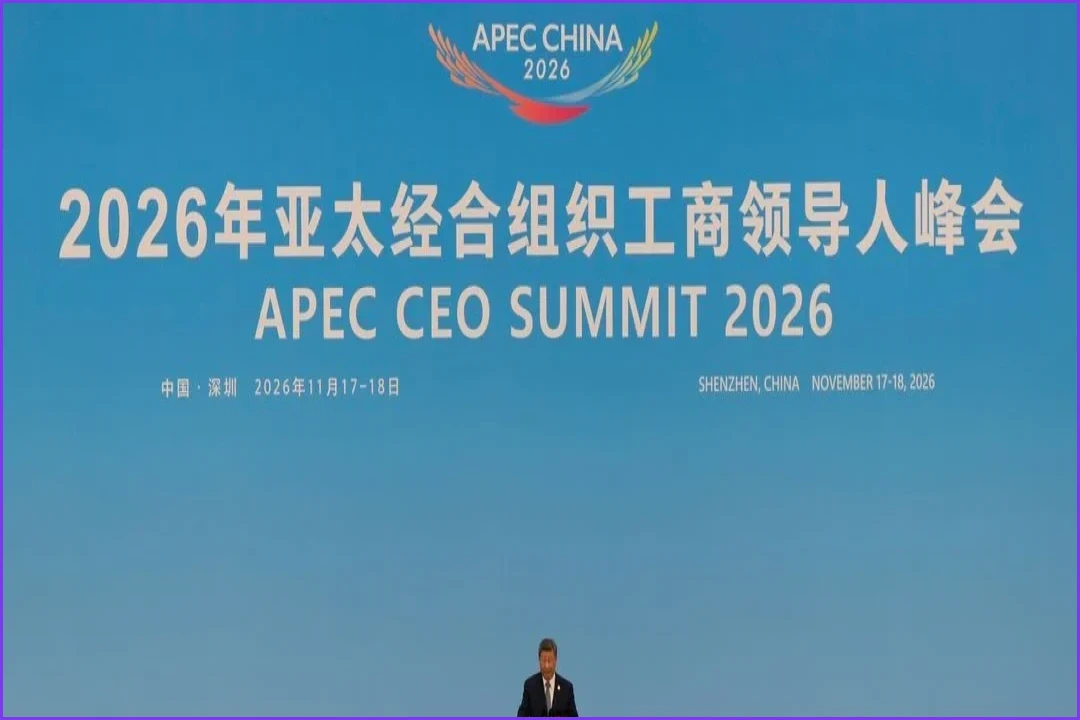
Chinese President Xi Jinping formally inaugurated the Asia-Pacific Economic Cooperation (APEC) summit in the southern Chinese city of Shenzhen on Wednesday, using the platform to advocate for expanded international collaboration on artificial intelligence and a more open global trade environment. As pressure mounts on global leaders to mitigate the risks associated with rapid technological advancement, Xi emphasized the importance of fostering partnerships in digital innovation.
"We should actively build partnerships for scientific and technological innovation, deepen cooperation in the digital economy and artificial intelligence and promote a green and low-carbon transition," the Chinese leader stated. According to Xi, transforming these innovation strengths into growth momentum is essential for fostering shared prosperity and economic stability across the Asia-Pacific region.
Addressing the economic landscape, Xi called for the removal of investment and trade barriers to ensure inclusive and balanced development. He reiterated China's commitment to providing a stable, predictable, and beneficial environment for global enterprises, noting that the country plans to continue expanding access within its services and manufacturing sectors. "Starting by lowering tariffs, expanding access and exploring regulations and management standards, China will conduct deep-seated reform," he added.
The summit occurs against a backdrop of significant trade tensions between the world's two largest economies. While a tenuous trade truce between Xi and US President Donald Trump was reached on the sidelines of last year's APEC meeting in South Korea, that agreement is set to expire in January. The trade relationship remains strained by the US administration’s imposition of broad tariffs, which have been met with Chinese counter-levies and threats to restrict key exports.
Furthermore, the United States recently announced stricter export controls on advanced semiconductors destined for China, citing national security concerns regarding AI model development. These regulations target not only direct chip smuggling but also the use of third-country data centers by Chinese companies to access computing power. Meanwhile, US-based chip giant Nvidia faced a difficult Wednesday, as its latest earnings report was overshadowed by a scandal involving former CEO Jensen Huang and a woman suspected by US officials of spying for China. President Xi and President Trump are expected to meet in Shenzhen on Thursday.