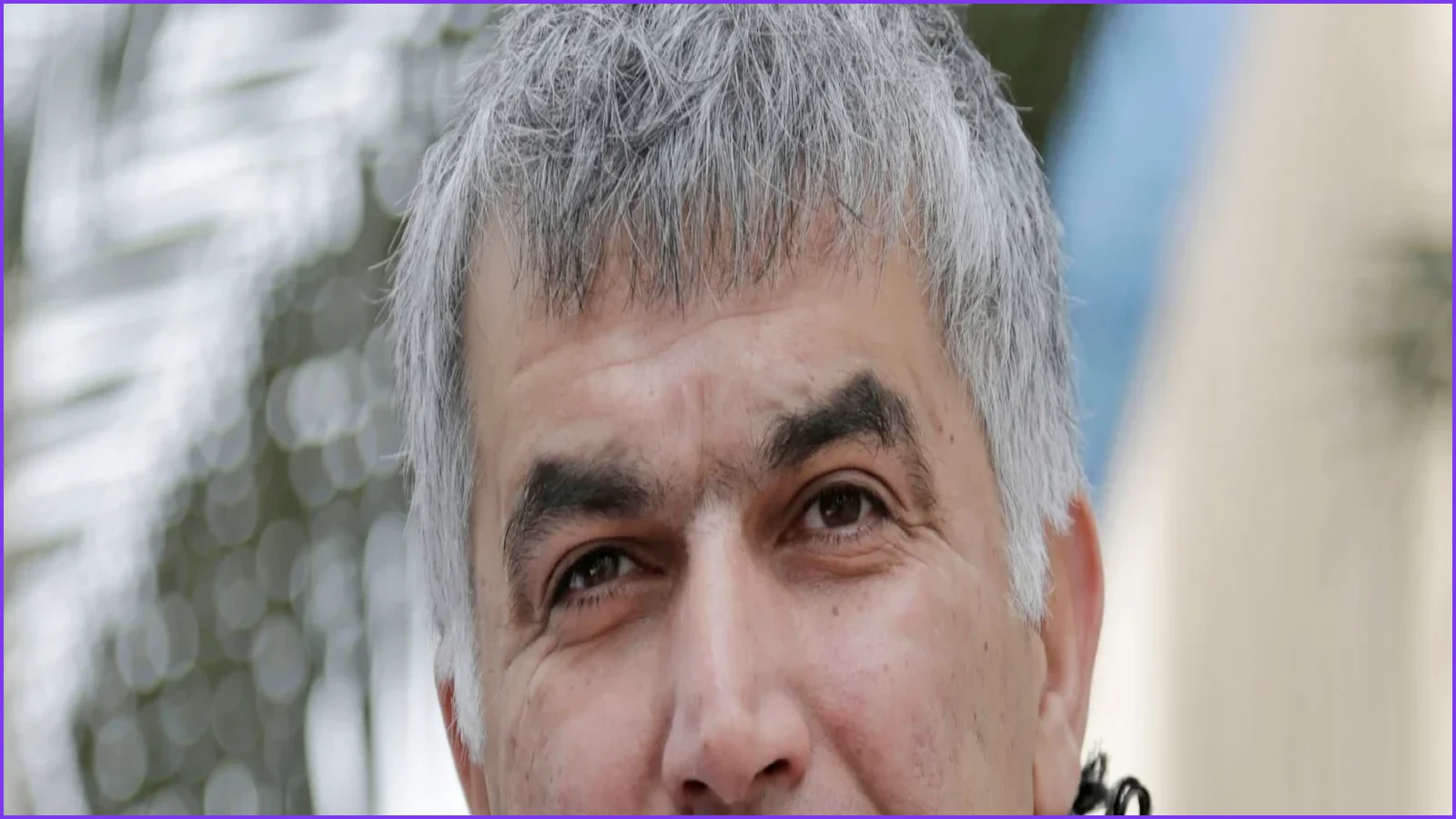
Nabeel Rajab, a prominent democracy activist who championed the rights of Bahrain’s Shiite majority and spent years in prison for his opposition to the country’s monarchy, has died at the age of 62. His death occurred on Tuesday after family members found him unresponsive at their home in Turkey.
Ebrahim Sharif, an activist and close friend of the family, reported that Rajab’s wife and daughter transported him to a hospital in Istanbul, where he was pronounced dead. After speaking with Rajab's brother, family members indicated they believe he likely suffered a heart attack.
The Bahrain Center for Human Rights, an organization Rajab once led as president, confirmed the news in a post on X. The group expressed their condolences, stating, “We extend our sincere condolences and heartfelt sympathy to his esteemed family. We pray that God may encompass him with his vast mercy and reward him abundantly for his efforts and contributions.”
Rajab was a central figure in Bahraini human rights advocacy for decades, often utilizing social media to highlight the treatment of dissidents in a nation where such criticism carries significant risk. He helped establish the Bahrain Center for Human Rights in 2002, creating a platform to advocate for democratic reforms in the island nation, which is ruled by a Sunni monarchy over a predominantly Shiite Muslim population.
He gained international recognition in 2011 during the Arab Spring uprisings. As a well-known voice for the movement, Rajab participated in the occupation of Manama’s Pearl Roundabout, continuing his activism even after security forces launched a violent crackdown. Alongside fellow protesters, he demanded fair elections, the establishment of a constitutional democracy, and an end to preferential treatment for the country’s Sunni minority. Bahrain eventually suppressed the uprising with assistance from troops from Saudi Arabia and the United Arab Emirates.
Despite constitutional guarantees regarding freedom of speech, Rajab faced repeated prosecutions for remarks that were deemed to insult foreign nations or government agencies, or for spreading false rumors during wartime. His frequent detentions drew widespread criticism from the United Nations, human rights organizations, and international allies, including the United States, which maintains the headquarters for its Navy’s 5th Fleet in Bahrain.
In June 2020, while serving a five-year prison sentence for tweets critical of the Saudi-led war in Yemen and allegations of prison abuse, Rajab was released to home detention due to the coronavirus pandemic. Sayed Ahmed AlWadaei of the London-based Bahrain Institute for Rights and Democracy noted that Rajab was distinguished by his willingness to defend the vulnerable, even when the personal cost was high. The International Federation for Human Rights, where Rajab served as deputy secretary-general from 2010 to 2020, remembered him as an inspiration, with president Alexis Deswaef stating, “The world has lost a truly exceptional human rights defender. He paid for his commitment to a more just world with many years in prison and constant harassment by the Bahraini authorities. This must have taken a toll on his health.”
___ Schreck reported from Bangkok and Metz from Jerusalem.