European Union lawmakers have clashed over a newly announced plan by five member states to transfer irregular migrants to an offshore return hub in Rwanda. Our correspondent Vincenzo Genovese, reporting from Vienna, said it marked an unprecedented move in EU migration policy by relocating irregular migrants to a third country with which they have no previous connection, prompting observers to compare the move to migration strategies pursued by Donald Trump in the United States.
Political support for external deportation centers has grown across the bloc, with 19 of the 27 EU member governments backing the return hub framework. Only France and Spain have explicitly declared their opposition to the plan, while Italy continues to operate its own independent migration agreement with Albania. Danish Prime Minister Mette Frederiksen described the five-nation accord as a "game changer" designed to help European governments regain control and remove incentives for illegal entry. Frederiksen stated on Monday that she has a strong expectation that additional EU member states will eventually join the scheme.
Details from negotiations reveal that the proposed pilot facility in Rwanda will accommodate approximately 100 individuals. Designed as open accommodation centers rather than locked deportation facilities, the hub would allow migrants to move freely across the country with the stated objective of integrating them into local society and the domestic labor market. However, legal challenges could emerge when deportations begin next year, as happened with the UK-Rwanda agreement.
Under existing EU legislation governing external return hubs, candidate non-EU countries are eligible only if international human rights standards are respected. Although Rwanda's broader human rights record has faced persistent international scrutiny, Rwandan Minister of the Interior Vincent Biruta insisted the nation is fully prepared. Biruta asserted that Rwanda possesses extensive experience in managing migrant populations and reaffirmed its commitment to respecting fundamental rights.
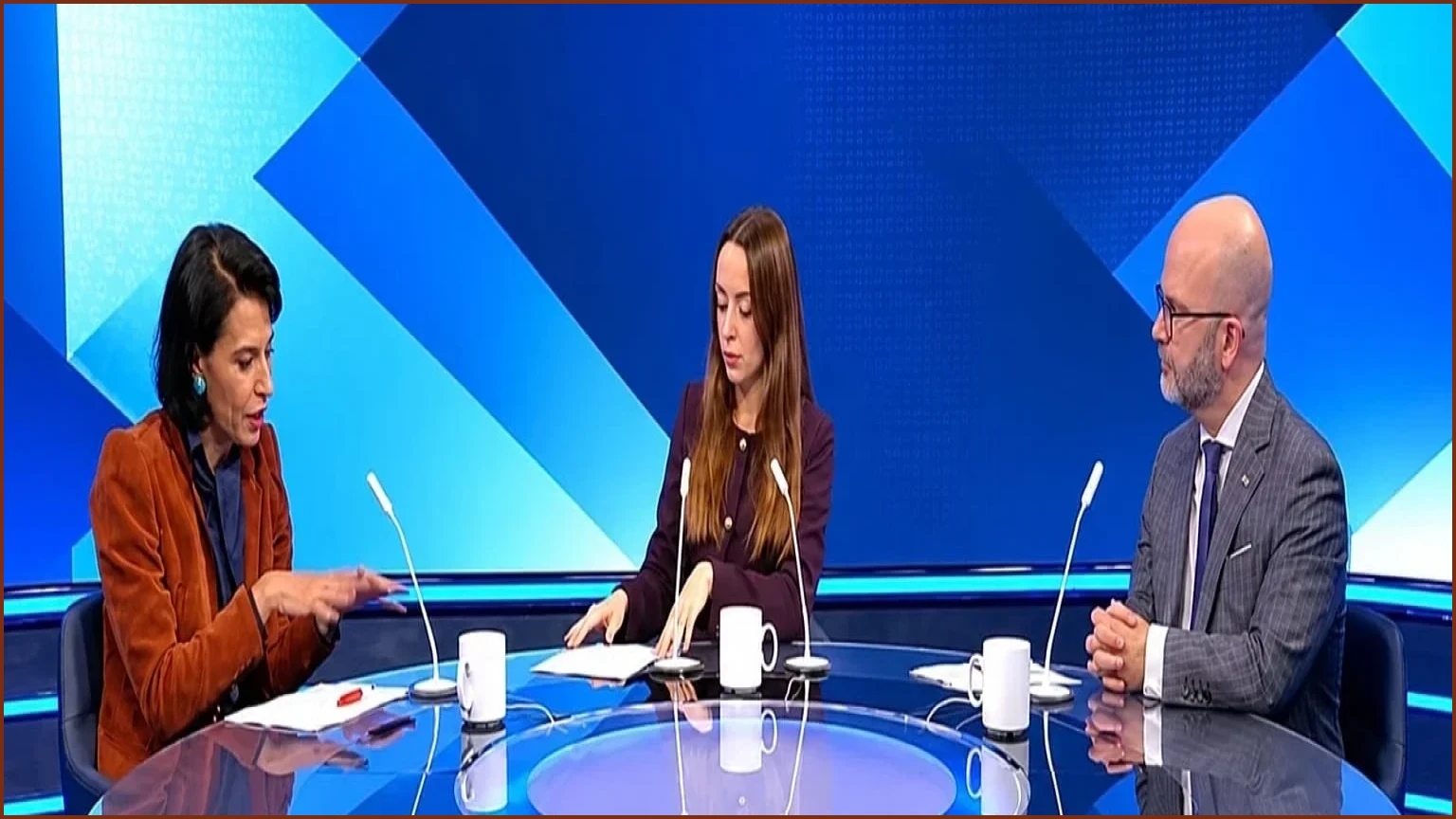
The debate over the initiative, hosted by Jones, featured contrasting perspectives from members of the European Parliament. Swedish MEP Charlie Weimers, a member of the European Conservatives and Reformists group who has served in parliament since 2019, echoed Frederiksen's description of the policy as a "game changer." Weimers emphasized that every policy framework begins on a small scale, arguing that the pilot project would prove successful if it creates momentum for further steps in broader EU migration management.
Taking the opposite stance, Iraqi-born Swedish MEP Abir Al-Sahlani of the Renew Europe Group, who has also served since 2019, questioned the basic practical feasibility of relying on Rwanda to execute returns. "If we in Europe were not able to send them back to their countries, what makes us believe Rwanda will be able to?" Al-Sahlani asked. She raised serious concerns regarding security, Rwanda's heavy dependence on foreign development assistance, and numerous unresolved operational details.
Al-Sahlani further criticized the growing influence of far-right narratives on European policy discussions, contending that EU governments are failing to utilize existing statutory tools effectively. She accused political leaders of portraying asylum seekers as threats and using them as scapegoats for broader social issues, warning that the wider migration debate is increasingly driven by emotional rhetoric rather than verifiable facts, fueled by the misuse of statistics, selective truths, and fabricated accounts designed to vilify refugees.