Following a sweeping defeat in the November midterm elections, Arizona Republicans are confronting an unprecedented political lockout after Democrats secured every statewide office on the ballot and established a lawmaking trifecta unseen in the state since 1966. The historic results leave the GOP completely removed from power at the state level, marking a dramatic reversal for a political stronghold long defined by Barry Goldwater's conservative movement and John McCain's maverick tradition.
The current landscape stands in stark contrast to a decade ago. When Donald Trump won the White House in 2016, Republicans controlled every major lever of power in Arizona, including the governor's office, both U.S. Senate seats, and majorities in both legislative chambers. Over the following decade, as Trump tightened his grip on the party, Democrats steadily gained ground, culminating in this election cycle's complete takeover from the governor's office down to the post of state mine inspector.
Among the key midterm contests, Democratic incumbent Governor Katie Hobbs—once viewed as politically vulnerable—won her race against Congressman Andy Biggs, a prominent figure in the Make America Great Again (MAGA) movement, by more than 10 percentage points. In the race for secretary of state, Democratic incumbent Adrian Fontes decisively defeated Trump acolyte Alexander Kolodin. Kolodin, who was heavily involved in efforts to challenge the 2020 election outcome, had previously beaten former Arizona Republican Party chair Gina Swoboda in the GOP primary.
The Democratic surge reached deep into local governance as well. In Maricopa County, the nation's fourth-largest county, a 19-year-old sophomore at Arizona State University unseated a tenured Republican to win the role of superior county clerk, taking charge of court records, child support filings, and marriage licenses. While part of a wider blue wave that affected GOP candidates in redder states like South Carolina and Texas, Arizona's political shift reflects decades of demographic change, rapid suburban growth around Phoenix, and a rejection of hardline Trumpism by affluent Republican and independent voters.
The magnitude of the losses has sparked intense soul-searching within the state GOP regarding its central direction. Kirk Adams, a former Arizona House speaker who served as chief of staff to the state's last Republican governor, framed the central dilemma facing the party. "Were we too Maga or not Maga enough?" Adams asked, adding that "the world has changed, so if there is no change from the party, we’ll be looking at minority status for a long time. Political parties tend to react to near-extinction events like this." Celebrating the Democratic victory on X, Hobbs wrote, "Now, Arizona will have a Democratic trifecta for the first time in 60 years. We’re going to need a lot more pizza."
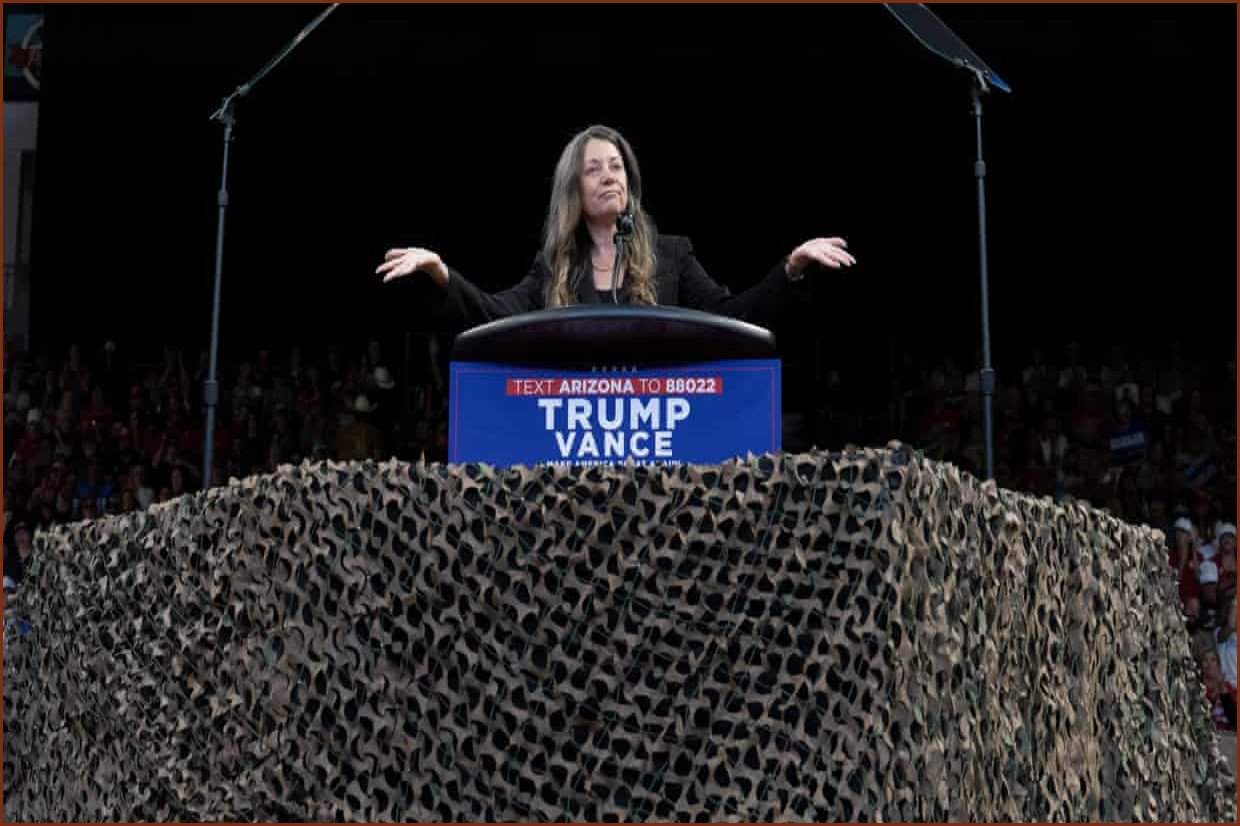
Republicans remain deeply divided on how to rebuild. Some party members place the blame on state leadership for delegating strategic operations to outside organizations, particularly Turning Point Action—the Phoenix-headquartered conservative youth group founded by Charlie Kirk—and Arizona's far-right Freedom Caucus. Swoboda argued that the state party allowed Turning Point Action to play kingmaker despite having far fewer financial resources than the outside group, which poured millions into conservative candidates. Every statewide nominee endorsed by Turning Point ultimately lost.
"I could see this coming," Swoboda said, criticizing the party for failing to engage with voters and focusing on tone-deaf messaging rather than consumer concerns like rising prices and foreign conflict. "We are in the wilderness. Who is going to give money to a party that is run by Turning Point Action?" Turning Point Action did not respond to requests for comment.
However, proponents of the party's right wing contend that conservative candidates held up better than moderate figures. Tyler Bowyer, chief operating officer of Turning Point Action, posted on social media that more moderate Republican candidates lost more ground than conservatives across red and swing states. Looking ahead to the 2028 presidential cycle, Bowyer outlined a strategy that includes securing an early challenger against incumbent Democratic U.S. Senator Mark Kelly, obtaining early financial commitments from groups like the Club for Growth, and expanding outreach to non-regular voters.
The party's breakdown caps years of internal friction. In 2017, conservative U.S. Senator Jeff Flake opted against seeking re-election after realizing he could not win a primary against a Trump-aligned challenger. Following Senator John McCain's death in 2018, both Senate seats fell to Democrats, and in 2020, Trump became only the second Republican presidential candidate in 50 years to lose Arizona. Nevertheless, party loyalists continued to elevate Trump allies while purging internal critics. In 2022, former television anchor Kari Lake won the GOP gubernatorial primary after declaring her campaign had "drove a stake through the heart of the McCain machine," only to lose the general election to Hobbs. For her current term, Hobbs selected John Giles, the former Republican mayor of Mesa who became an independent, as her running mate.
Adams noted that rebuilding the party apparatus will be uniquely challenging due to a lack of high-ranking leaders. "Typically you have a governor or a senator who has a political machinery in place," he observed. "We don’t have that now."
Former state party leaders emphasize that the GOP must move quickly before the next election cycle. Kurt Davis, who served as party executive director in the mid-1980s and is now an independent, noted that the party survived the 1980s impeachment of Republican Governor Evan Mecham—following public outcry over racist comments, the cancellation of a Martin Luther King Jr. state holiday, and controversial appointments—by focusing on voter registration and candidate recruitment. Warning that "there’s a two-year clock that is running," Davis urged a return to core operational duties.
Republican strategist Nathan Sproul believes the party can recover by 2028 if legislative Democrats overreach, provided Republicans end internal warfare and accept internal dissent. Sproul cited Ronald Reagan's principle that "the person who agrees with you 80% of the time is a friend and an ally – not a 20% traitor." Former party chair Robert Graham agreed, stating that while Turning Point was "really good at beating the crap out of people," such tactics failed outside of primary races. Graham urged the party to refocus on job creation, economic opportunity, safety, and prosperity.
While the state party organization did not respond directly to requests for comment, Arizona GOP Chair Sergio Arellano stated on social media that the party will "take a hard look at what worked, what didn't and what we need to do better." Swoboda insisted that the party must actively reform rather than maintain the status quo, stating, "Where the party is going to go depends on what the state committee wants. I thought the committee liked winning."