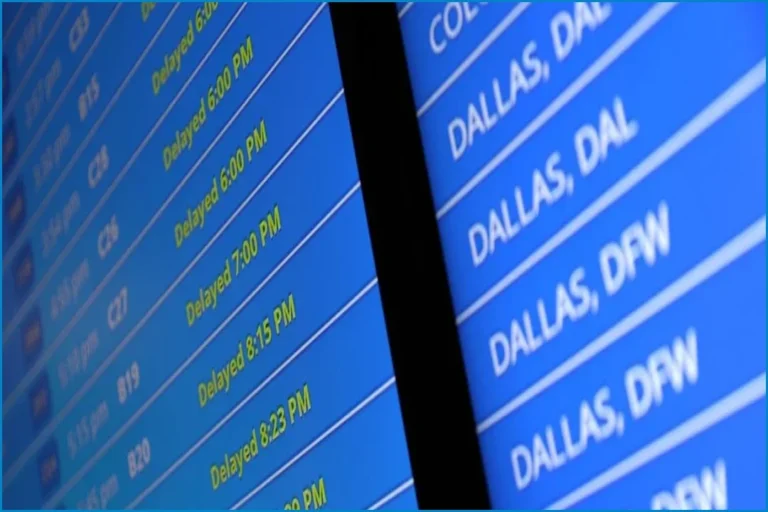
United States airspace began returning to normal operations on Saturday following a rare nationwide ground stop that caused thousands of flight cancellations and stranded air travelers across the country. Transportation Secretary Sean Duffy announced during a Saturday news conference that full operations had resumed, confirming that all airborne aircraft had landed safely during the disruption. Earlier on Saturday, Duffy stated in a social media post that planes were once again pushing back, taxiing, and taking off, assuring the public that flying remained safe while warning that delays and cancellations would persist as airlines work to reschedule flights and reposition crews and aircraft.
Despite the resumption of air traffic control operations, flight tracking data from FlightAware showed more than 4,100 flights canceled and approximately 3,200 delayed on Saturday. The disruption was even more severe on Friday, when around 9,159 flights were canceled and 7,190 were delayed, leaving passengers stranded at major airports nationwide. FAA Administrator Bryan Bedford stated on Saturday that out of 50,000 flights scheduled for Friday, approximately 30,000 had been completed before the order was issued. About 12,000 flights could not be completed on Friday, including roughly 3,000 private flights alongside commercial services. Bedford anticipated as many as 5,000 flight cancellations on Saturday, but projected that airlines should return fully to schedule by the end of Sunday.
The Federal Aviation Administration initiated the nationwide stoppage at 3:36 p.m. EST on Friday while approximately 3,500 aircraft were actively in the air. Duffy emphasized that the order was issued out of an abundance of caution, and every airborne flight managed to land safely. The ground stop was subsequently lifted at around 8:20 p.m. EST on Friday. The event represented the first nationwide ground stop in the U.S. since January 2023, when a critical FAA computer system malfunctioned. Prior to the 2023 incident, the last national ground stop occurred in the aftermath of the Sept. 11, 2001 terror attacks.
Government officials attributed the operational breakdown to legacy technology and aging system infrastructure. Duffy characterized the national air traffic control system as "incredibly old." According to Duffy, a preliminary investigation revealed that a contractor for L3Harris, a technology and defense company that owned the system, was replacing a router and switching old copper wiring to fiber at a remote FAA facility. The router being replaced unexpectedly began flooding other routers, sending 1,000 logon attempts every four to five seconds and overloading the system. Duffy noted that the FAA is investigating whether the incident stemmed from human error or a defective router, while criticizing contractors who "take our money and provide really poor service." Senior government sources indicated that the issue was isolated to specific Cisco 600 series routers manufactured between 2001 and 2006.
Bedford explained that transitioning the network from copper wires to fiber was a routine maintenance task the agency had been executing for years, with about 70 percent of the system already converted. However, after the router flooded the network for 45 minutes, the FAA was unable to determine the root cause of the instability, which quickly spread across 17 facilities. Bedford stated he fully stood behind the decision to order the ground stop out of an abundance of caution. Meanwhile, authorities addressed potential security concerns. Homeland Security Secretary Markwayne Mullin stated during a Friday briefing that there were no indications of a cyberattack. Duffy echoed that view on Saturday, saying he did not believe a cyberattack had occurred, but rather that the FAA system simply failed to "meet the moment."
Addressing long-term solutions, Duffy posted that the FAA is actively moving to modernize its aging infrastructure, pointing to a $12.5 billion down payment secured by President Donald Trump. However, Duffy added that the amount "isn't ENOUGH," coinciding with the Trump administration boosting its funding request for air traffic control modernization to $50 billion late Friday. Duffy stressed that the administration's top priority remains ensuring travelers return home safely and swiftly, describing U.S. airspace as both the busiest and safest in the world. Several U.S. officials also reiterated that flying is entirely safe for the public.
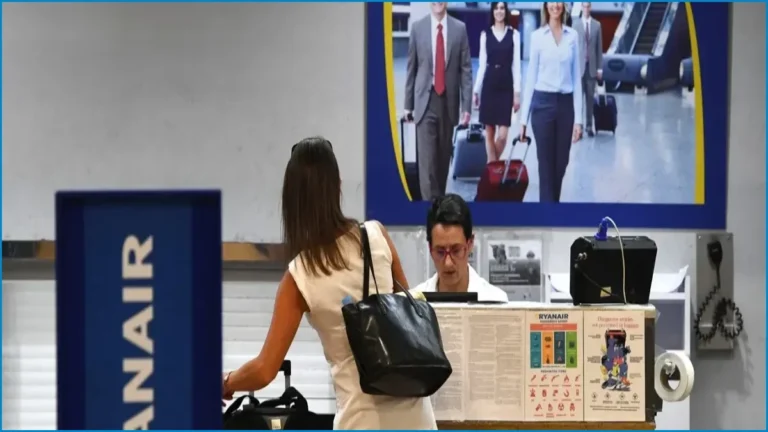
Major airports across the country continued to experience significant delays, including facilities in Boston, Atlanta, Miami, Pittsburgh, New York City, Los Angeles, and Baltimore. Major air carriers issued guidance for affected travelers as recovery efforts continued. Delta Air Lines advised that customers traveling on Saturday should expect ongoing delays and schedule adjustments while the airline works to reposition flight crews and aircraft. Similarly, American Airlines stated on Saturday that while it had implemented multiple recovery measures to limit impacts on customers and staff, the lingering effects of the major airspace disruption would continue to produce additional cancellations and delays, prompting the carrier to urge travelers to monitor their flight status closely as normal operations resume.
"You will continue to see some delays and cancellations as carriers reschedule flights and reposition aircraft/crews where they are needed most."
Several U.S. officials said it is completely safe for Americans to fly.