According to current opinion polls, France is set to face a choice next May between two distinct forms of what critics describe as national suicide: the platforms of Jean-Luc Mélenchon and Marine Le Pen. Last month, Marine Le Pen presented a programme characterized by dishonest arithmetic and an incoherent jumble of liberalism and protectionism, combining tax cuts with increased social spending.
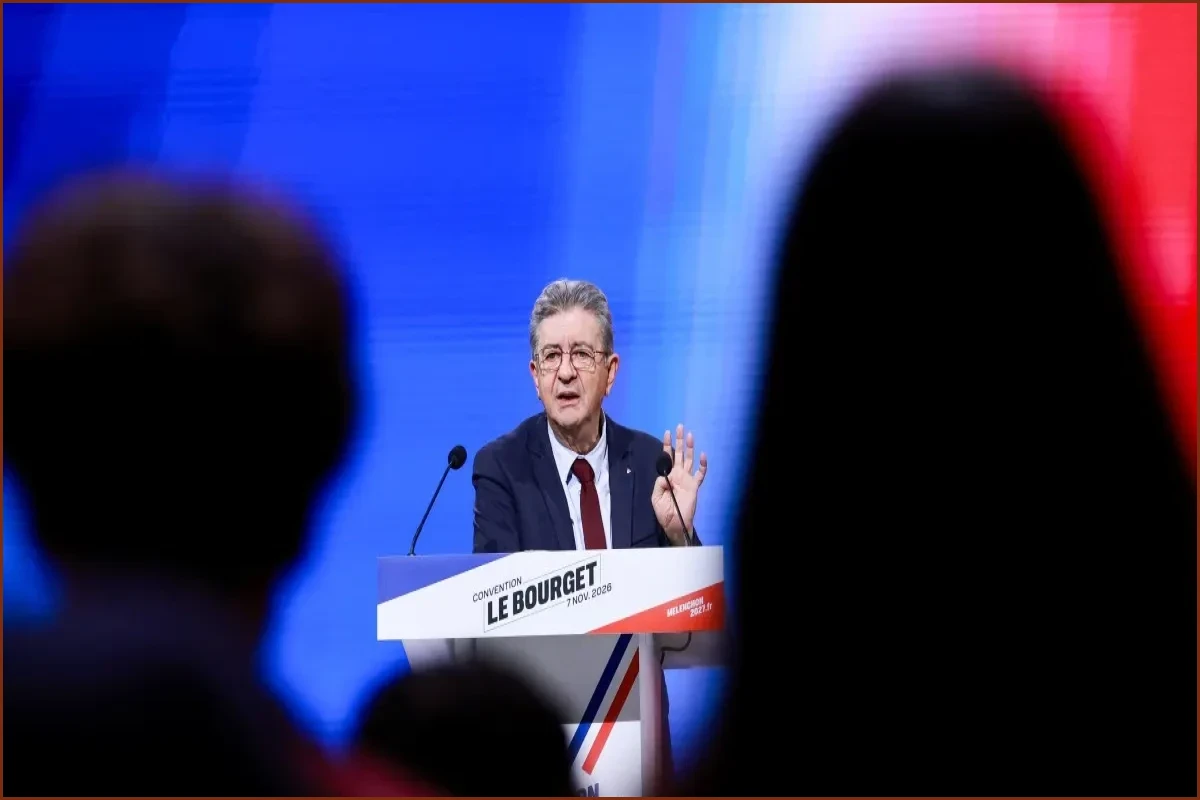
Last week, Jean-Luc Mélenchon published his own ultra-left economic programme for a “New France,” which critics have dismissed as a six-year-old’s Santa Claus wish-list.
Mélenchon’s proposals include moving the retirement age to 60, implementing a 32-hour work week, introducing a sixth week of holiday, and providing seven days of compassionate leave for the death of a “friend.” In a country that already entrusts 57 percent of its GDP to the state, Mélenchon’s plan would add at least €100 billion a year to the annual budget. Under his vision, prices would be frozen, salaries would be increased, and a large portion of the national debt would be repudiated.
Funding for these measures would rely on private enterprise and “the rich,” with tax breaks for businesses abolished, inheritance capped at €12 million, and at least two new taxes on wealth introduced alongside higher income tax for moderate to high earners. Additionally, several industries, including banks, would be nationalised.
Mélenchon’s programme is coherent in its own way, representing an unashamed lurch toward the kind of “collectivism” last attempted in Europe by the Soviet Union. By contrast, Le Pen’s programme is described as a straightforward swindle—a bait and switch mixture of welfarism and liberalism with numbers that do not add up. Mélenchon’s plan also undermines itself by promising a rapid dash to 100 percent renewable energy while simultaneously dismantling France’s nuclear power stations, which currently provide 70 percent of the nation’s electricity.
Furthermore, the plan expects other EU countries to agree to abolish part of the French debt while France unilaterally repudiates the single European market for goods and capital. In sum, rule by the LFI would likely mean rule by the IMF.
“Mélenchonomics” is simultaneously less and more dangerous than “Marinomics.” It is less dangerous because Mélenchon will likely never be elected; polls suggest that if he reaches the second round, he will be defeated by Le Pen by a two-to-one margin. However, it is more dangerous because the programme is not intended for democratic government.
Mélenchon knows he cannot be elected this May; his goal is to reach the second round. By exciting the idealistic Left and the youth, he hopes to overwhelm the muddled promises of central bloc candidates who are handicapped by their partial attachment to the real world.
Once in the second round, the LFI intends to paint anyone who abstains or votes for Le Pen as a “neo-liberal,” “fascist,” or “racist.” Mélenchon expects to emerge post-election as the only credible voice of “opposition to fascism” and to foment an insurrectionary mood that would make recent street protests appear feeble.
The obvious question is why Le Pen and Mélenchon are attracting support from well over 50 percent of the French electorate. According to recent polls, Le Pen holds 35 percent support for the first round of the presidential election on April 18th. Mélenchon has risen in the last month from approximately 14 percent to 19 percent, fueled by 45 percent support among voters under 24 and by protests against failing lycées and the cost of living.
Meanwhile, no candidate in the crowded but flailing “mainstream”—from the centre-left to the centre-right via the ex-Macronist centre—is currently attracting more than 14 percent of the first-round vote.
France is heading for a calamitous choice in the two-candidate second round on May 2nd. All three forms of the mainstream have governed the country this century and are held co-responsible for the €3.6 trillion mountain of debt. They have jointly created a situation where the French state claims more resources than almost any other European country yet struggles to meet national needs in education, health, and defence.
While France is not the basket-case some claim—ranking 26th in the UN’s Human Development Index—it is difficult for mainstream parties to accuse Le Pen and Mélenchon of offering destructive policies when they have presided over half a century of high taxation, deteriorating services, and increasing public debt. The mainstream has simply run out of appealing ideas and likeable personalities.
There are 40 percent or more of voters who refuse both Mélenchon and Le Pen, which is more than enough to take an honest and realistic candidate into the second round. However, that “sensible” electorate is splintered. Talk of a “central primary” or a “saviour” candidate to unite the anti-extreme camp is growing, with names like Christine Lagarde, Teddy Riner, or Francois Hollande mentioned, though no one seems to fit the bill.
With five months remaining, the only reason for optimism is that French politics hates a “fait accompli,” and there is still time for a surprise from the centre-field.