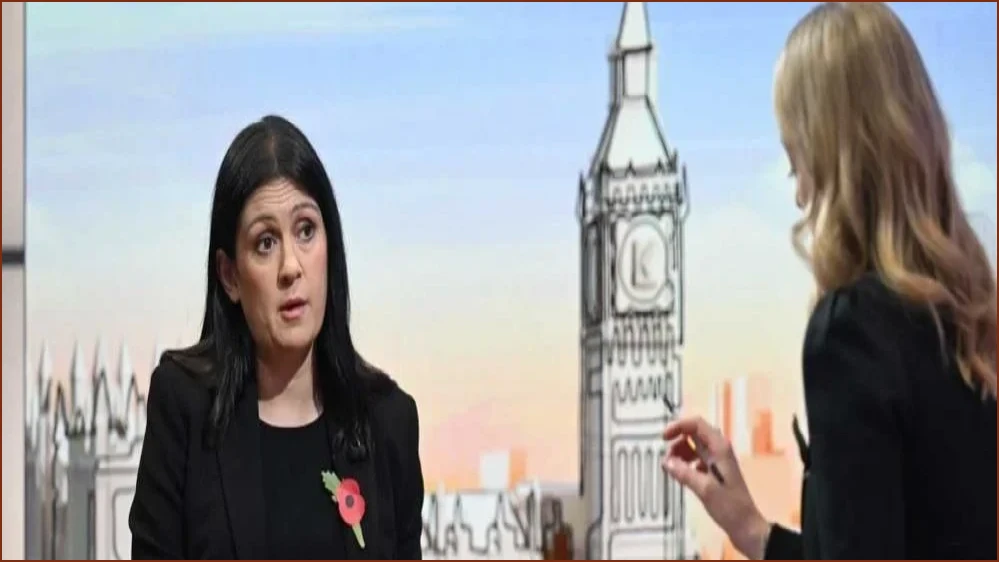
Culture Secretary Lisa Nandy has rejected accusations that she politicised Remembrance Sunday after coming under intense criticism for linking the solemn commemoration to the UK rejoining the European Union's Erasmus+ exchange scheme. Speaking on television, Nandy insisted she was "horrified" by the backlash from opposition politicians and defended the policy connection as common sense.
The controversy began on Saturday night when the Department for Culture, Media and Sport issued a statement announcing that "as we mark Remembrance Sunday, Erasmus+ will give a new generation the chance to build connections across Europe." In the department's press release, Nandy argued that honoring wartime sacrifice involves strengthening international ties, stating: "As we remember the immense courage of those who served our country, we honour them by building the best opportunities for the next generation through closeness and collaboration with our allies."
The linking of Remembrance Sunday to the educational scheme drew swift condemnation from political figures and veterans' representatives. Conservative Party chairman Kevin Hollinrake called Nandy's comments "tone deaf and frankly shameful" and demanded an apology, asserting that the bonds forged by military veterans "run far deeper" than an educational exchange scheme. Peter Sharples, chief executive of the Veterans Institute, told the Telegraph that the public should "just honour the fallen" on Remembrance Sunday rather than using the occasion to debate "party political matters."
Reform UK leader Nigel Farage also criticized the announcement during a interview, remarking: "For Lisa Nandy to use Remembrance Sunday to announce this and say it's all about peace, it's all about the war – I find that very, very poor taste." Farage denounced Erasmus as a "terrible scheme" that is "wildly expensive" in comparison to the Turing Scheme, which ministers introduced in 2021 as a post-Brexit alternative. He further criticized ongoing negotiations between the UK and the EU regarding a new youth mobility agreement ahead of a major summit scheduled for 20 November.
Interviewed on the Sunday with Laura Kuenssberg programme, Nandy stood firm behind her original remarks and maintained that expanding the study and work scheme would help young Britons recognize past sacrifices. "It was Winston Churchill after the Second World War who talked about extending the hand of friendship across Europe and making sure that we honoured the legacy of that generation," she said. She added that following Brexit, "we closed off opportunities for young people from this country to understand not just the impact that generation made here in the UK, but the way in which they went off and fought for the freedom of people across Europe."
Pressed on whether it was appropriate to link the day of remembrance to the government's perceived cultural benefits of the scheme, Nandy responded: "There was a time where that wouldn't have even raised an eyebrow as somehow political, it was just common sense – and it is common sense." She went on to observe that most of the Brexit benefits promised in 2016 "have not been realised" and emphasized that "there are trade-offs and choices to be made" regarding Britain's future relationship with the bloc.
Under the newly outlined government plans, applications for Erasmus+ will open later this month. The initiative will provide free train passes for 18-year-olds to travel to EU countries independently or in groups of up to five friends. Additionally, youth groups will participate in short overseas exchanges, with priority given to regions historically less engaged with Erasmus, including the north of England and the Midlands.
The dispute comes amid wider debates over post-Brexit arrangements between the UK and the EU. Prime Minister Andy Burnham has called for an "honest discussion" regarding the possibility of returning to free movement between the UK and the EU. However, former EU Brexit negotiator Michel Barnier has previously warned that the UK cannot "cherry pick" which specific elements of the single market it wishes to subscribe to.