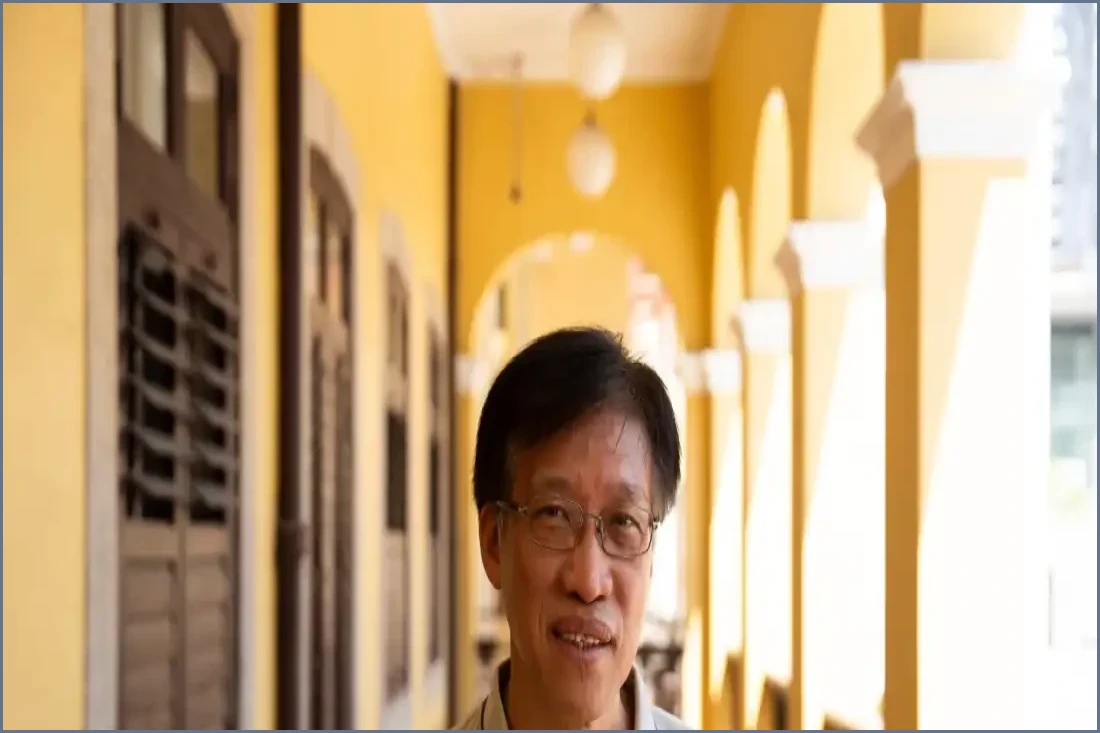
Au Kam San, a veteran pro-democracy former lawmaker in Macao, was sentenced to 12 and a half years in prison on Friday. The sentencing follows a closed-door trial in the Chinese casino hub, marking the first time the territory's national security law has been used for a public prosecution since its enactment in 2009. The 69-year-old was found guilty of subverting state power, breaching confidentiality, and establishing unauthorized contact with entities outside of Macao to conduct activities deemed to endanger national security.
According to the court's statement, Au cooperated with "hostile organizations" outside of Macao over a long period, collecting and disseminating political views that the court characterized as containing false information and subversion. The court alleged that he conspired to incite hatred among residents against the central government with the intention of undermining the country's fundamental system. While acknowledging that the defendant was a first-time offender and admitted to a portion of the criminal facts, the court ruled that his actions demonstrated a high degree of intent and that the potential consequences of his crimes were "very serious."
The trial, which took place in September, was held behind closed doors. The court stated that this decision was made to ensure that national security interests were not undermined, maintaining that Au had access to legal counsel and exercised his right to a defense. Additionally, the court noted it had approved requests from his family to visit him regularly.
The legal proceedings have drawn significant criticism from observers and family members. Au's wife, Virginia Cheang, expressed skepticism in a public letter, labeling the process a "political trial" and a "groundless persecution to humiliate one's character." She stated her hope that authorities would allow for regular communication and family visits without conditions. Au's daughter, Au Hon I, who resides in London, described her father as a peaceful individual deeply committed to Macao. She characterized the ruling as a "very scary chapter" that sets restrictive boundaries on the rights of citizens.
Legal experts have also raised concerns regarding the lack of transparency. Jorge Menezes, a Portuguese lawyer practicing in Macao, noted that the specific organizations involved and the nature of the information allegedly provided by Au were never made public. Menezes suggested that the court's claim that Au acknowledged some facts was misleading, arguing that the lack of a clear guilty plea violated the defendant's dignity. He further suggested that the case serves as a message to those who might challenge authorities, noting that Macao often acts as a "laboratory" for similar situations in Hong Kong.
Michael Polak, serving as Au's international counsel, urged the European Union and Portugal to intervene, noting that Au is a Portuguese citizen. Polak warned that the length of the sentence, given the defendant's age, could effectively amount to a life sentence.
The court's findings specifically cited that between 2023 and 2024, Au assisted overseas groups in spreading distorted information intended to induce foreign countries to take hostile actions against China and Macao. Prosecutors also alleged that in 2021, while serving in the legislature, Au leaked confidential information obtained during closed-door committee meetings regarding the renewal of gaming licenses. Macao, a former Portuguese colony that returned to Chinese rule in 1999, remains the only city in China where casino gambling is legal, housing resorts affiliated with major American companies like MGM Resorts, Las Vegas Sands, and Wynn Resorts.
Au, a teacher who transitioned into politics, served for 20 years in a legislature largely dominated by Beijing loyalists before stepping down in 2021. Throughout his career, he was known as a rare voice of dissent, frequently criticizing government measures on social media. He was also a prominent organizer of commemorations for the 1989 Tiananmen Square crackdown. Despite the criticism, the Macao government maintained that the ruling was appropriate and urged all sectors to respect it, affirming its commitment to the strict enforcement of the security law. Meanwhile, Beijing's Hong Kong and Macao Affairs Office stated the ruling demonstrated a "firm resolve" to safeguard national security, while China's Foreign Ministry expressed opposition to any external interference in the territory's affairs.
"From what I see, he did not plead guilty. Otherwise, they would have said. So this is misleading and unfortunate," he said. "It violates his dignity."
Before his arrest, Au was a rare voice in Macao who regularly criticized government measures and political developments on Facebook and in interviews, although many considered his critiques to be mild.