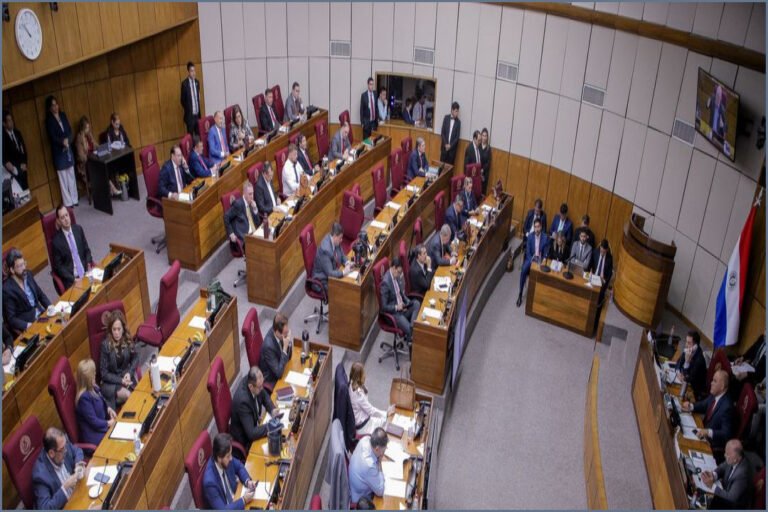
The Democratic takeover of the U.S. Congress following the 2026 midterm elections presents fresh strategic complications for Beijing, threatening key geopolitical advantages China gained under President Donald Trump’s transactional foreign policy while demonstrating the resilience of American democratic governance.
While Republican majorities had largely avoided directly confronting Trump's diplomatic maneuvers, a Democratic-controlled Congress acquires critical mechanisms—including legislative authority, budgetary control, and oversight hearings—to alter political incentives and influence U.S. foreign policy at the margins, even as Trump retains core executive authority over foreign affairs during his remaining two years in office.
Beijing had steadily adapted to Trump's transactional approach to diplomacy. The first key aspect is that Trump’s departure from the traditional U.S. foreign policy consensus – which has long emphasized alliances, democratic values, multilateral institutions, and the defense of a rules-based international order – cannot be explained by Trump’s personality alone. Three structural developments have made an adjustment in U.S. foreign policy unavoidable. Under his administration, Trump embraced "G2" rhetoric framing China as the primary peer competitor, treated Taiwan increasingly as a bargaining instrument accompanied by delays in arms sales, and accepted Xi Jinping’s language of "constructive strategic stability," opening pathways for bilateral accommodation over conventional U.S. commitments.
China's preference for maintaining this transactional stability was underscored on November 2, the day prior to the midterm elections, when the South China Morning Post, owned by Chinese conglomerate Alibaba Group, published an article questioning whether strategic stability would collapse if Trump lost control of Congress. Although the publication expressed confidence that Trump would attempt to stabilize bilateral relations, it acknowledged that a loss of House control would test the emerging framework.
With Democrats assuming control of Congress, Beijing faces several strategic friction points. Congressional oversight is anticipated to reintroduce democratic values into U.S.-China policy, making Taiwan’s security less vulnerable to executive bargaining. Furthermore, legislative pressure to repair relationships with democratic allies across Europe, North America, and the Indo-Pacific—including Canada, European partners, Japan, South Korea, and Australia—could consolidate collective economic, technological, and military capabilities, limiting Beijing's operational room compared to periods of allied division.
Semiconductor technology export policy highlights another significant area where Congress could assert decisive control. Despite broad bipartisan backing for restricting Beijing’s access to sensitive U.S. technology, the Trump administration allowed sales of certain advanced Nvidia microchips, including the H200 model, while tying these deals to financial returns for the United States and maintaining restrictions on top-tier components. A Democratic Congress is positioned to utilize budgetary authority, legislative action, and public hearings to enforce tighter export limits.
Geopolitical distractions could also shift unexpectedly for Chinese strategists. The ongoing Iran war currently consumes substantial U.S. military assets, financial resources, diplomatic focus, and political attention, effectively diverting Washington away from long-term competition in the Indo-Pacific. Heightened congressional scrutiny could increase pressure to wind down the Middle Eastern conflict earlier, depriving Beijing of a strategic buffer created by prolonged American involvement overseas.
These developments unfold alongside broader structural adjustments in U.S. foreign policy. Washington's policy shifts stem from systemic factors rather than leadership personality alone, including the rising financial burdens of sustaining the post-Cold War liberal international order, growing U.S. domestic fiscal pressures, China's rapid industrial and military expansion, and security complications arising from Russia's invasion of Ukraine.
On an ideological level, U.S. political friction had previously provided Chinese state propaganda with material, to the point where observers noted state outlets like the Xinhua News Agency needed only to translate American news reports to depict democratic weakness. Yet the midterm elections demonstrate something Beijing’s propagandists cannot easily explain away. Americans dissatisfied with their government’s direction have used the ballot box to change the balance of political power. The midterm elections created new opportunities for oversight and constitutional checks on the presidency. Highlighted by milestones such as Democratic Senator-elect James Talarico becoming the first Democrat elected to represent Texas in the U.S. Senate since 1988, the outcomes provide clear evidence that U.S. democracy retains its capacity to peacefully restrain power and correct its political course.
You have reached the limit of 3 free articles this month.
Nevertheless, Beijing has good reasons to view the midterm results with concern.