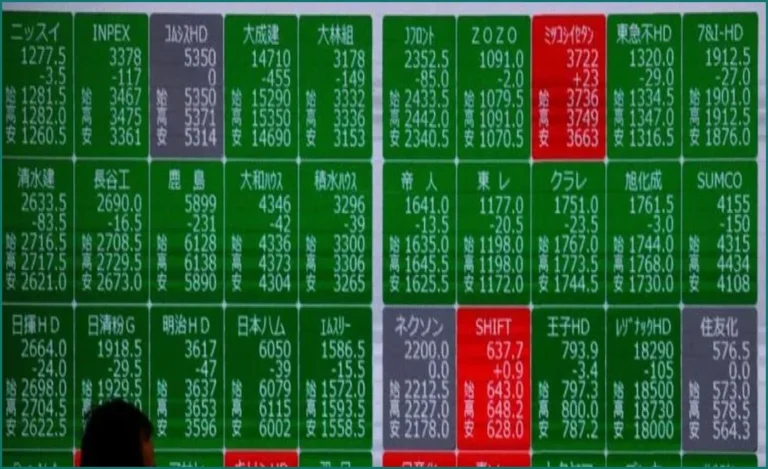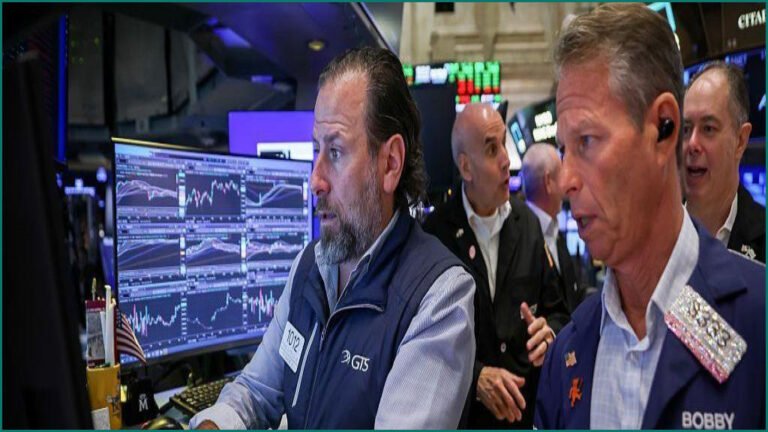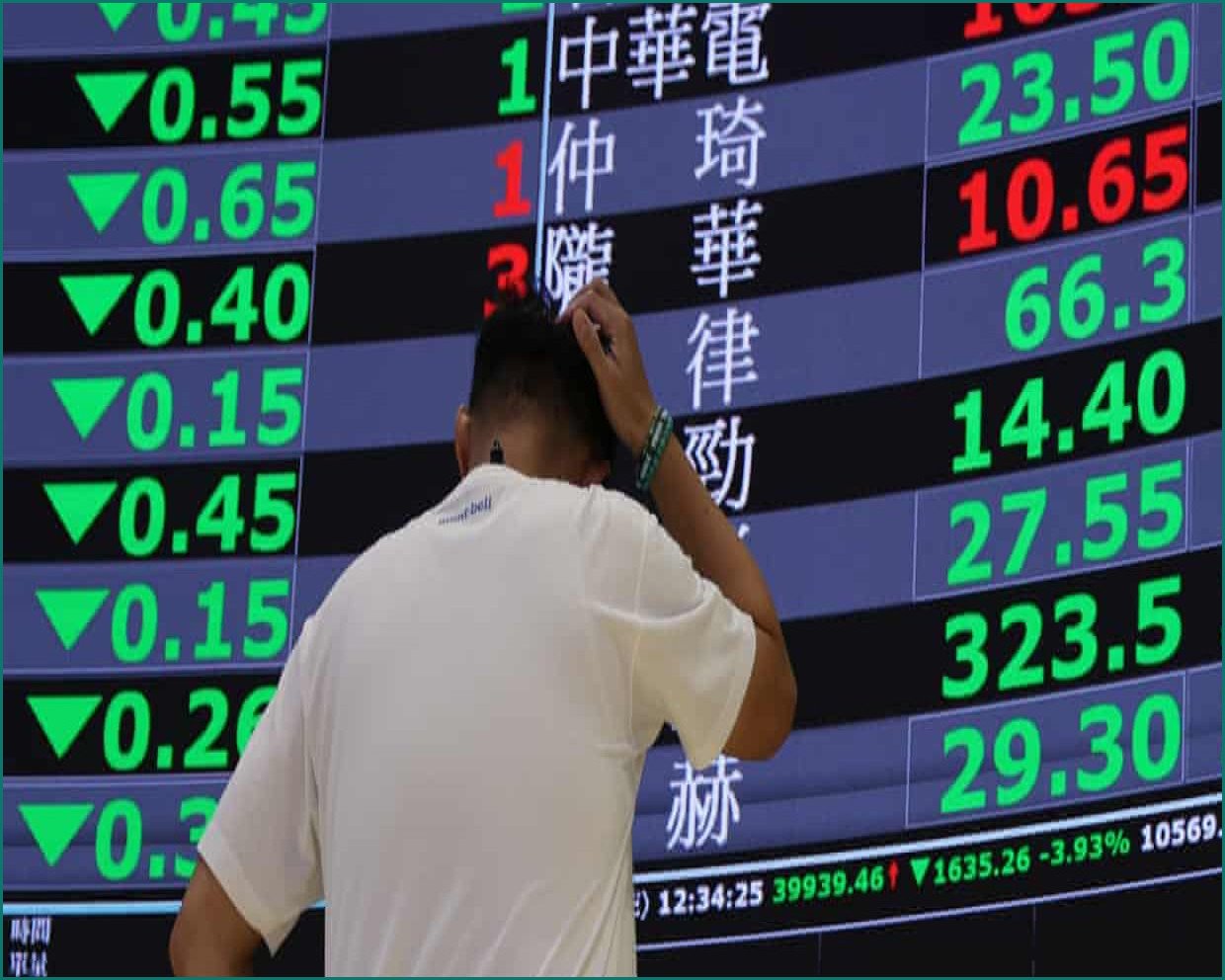
Global equity markets faced significant downward pressure on Friday, following a decisive victory for the Democrats in the US midterm elections. The political outcome served as a catalyst for a broad sell-off in technology stocks, which quickly rippled from Wall Street to trading floors across Asia and Europe.
In London, the FTSE 100 index experienced a volatile session. During morning trading, the index fell by as much as 254 points, or 2.35%, hitting 10,528 points, marking a potential worst daily performance since March. Although the index recovered some ground following the reopening of US markets, it finished the day down 1%. Similar trends were observed in mainland Europe, with Germany’s Dax index falling 2%, France’s Cac 40 dropping 0.8%, and Spain’s Ibex losing 0.6%.
The sell-off was particularly severe in Asia, where the Nikkei 225 in Japan sank 6%, and South Korea’s Kospi index tumbled more than 6.5%. Christopher Forbes, head of Asia and Middle East at CMC Markets, described the market conditions as a disaster, noting that clients were facing margin calls and expressing significant frustration over the sudden loss of value in their positions. He stated that clients were long on indices and stocks, and were forced out of their positions.
Susannah Streeter, chief investment strategist at Wealth Club, attributed the market pain to heightened anxiety regarding the artificial intelligence sector. She noted that concerns are mounting that the expansion of data centers may slow down, potentially undermining the spending surge that has driven the industry's recent boom. This comes at a time when investors are increasingly nervous about the returns on these substantial investments.
The market volatility was also reflected in the Vix, known as Wall Street’s fear index, which jumped more than 60% to reach its highest levels since the early weeks of the Iran war. Specific tech stocks saw dramatic declines on Thursday, with SanDisk falling 22% and Western Digital dropping 17%. These losses occurred despite a stronger-than-expected US employment report, which indicated that the economy added 165,000 jobs in October and pushed the unemployment rate down to 4.1%.
Chris Beauchamp, chief market analyst at IG, warned that with AI fears remaining prominent, further selling could be on the horizon. He highlighted that investors are also closely monitoring the potential for a resumption of the Iran conflict and fluctuations in oil prices, contributing to a febrile atmosphere.
Despite the current downturn, many indices remain positive for the year. The Nasdaq Composite is up 6.35% since January, and the FTSE 100 has gained almost 7.5% in 2026, though both remain below their recent peaks. Mohit Kumar, an economist at Jefferies, suggested that while a quick rebound is unlikely, the current situation does not necessarily mark the end of the AI trade. He argued that the Democrats are unlikely to abandon a major engine of US growth, as AI infrastructure and data centers are significant job creators that the party would be reluctant to see move outside the country.
The impact of these market tremors extended to the London Metal Exchange, where copper—a critical material for the semiconductor, electronics, and automotive industries—dropped 0.61%, putting it on track for a 2.79% weekly decline. Craig Lang, a principal analyst at CRU, noted that copper prices are increasingly tied to sentiment surrounding data center expansion and the broader AI market.
“Big worries are colliding – the build-out of datacentres looks set to slow, which risks shredding the spending spree underpinning the boom, right at the time that investors have become super nervous about returns on this massive investment.”