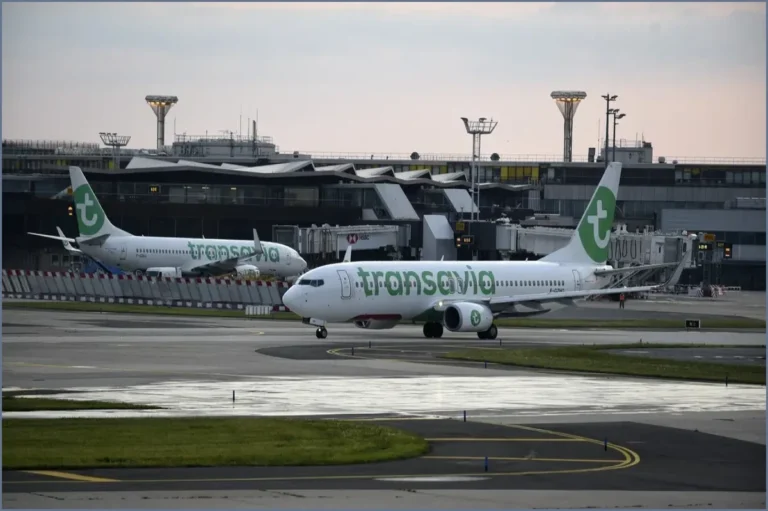
Italian, French, and Bulgarian fighter jets were scrambled on Thursday as at least 14 European flights were hit by hoax bomb alerts, marking the third consecutive day of such incidents this week. Authorities and airlines confirmed that the hoaxes specifically targeted low-cost carriers and flights operating to or from Bulgaria, the Czech Republic, and Italy.
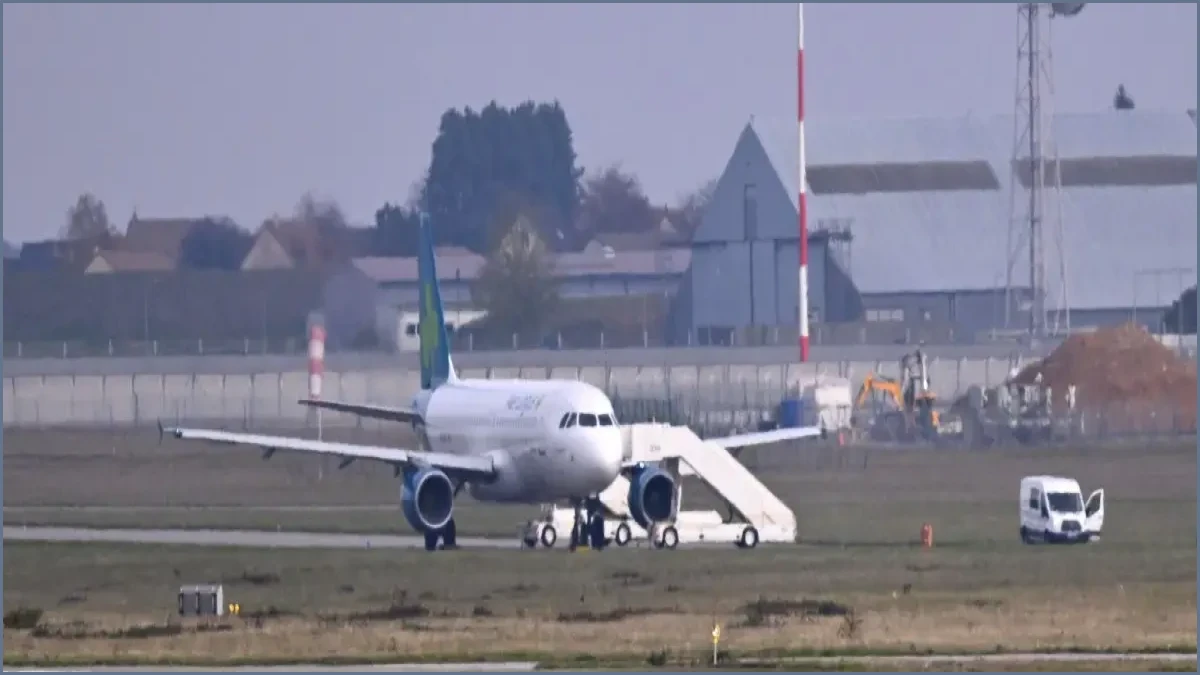
Military responses were significant throughout the day. Italian air force jets provided an escort for a Finnair flight traveling from Helsinki to Rome, while French fighter jets guided an Aer Lingus flight from Dublin to Rome to a military base in Evreux, located west of Paris.
Additionally, the Bulgarian air force escorted three planes that had been targeted by threats. In total, three flights were diverted, but all aircraft landed safely, and subsequent inspections confirmed that no explosives were present.
More than 20 hoaxes have been reported this week, with Ryanair being the victim of at least seven. A spokesperson for the Bulgarian Ministry of Transport told AFP that three Ryanair planes heading to Sofia from Madrid, Copenhagen, and London Stansted were targeted.
Two of these aircraft landed in Sofia, while the flight from London-Stansted was diverted to Plovdiv Airport.
The Bulgarian defense ministry stated that their fighter jets were deployed to detect, identify, and escort the aircraft, and an interior ministry spokesperson confirmed that no explosives were found after inspections.
Finnair also faced multiple alerts. A spokesperson, Stiina Tuunanen, confirmed that a flight from Helsinki to Rome was escorted by a fighter jet and checked by bomb experts at Rome's Fiumicino Airport, with nothing unusual found.
Tuunanen noted that the airline follows a clear process in such situations and works closely with local authorities. She also mentioned that another false threat targeted flight AY1471 from Helsinki to Vienna.
Wizz Air reported that a flight from Milan to Warsaw was re-routed to Vienna in accordance with safety protocols. Another Wizz Air flight from Milan to Bucharest landed safely, after which a crisis unit was established at Henri Coanda Airport, according to the Romanian intelligence service.
Meanwhile, an Aer Lingus flight from Dublin to Rome was rerouted to France and escorted by military aircraft to the Evreux air base.
In the Czech Republic, four Prague-bound planes operated by Ryanair, Easy Jet, and Sky Express were targeted. Czech police stated on X that they perceive the credibility of the threats as low but are not underestimating the situation, having activated all necessary security measures.
Prague Airport spokeswoman Denisa Hejtmankova noted that the airport received the threats via emails from anonymous addresses. Two planes arriving in Copenhagen were also targeted, though Copenhagen police told AFP that there was no danger to passengers or anyone at the airport.
While the origin and motives of the threats remain unknown, they occur amid a rise in hybrid attacks in Europe, which authorities have sometimes linked to Russia or Iran. Last month, Nicolas Roche, France's secretary general for defense and national security, highlighted to parliament the diversity of hybrid attacks, including sabotage, cyber threats, and drones.
On Tuesday, 10 flights were targeted by hoaxes, which forced the closure of a Warsaw airport and the deployment of Italian fighter jets. On Monday, a Wizz Air flight from London's Luton airport to Sofia was diverted and forced to make an emergency stop in Budapest due to a bomb threat.