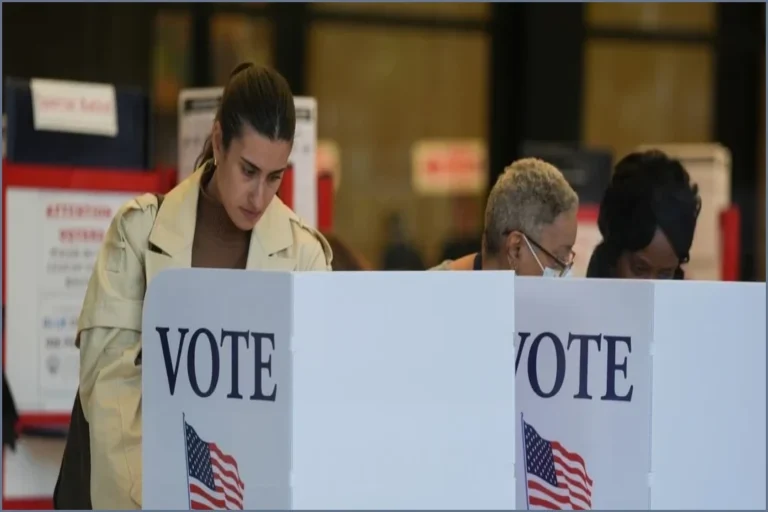
The U.S. stock market experienced a significant surge on Wednesday as investors analyzed the implications of the Democratic Party's sweeping victories in the midterm congressional elections. The Dow Jones Industrial Average climbed more than 1,500 points, or 2.9%, during afternoon trading, positioning the blue-chip index for its strongest gain of the year. The broader S&P 500 index rose 1.7%, while the tech-heavy Nasdaq Composite Index saw a gain of 1.8%.
Market participants are currently assessing how the shifting political landscape might impact various investment areas, ranging from the pace of data center construction and cryptocurrency regulation to potential proposals aimed at capping credit card interest rates. Despite these changes, Wall Street analysts generally do not expect the election outcome to derail a market that is primarily driven by solid economic growth and robust corporate profits rather than political developments.
Stephen Brown of Capital Economics noted in a message to investors that the scale of the Democratic gains does not significantly alter the near-term policy outlook, as the party still lacks a filibuster-proof majority in the Senate and President Trump retains veto power to block legislation. Analysts at the Wells Fargo Investment Institute also stated they do not anticipate sweeping policy changes, suggesting instead that a split-government alignment is more likely to focus on energy policy, affordability, and opportunities related to artificial intelligence.
As Wall Street attempted to distinguish between winners and losers following the widespread Republican losses, stocks in solar-power companies, dollar stores, and hospital owners helped lead the market higher. Conversely, investors identified potential risks for the artificial intelligence sector, businesses owned by Elon Musk—who donated heavily to Republicans—and Mr. Trump's social media company. Shares of Trump Media & Technology dropped nearly 17% in afternoon trading, while shares of Musk-owned SpaceX and Tesla declined 3.4% and 2%, respectively.
Investors also anticipate that the election results will increase gridlock in Congress, with Democrats now in control of both the House and Senate, and Mr. Trump threatening to use his veto power against legislation he opposes. According to Wall Street analysts, political gridlock has historically been favorable for markets because it limits the ability of Congress to pass sweeping tax and spending legislation, thereby reducing the risk of volatility. Furthermore, stocks have generally performed well following midterm elections; according to data from investment firm Edward Jones, the S&P 500 has risen an average of 15.5% in the six months following the last 14 midterm races dating back to 1970.
Beyond the immediate political landscape, the election results could influence key investor issues such as the pace of data center construction. While massive spending on artificial intelligence has helped drive stocks to record highs this year, it has also raised concerns regarding a potential bubble in tech stocks. Jeff Buchbinder of LPL Research noted that while the buildout is expected to continue, strong performances by Democrats in key data center states, combined with local pushback, could slow progress. This may increase regulatory pressure on AI infrastructure stocks, including machinery, semiconductors, and power generation, with Buchbinder emphasizing that policy decisions often occur at the state and utility-commission level, making gubernatorial and utility races particularly important.