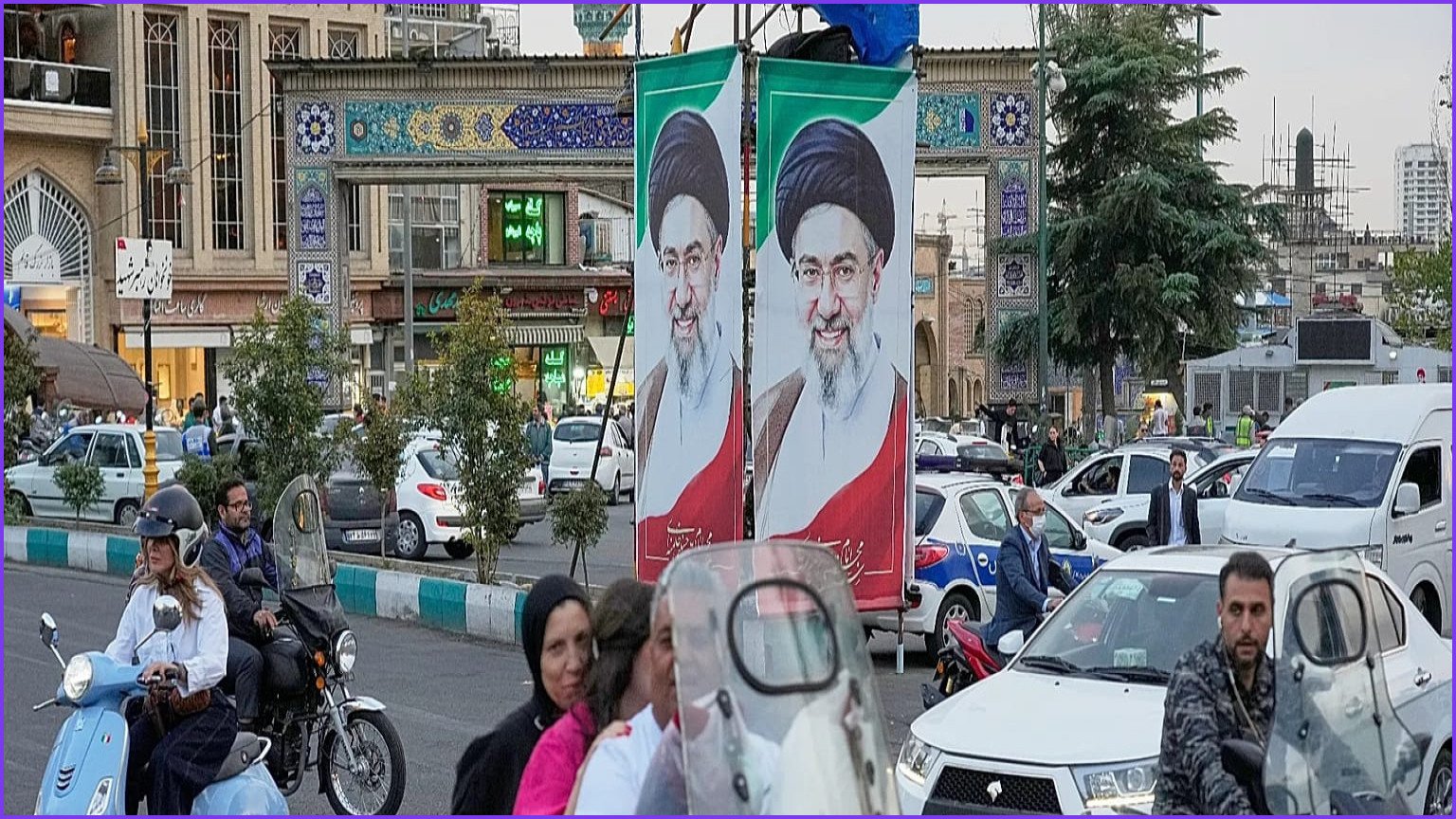
Iranian Supreme Leader Ayatollah Mojtaba Khamenei has issued a stern warning to the international community, declaring that any level or type of threat against Iran must be met with an immediate, impactful, and geographically unrestricted response. This directive comes as urgent diplomatic efforts are underway to prevent a new, all-out war that could have severe consequences for the Middle East and beyond.
During a meeting with top military commanders on Saturday, Khamenei provided specific directives to prepare for potential new military actions from the United States and Israel. According to the official IRNA news agency, this was the first public appearance of the Supreme Leader since the conflict began with US and Israeli strikes in late February.
In the briefing, Khamenei ordered the creation of an updated list of potential targets, which he specified should include all kinds of physical and non-physical assets.
He further asserted that Iran would dictate the terms of any future conflict, stating that the Armed Forces of the Islamic Republic and the Iranian nation would determine when and under what conditions any resumed military or terrorist attacks would end.
The meeting included briefings from the commander of the Islamic Revolutionary Guard Corps (IRGC) Major General Ahmad Vahidi, as well as the Iranian army commander and his chief of staff. They reported to the Supreme Leader on Iran’s current military readiness, noting that domestic weapons production has increased seven-fold.
The Washington-based Institute for the Study of War (ISW) suggested that these threats are likely part of an Iranian effort to deter the United States and Israel from launching further strikes.
These warnings follow reports from the US that its forces could conduct a short but intensive military campaign against Iran following the US midterm elections next week.
Despite the defiant rhetoric, Iranian officials have signaled positive developments in mediated negotiations with the United States via Qatar. Foreign Minister Abbas Araghchi announced on Saturday evening that Tehran could potentially agree to reopen the Strait of Hormuz in just two days, a significant reduction from the previous seven-day timeline. Araghchi confirmed that Iranian diplomats are currently in Qatar for discussions following mediation efforts in Tehran over the past few days.
While he stated that Iran is not planning to meet directly with US officials, he described recent US efforts toward broader dialogue as a positive step. He noted that a decision on whether negotiations would be direct or indirect would be made once Washington agrees to Iran’s conditions, which include lifting the blockade of Iranian ports, releasing frozen assets, and waiving sanctions on oil sales.
Major General Mohsen Rezaei, head of Iran’s Supreme National Security Council, also confirmed he had received a letter from US Vice President JD Vance proposing negotiations, describing the change in tone as a very good sign. Rezaei highlighted a shift in one of Iran’s conditions, stating that ships in a reopened Strait of Hormuz would travel on a route agreed upon by Iran and Oman, with all traffic passing through the waterway under Iranian management.
Regarding Iran’s nuclear doctrine, Rezaei stated there has been no decision to change it, though he acknowledged that some within Iran have questioned whether that policy should be rethought if the country is attacked again.