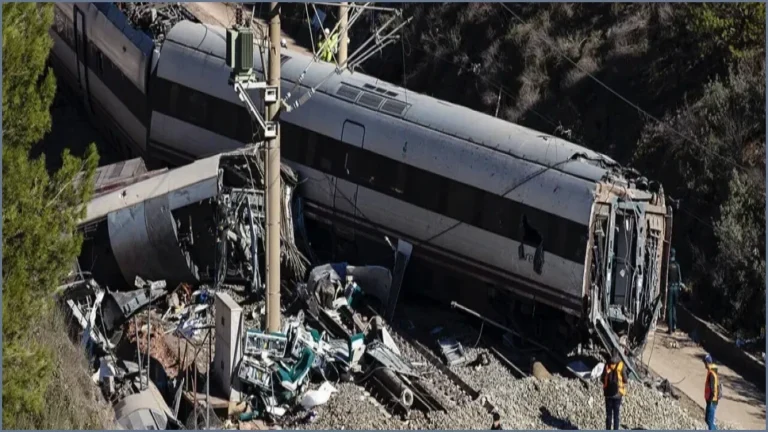
A rear-end collision between two high-speed passenger trains in central Spain killed 68 people and left dozens hospitalized on Wednesday, Oct. 28, 2026, marking the country's second fatal rail disaster this year and triggering widespread safety concerns just four weeks before a national election.
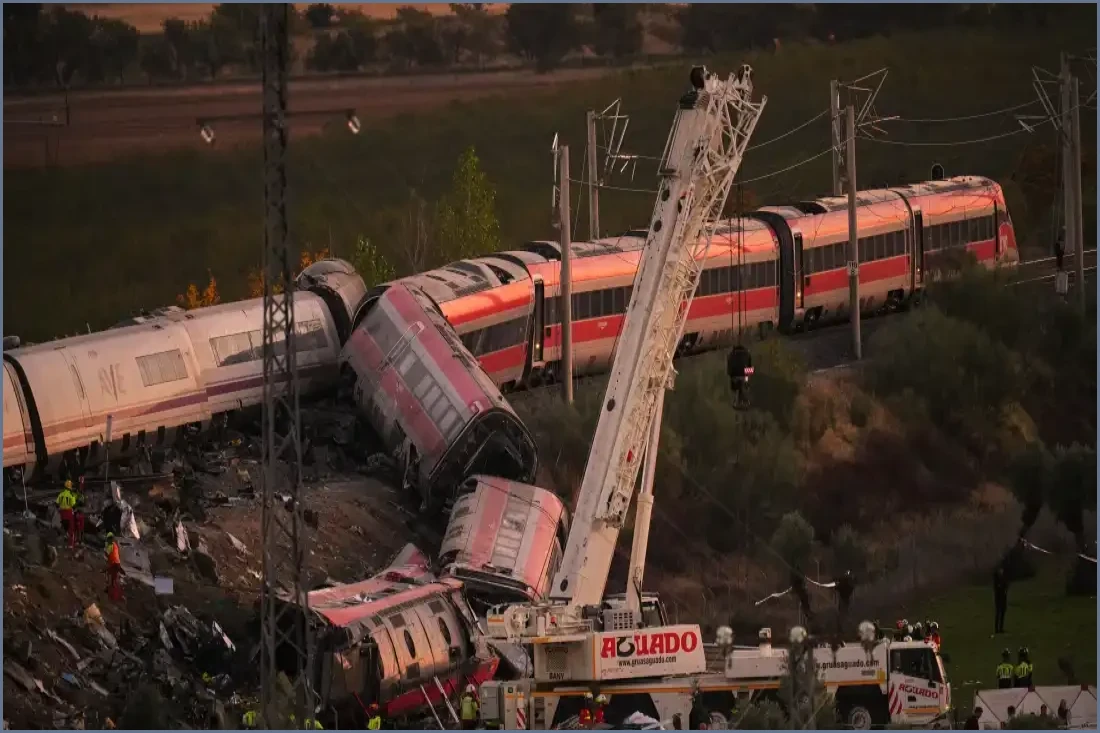
The disaster occurred along a rural stretch lined by olive groves near the town of Urda in Toledo province. Emergency operations unfolded rapidly throughout the day, with hundreds of firefighters, police officers, soldiers, and medical personnel working to pull survivors from the wreckage and retrieve victims. By late Wednesday evening, rescue crews had deployed heavy cranes to move damaged train carriages after regional authorities confirmed the high death toll.
Spanish Transport Minister Óscar Puente revealed that the collision was caused by an "inexplicable" command center instruction given after safety systems failed, stressing that the train engineers were not to blame. At 8:30 a.m., a computer malfunction shut down the security system across a 63-kilometer (39-mile) section of track, bringing all trains on that segment to a halt. The IRYO train stopped near Urda, while a state-operated RENFE train came to a stop 25 kilometers (15.5 miles) behind it.
Just minutes after the initial shutdown, central command operators instructed the RENFE driver to resume travel without speed restrictions, despite an active "stop signal" remaining on the line. At 8:53 a.m., the moving RENFE train slammed into the rear of the stationary IRYO train. Puente emphasized that the train should never have been authorized to proceed, or at the very least should have been instructed to travel at reduced speed.
Prime Minister Pedro Sánchez traveled to Toledo to inspect the crash site after regional officials confirmed more than 60 fatalities. Sánchez announced three days of national mourning beginning Thursday and acknowledged the urgent need to restore public confidence in rail transport. "It is clear that we need to reinforce the safety of our train service to rebuild the trust in our high-speed rail," Sánchez said. "It is not acceptable for a country like Spain to endure two high-speed train accidents in the same year."
The tragedy strikes a severe blow to Spain's high-speed rail network, which ranks second in the world to China in total track mileage and has long been considered one of the nation's crowning achievements. Prior to 2026, the high-speed system had not suffered a single fatal crash since coming into service over three decades ago. However, Wednesday's collision follows a January crash in southern Spain that killed 46 people when a train derailed and struck an oncoming carriage. Both fatal crashes this year involved state-owned operator RENFE and privately owned IRYO, an Italian company that began operating in 2022 after Spain liberalized its high-speed rail sector in 2021.
The timing of the crash introduces acute political pressure as Spain prepares for its first national election since 2023. Sánchez, who called early elections earlier this month intending to focus his campaign on public discontent over housing costs and high rents, now faces intense scrutiny over infrastructure management. About an hour before news of the collision spread, Sánchez posted on X that "There are lots of reasons to be optimistic about this country." He now faces renewed political opposition while already battling criticism over liberal migration policies and corruption allegations against his party and his wife, both of which they strongly deny.
When questioned by reporters regarding a potential resignation following a second major rail disaster under his leadership, Transport Minister Puente stated he was focused strictly on responding to the crash rather than his personal future. Conservative opposition leader Alberto Núñez Feijóo offered condolences while demanding accountability, stating, "This is the moment to respect the dead, the injured and their families. That does not mean we will ignore the fact that Spaniards are asking tough questions that demand answers." Far-right Vox leader Santiago Abascal launched a sharper attack hours after the crash, calling it "Another tragedy" and stating, "I promise to work tirelessly until this government, which is a criminal organization, is sitting in a courtroom to answer for its crimes."
The graphic above shows the placement of derailed train cars from both trains after the crash and the events leading to the crash. Phil Holm/AP hide caption
Sánchez has weathered many crises since taking power in 2018, staying in power and winning reelection after the COVID-19 pandemic and the global rise in inflation.