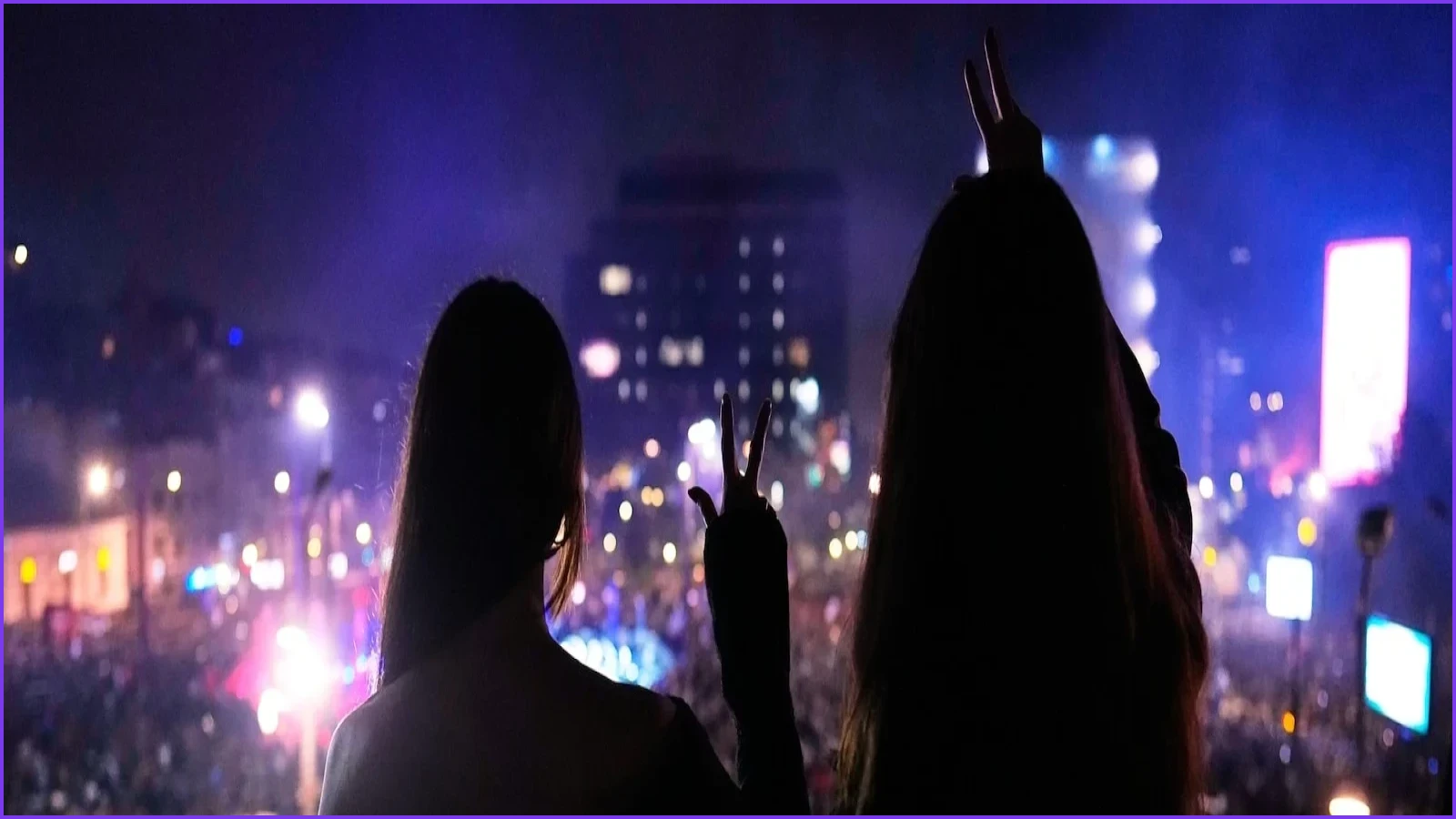
For over a year, a prominent park in Belgrade, Serbia, located between the Parliament and the offices of right-wing leader Aleksandar Vucic, remained inaccessible to the public. The area had been cordoned off and occupied by a group of Vucic’s most ardent supporters, who functioned as an enforcer squad tasked with intimidating and assaulting members of a growing anti-government student movement. However, the political landscape shifted dramatically on Sunday evening when Vucic stunned the nation by conceding defeat in an election against student-backed candidates. Following the announcement, ecstatic crowds filled the streets of Belgrade, dismantling the barriers around the encampment known as Caciland and setting the tents inside on fire, effectively signaling the end of Vucic’s grip on power.
This seismic change was the result of two years of relentless organizing and sustained protests by the student movement, which had accused the Kremlin-backed Vucic of fostering authoritarianism, maintaining ties to organized crime, and overseeing runaway corruption. The event echoed similar bottom-up, youth-led protest movements that have recently challenged entrenched power structures across Europe. Notably, this success mirrored the ouster of pro-Russian Prime Minister Viktor Orbán in neighboring Hungary just six months earlier.
In Hungary, the 16-year rule of the far-right Orbán had once appeared unshakable, but growing public anger over corruption and the capture of state institutions coalesced around political newcomer Péter Magyar. Like the Serbian students, Magyar spent two years touring the countryside where Orbán held his strongest support. Campaigning on a platform of anti-corruption and a return to European Union democratic standards, Magyar’s center-right Tisza party secured a landslide victory, driven by the highest electoral turnout in Hungary's post-socialist history. Magyar has since used his party's two-thirds parliamentary majority to work toward freeing the media and holding members of Orbán’s regime accountable. In social media posts, Magyar congratulated the Serbian students, expressing nostalgia for the joyful scenes in Belgrade that mirrored his own victory in April.
While the Serbian student movement celebrates its victory, it faces the daunting task of restoring a ravaged democracy without the benefit of a constitutional majority. Their list of candidates includes experts in various fields but lacks significant political or state-level experience, and the identity of the future prime minister remains unknown. Radomir Saicic, a candidate on the students' ticket, noted that while today is for celebration, the real work begins tomorrow. The movement must navigate the influence of Vucic’s loyalists within the security services and a well-organized propaganda machine, as Vucic has already announced his intention to lead an opposition struggle.
Similar youth-led unrest has emerged in Albania, where student protests over education reforms have evolved into broader anti-government sentiment, fueled by anger over a development project linked to Jared Kushner, the son-in-law of U.S. President Donald Trump. Demonstrations against the long-serving socialist government of Prime Minister Edi Rama, a Vucic ally, have escalated into violent clashes in Tirana, with riot police deploying tear gas and water cannons. These events are part of a wider wave of social unrest across Europe, from France and Italy to Spain and Portugal, driven by youth frustration over housing costs, social services, and public education.
Professor María Silvestre of the University of Deusto in Spain noted that young Europeans are experiencing a profound sense of uncertainty and a lack of control, which can lead to a sudden spark that channels discontent into the streets. In a post-election analysis, Serbian professor Dejan Pavlovic wrote that the students' lack of political experience became their greatest strategic advantage, as they appeared fresh compared to Vucic, whom he described as culturally obsolete. The movement’s next major challenge will be a presidential election due by the end of the year, where they must avoid internal divisions. Political commentator Ivan Milenkovic warned that dismantling the tentacles of Vucic’s influence throughout the country will be a difficult job, yet Pavlovic noted that the students' success challenges conventional assumptions about the resources necessary to defeat an entrenched incumbent.