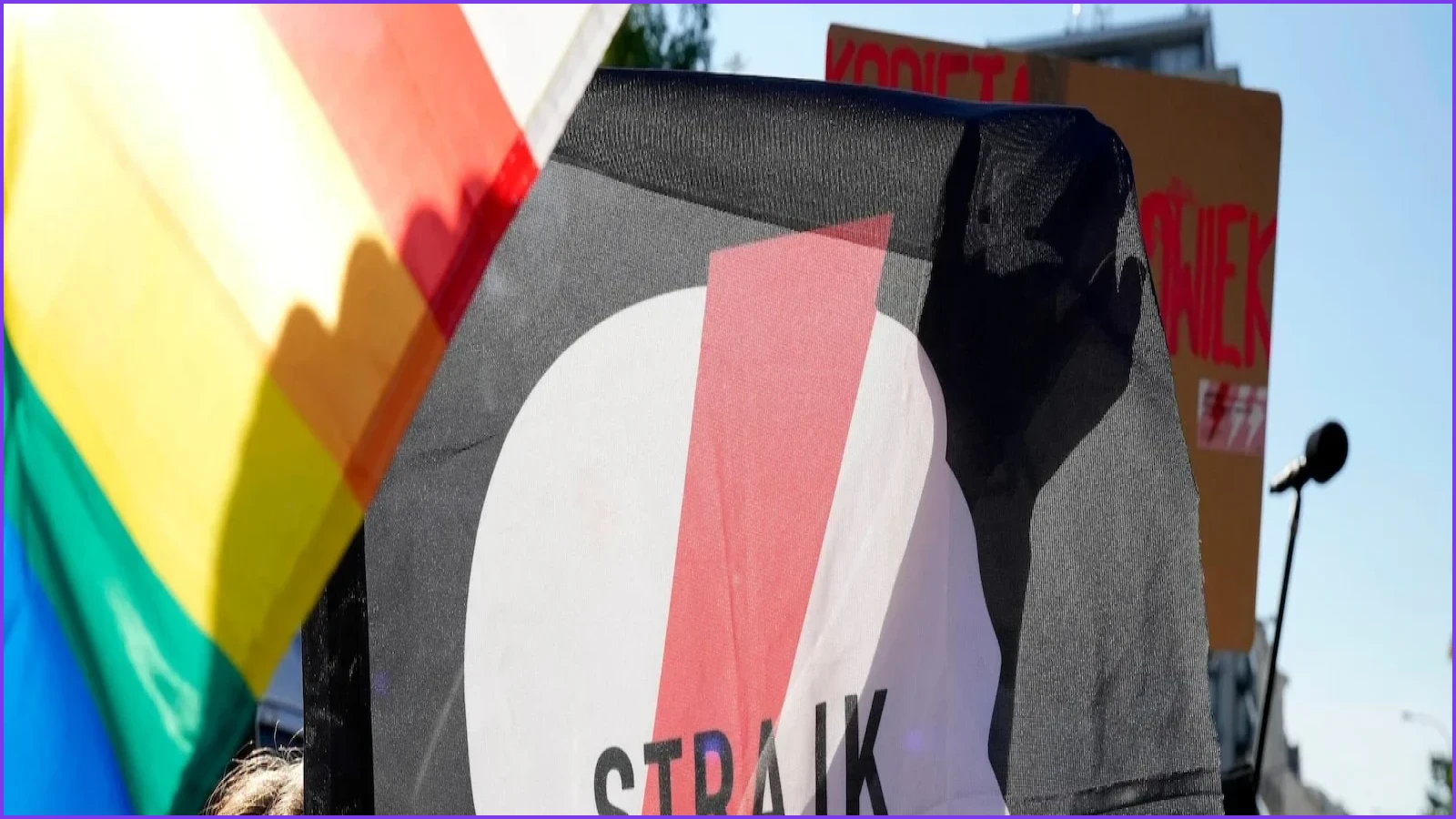
Women are planning a series of street demonstrations across more than 20 cities and towns in Poland this Thursday. The protesters are voicing their frustration over the country's lack of access to free and legal abortion services, specifically targeting the liberal government of Prime Minister Donald Tusk. Activists argue that the administration has failed to deliver on its campaign promises to relax the nation's stringent abortion regulations, even as the parliament passed two bills on Tuesday intended to ease existing rules. These measures, however, are widely expected to face a veto from the conservative president, Karol Nawrocki.
Zofia Marcinek, a representative of the reproductive rights activist group Abortion Dream Team in Warsaw, described the passage of the draft laws as mere “token gestures” rather than a sincere attempt at reform. According to Marcinek, the government is fully aware that the legislation cannot survive a presidential veto and is merely attempting to appear active to secure female support ahead of next year's parliamentary elections.
The current legal landscape in Poland has been deeply restrictive since 1993, permitting abortions only in cases of severe fetal abnormality, risk to the mother’s health or life, or pregnancies resulting from incest or rape. Despite these limitations, women have consistently pushed for broader legalization, notably during the “Black Protest” movement that began in 2016. Instead of liberalization, the national-conservative Law and Justice (PiS) government further tightened the rules in 2020, effectively banning abortions of fetuses with congenital defects.
Although abortions remain a taboo subject, they are still common, with the vast majority performed at home using pills sourced from outside the country. While Polish law does not impose criminal liability on women who undergo the procedure, those who provide assistance—including family members or doctors—face potential prosecution. Poland currently maintains one of the most restrictive abortion frameworks in Europe, exceeded only by Malta.
Activists are accusing the Tusk administration of spreading disinformation regarding the state of reproductive care. While Tusk’s coalition campaigned in 2023 on a promise to liberalize laws, he later stated in 2024 that a presidential veto would be insurmountable. The government has instead introduced measures aimed at preventing hospitals from citing religious grounds to refuse legal abortions. Tusk noted in 2024 that the state would stand on the side of women making such decisions. Data from the national health fund indicates that Polish hospitals performed 573 abortions in the first half of 2026, up from 452 during the entirety of 2022. However, activists maintain that tens of thousands of procedures occur annually outside the hospital system.
Marcinek argued that government rhetoric complicates matters for women who believe care is accessible, only to find otherwise when they seek help. This perception of improvement has also deterred international donors from supporting Polish women’s rights. In 2025, the Abortion Dream Team established an “abortion clinic” near the parliament in Warsaw to provide information and support. This September, they introduced a parcel locker called “Abortomat,” operated by the non-profit Women Help Women, which allows women to pick up pills the following day. This service provides a vital alternative for those unable to safely receive shipments at home due to unsupportive or abusive environments. As the group stated, they are “hacking the Criminal Code” to bring abortion access into the 21st century.