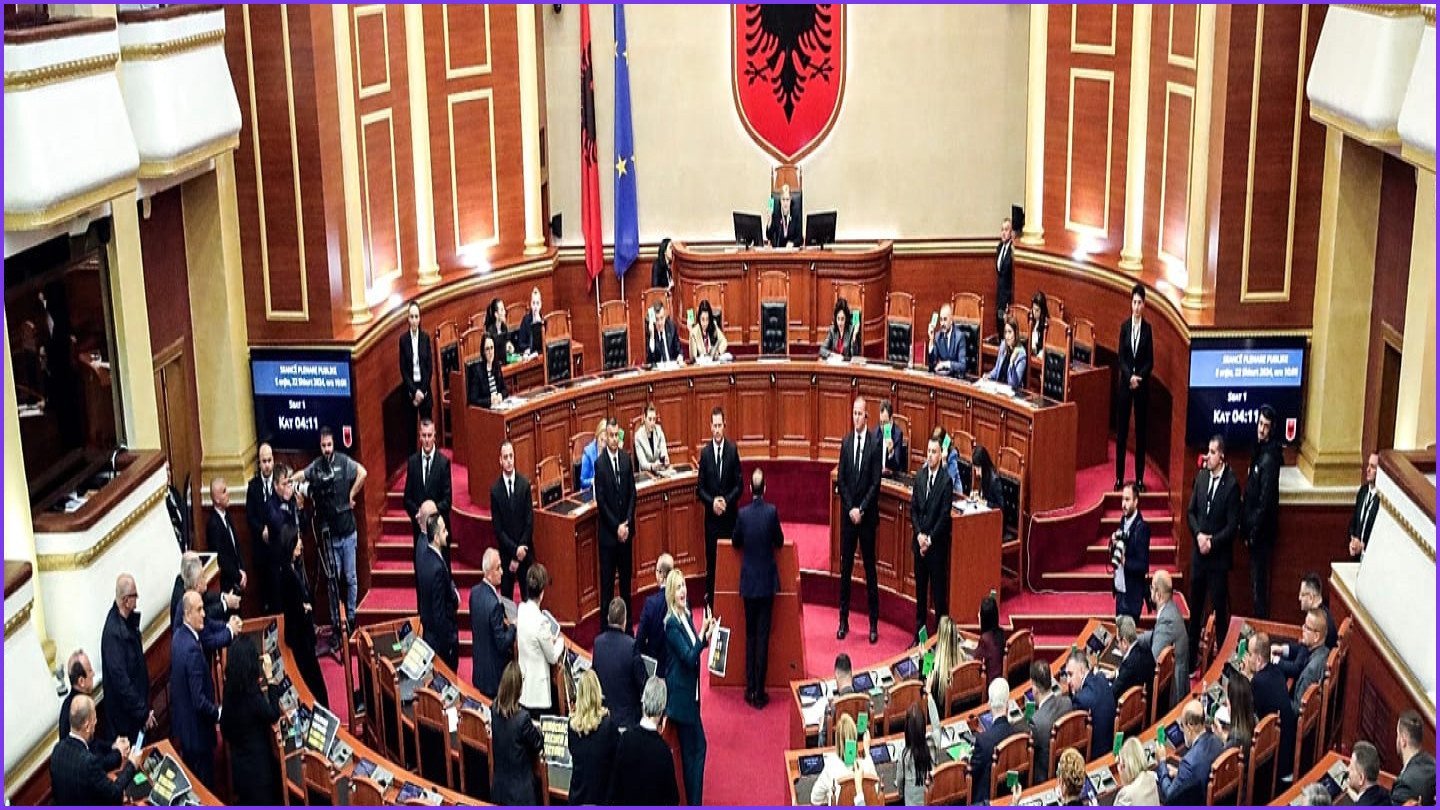
Lawmakers in Albania's parliament clashed on Thursday as opposition members attempted to disrupt a legislative session, intensifying an ongoing political crisis. The confrontation occurred after parliamentary leadership rejected opposition demands to hold a formal debate regarding the ten days of student demonstrations that have gripped the capital, Tirana.
Inside the assembly, opposition MPs blocked the parliamentary podium and displayed photographs of students who sustained injuries during previous clashes with police. Despite the obstruction and the surrounding chaos, the assembly continued its voting process on various pieces of legislation.
The parliamentary turmoil mirrors the situation outside the building, where large crowds of students gathered at the entrances as their protests entered their tenth consecutive day. Demonstrators have repeatedly clashed with police in the city center, utilizing rocks, flares, firebombs, and fireworks. In response, law enforcement officers have deployed batons, water cannons, and tear gas.
Students from both high schools and universities are demanding lower tuition fees, increased state investment in the education sector, and an end to corruption. These grievances have merged into a broader anti-government movement that is calling for the resignation of Socialist Prime Minister Edi Rama. Rama has firmly vowed to resist these demands, characterizing the protests as an attempt to overthrow the government through violence. Speaking after a meeting with teachers and school representatives on Tuesday, he stated, “A wave of stones, an attempt to overthrow the government and change those in power through the imposition of violence — something that will never be allowed to happen, in any form or for any reason.” He further argued that legitimate grievances were being exploited by individuals deliberately inciting violence.
The current student unrest follows months of demonstrations organized by the Flamingo movement, which formed in opposition to a luxury tourism development on the southern Adriatic coast linked to an investment firm founded by Jared Kushner, the son-in-law of US President Donald Trump. Albania’s situation reflects a wider trend across Europe, where governments are facing public pressure regarding rising fuel costs, deteriorating public services, underfunded schools, and a deepening housing crisis. Similar protests have occurred in France and Italy, while tent camps have appeared in Spain and Portugal due to housing unaffordability. Further demonstrations were also planned in Greece this week.