Poland's lower house of parliament has passed two bills designed to loosen the country's near-total ban on abortions. The approved measures seek to eliminate certain criminal penalties for individuals who help women access abortion care and would permit terminations in instances of foetal abnormalities. However, the legislation is widely expected to be vetoed by Poland's nationalist president.
Reproductive rights campaigners and advocacy groups have characterized the legislative move as a minor gesture that fails to address immediate needs. A spokesperson for the initiative Legalna Aborcja (Legal Abortion) noted that the legislation offers no real relief to those seeking care, stating, "What does this mean for women who need an abortion right now? Nothing, because none of these bills would help them."
Leah Hoctor, representing the Center for Reproductive Rights, similarly described the proposals as a minimal adjustment to current restrictions. She pointed out that even if the bills were ratified and signed into law by the president, they "would change very little for most women in Poland who need abortion care," leaving the nation "completely out of step with the rest of its EU peers."
Currently, abortion is legally permitted in Poland only when a pregnancy threatens the life or health of the mother, or if it results from an illegal act such as rape or incest. Hoctor emphasized that thousands of Polish women obtain abortions each year, either by traveling abroad or by accessing care illegally. She added, "That’s not what a modern European country needs to be. They’re not living up to the promise of what it is to be a modern healthcare system and a modern democracy."
To navigate the nation's political gridlock, the Center for Reproductive Rights called on Prime Minister Donald Tusk to implement an interim moratorium on the enforcement of all criminal provisions related to abortion. Hoctor stated that such a step "would ensure that those caring for women no longer do so under the threat of criminal investigation and prosecution." The recommendation reflects a 2024 finding by the UN Committee on the Elimination of Discrimination against Women, which determined that Polish women face severe human rights violations because of the country's restrictive legal framework.
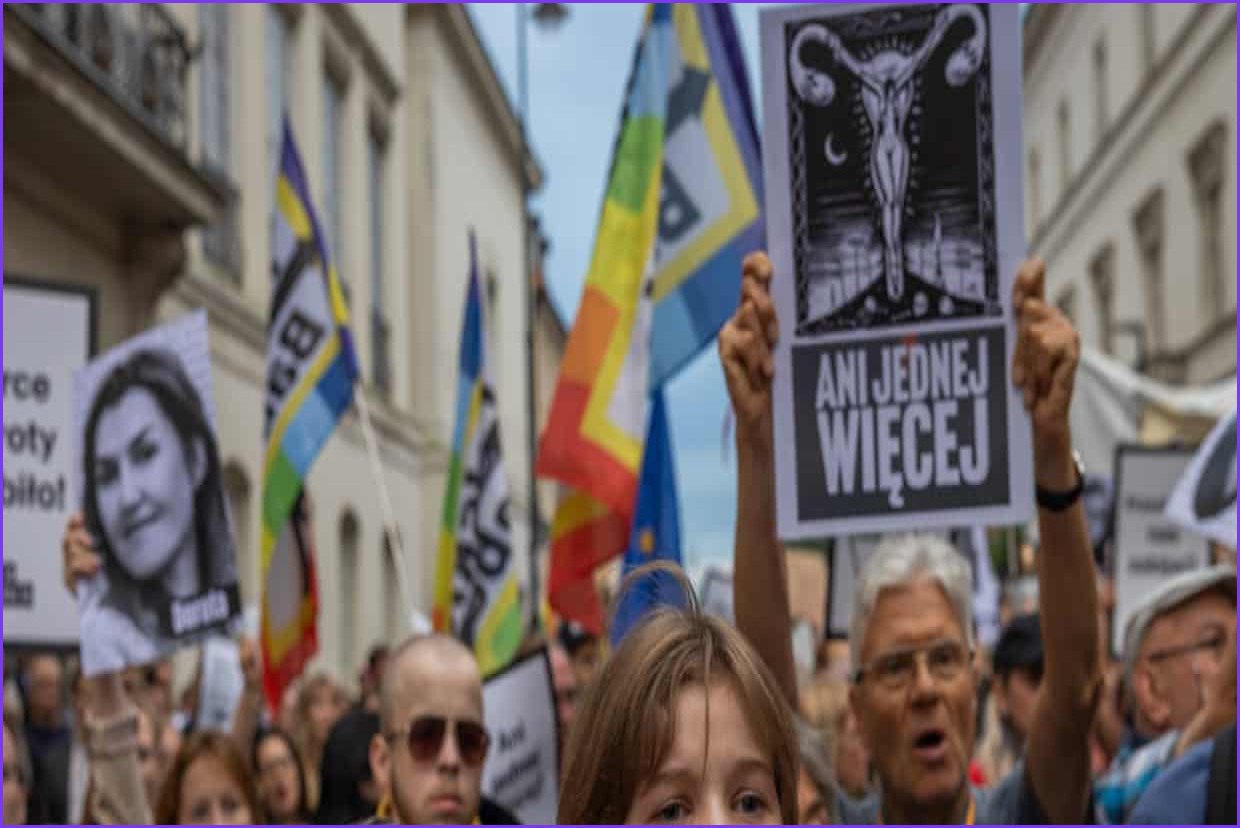
The parliamentary decision comes as rights organizations prepare demonstrations across 27 cities on Thursday. The Visible Foundation (Fundacja Widzialne) called on citizens via social media to maintain pressure on the government, writing, "Poland still has an inhumane abortion law," while demanding complete decriminalisation and full coverage for terminations under the National Health Fund.
Thursday's planned rallies mark the sixth anniversary of a 2020 judicial ruling that severely tightened Poland's abortion regulations. That ruling triggered the largest street demonstrations in Poland since the fall of communism, during which protesters gathered with signs bearing slogans such as "The revolution has a uterus" and "My body, my choice".
Those widespread public protests were widely viewed as a driving force behind Donald Tusk's election victory in 2023, following his commitment to overhaul abortion legislation within his first 100 days in office. However, Tusk backtracked last year on a promise to legalise terminations through the 12th week of pregnancy, acknowledging that there was "simply no majority" in parliament to pass such reforms.