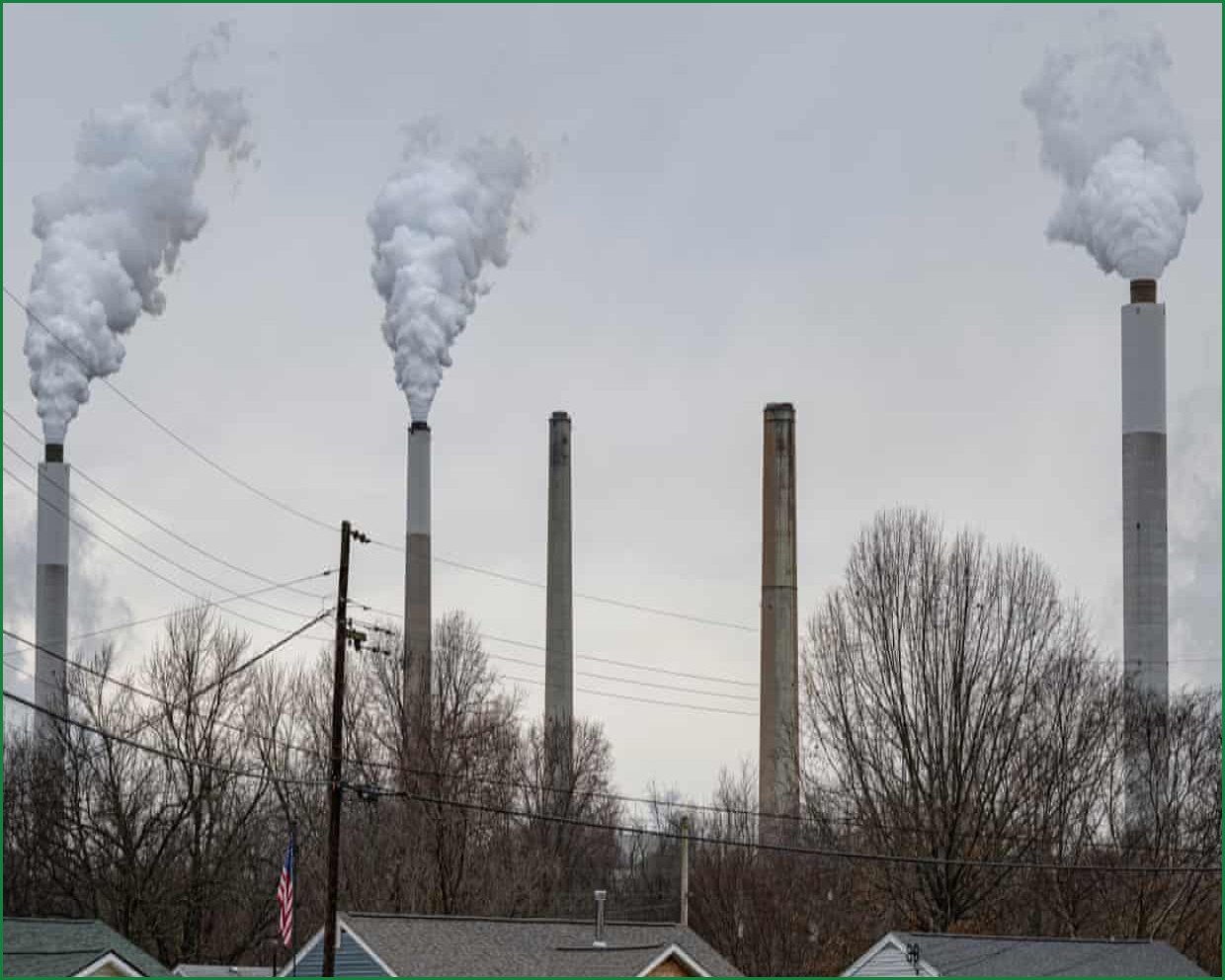
Global carbon emissions must drop by nearly a fifth within the next four years and by almost half over the coming decade to prevent global climate targets from being exceeded by a disastrous margin, according to a new report on the emissions gap published by the UN Environment Programme.
Analysis by the environmental agency indicates that while the window to cap temperature increases at 1.5 degrees Celsius above preindustrial levels has effectively closed, countries can still act to limit how far global temperatures overshoot that baseline. Cutting greenhouse gas output by 18% by 2030 and by 45% by 2045 would offer a solid chance of keeping global warming to 1.7C. Although such a trajectory would still leave recent record heatwaves occurring frequently, it could prevent climate conditions from worsening dramatically.
Despite long-term reduction targets set by various nations, actual short-term policies remain inadequate. Worldwide carbon output largely stalled in 2025, showing levels comparable to the prior year. However, analysts cautioned against viewing this as a definitive peak or plateau, pointing to expanding fossil fuel usage alongside rapid renewable energy growth and uncertain global geopolitical dynamics.
Inger Andersen, the executive director of the agency, noted that warnings issued to governments over many years were repeatedly ignored. She stated that while officials previously urged a herculean effort to remain under the 1.5C threshold, procrastination has now closed that window. Nevertheless, she stressed that governments must maintain the 1.5C target, which serves as the core of the Paris climate agreement, in order to shorten any period of temperature overshoot rather than giving up.
The United States, the world's second-largest emitter after China, has withdrawn from the Paris agreement under Donald Trump and is threatening to reverse its historic trend of declining emissions. Weak commitments made during the Cop30 climate summit in Brazil last November reflect broader global inertia linked to US policy stances. Current national policy commitments across the globe would result in temperatures reaching 2.6C above preindustrial levels, while existing implemented policies point toward a 2.8C increase. Projections show that every five years of unreduced emissions at current levels adds 0.1C to expected heating, raising concerns among scientists about crossing dangerous tipping points in the climate system.
Criticism of major energy producers has intensified alongside the publication of the data. Bill Hare, chief executive of the Climate Analytics thinktank, stated that key fossil fuel suppliers—specifically highlighting the US and Saudi Arabia, which together generate 20% to 25% of global fossil fuels—must stop denying scientific reality while their citizens face severe heatwaves and wildfires. Similarly, Mohamed Adow, director of Power Shift Africa, highlighted that clean technologies like wind and solar power are expanding rapidly, but political leadership continues to lag behind available technical solutions.
Addressing institutional delays, Johan Rockström, director of the Potsdam Institute for Climate Impact Research, urged that procedural disputes over IPCC reporting schedules should not delay national efforts. He highlighted that under existing promises, annual global output is set to hit roughly 50 gigatonnes of carbon dioxide equivalent by 2035, compared to the required limit of under 35 gigatonnes. In addition to broader carbon reductions, the UN report identified curbing methane—a gas 80 times more potent than carbon dioxide—as one of the fastest paths to limit immediate warming.
Action needed to avoid disastrous overshoot of climate targets, according to organisation’s environment body
One way identified by Unep to limit warming quickly would be to cut methane, a greenhouse gas 80 times more powerful than carbon dioxide.